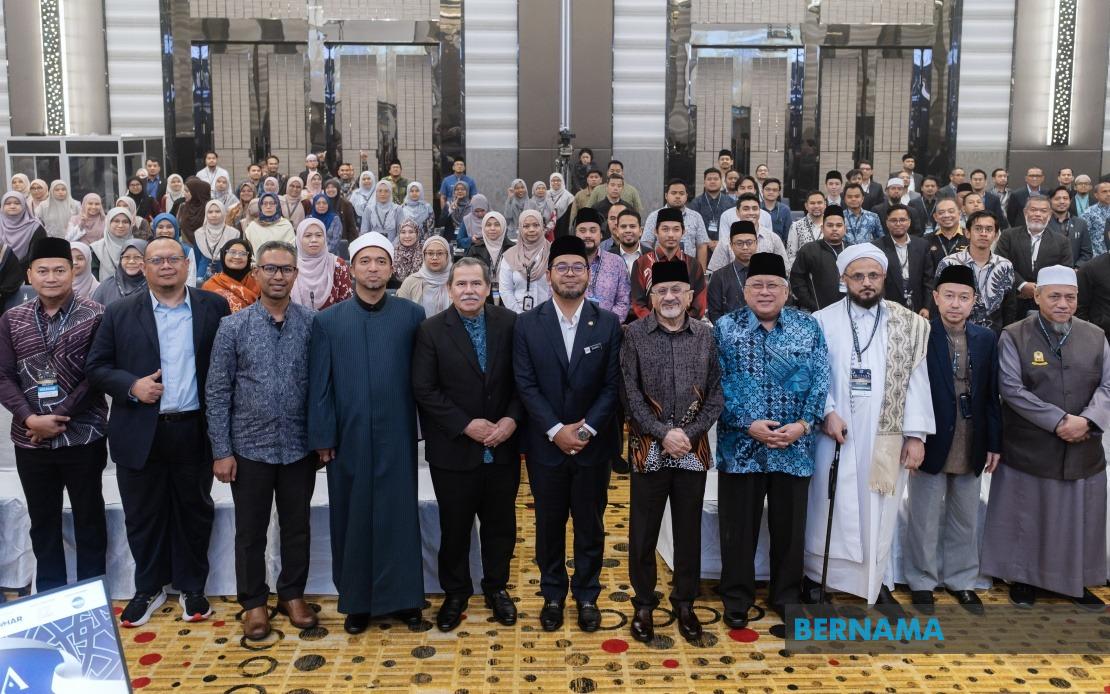
Malaysia should leverage Islamic social finance as a deliberate and comprehensive strategy to combat poverty while catalysing broader economic expansion, according to Minister in the Prime Minister's Department (Religious Affairs) Dr Zulkifli Hasan. Speaking at the MULTAQA SIDR Islamic Social Finance Conference (MULTAQA 2026) in Kuala Lumpur on August 12, he outlined an ambitious vision for repositioning faith-based financial mechanisms within the country's development framework, arguing that the sector possesses untapped capacity to drive meaningful social and economic transformation across communities.
To realise this potential, Dr Zulkifli signalled the government's intention to pursue structured partnerships involving multiple stakeholders. His remarks emphasised that effective advancement of Islamic social finance requires coordinated engagement between public institutions, academic bodies, and commercial enterprises. By fostering these collaborative channels, policymakers believe they can unlock innovation and scale solutions that address systemic poverty while maintaining alignment with religious principles. The minister's emphasis on multi-sector cooperation reflects growing recognition within Southeast Asia that achieving sustainable development goals demands integrated approaches that transcend traditional institutional boundaries.
A key institutional development underlying this agenda is the reassignment of leadership responsibilities. The Department of Waqf, Zakat and Haj (JAWHAR) has been designated as the primary coordinating body tasked with elevating governance standards and professional practices within the Islamic organisational landscape. This centralisation of authority signals government determination to establish consistent quality benchmarks across the sector. For Malaysian NGOs and religious organisations, this reconfiguration carries significant implications, as JAWHAR's expanded mandate will likely introduce more rigorous accountability frameworks and operational protocols.
Dr Zulkifli underscored the critical role universities and higher education institutions must play in strengthening Islamic NGO governance and management capacity. He argued that meaningful collaboration between academic researchers, practitioners in the voluntary sector, and established organisations would be essential for professionalising Islamic social finance structures. This emphasis on knowledge transfer and institutional learning reflects contemporary best practices in development finance, where evidence-based approaches and technical expertise increasingly shape programme design and implementation. For Southeast Asian institutions, such partnerships offer pathways to build local expertise while benefiting from international experience.
The integration of Islamic social finance into Malaysia's broader financial ecosystem constitutes a central strategic objective. By positioning the sector alongside established financial segments rather than treating it as a peripheral concern, policymakers aim to unlock greater resources and attract sophisticated investment mechanisms. This mainstreaming approach has profound implications for how social welfare is financed and delivered across the region, potentially shifting burden-sharing from government budgets towards sustainable, self-perpetuating financial systems grounded in Islamic principles of mutual assistance and community responsibility.
The conference itself proved significant as a platform for introducing Malaysia's Islamic Social Finance Report 2026, jointly produced by the Zakat Collection Centre of the Federal Territories Islamic Religious Council (PPZ-MAIWP) and the Centre of Excellence for Islamic Finance at INCEIF University. This comprehensive document serves as both diagnostic assessment and strategic blueprint, mapping developments, identifying obstacles, and projecting possibilities within the Islamic social finance landscape. For regional policymakers and international observers, the report functions as an important reference point, offering insights applicable across Muslim-majority economies grappling with similar poverty and development challenges.
Crucially, Dr Zulkifli reframed Islamic social finance as representing "The Third Force" in development architecture. This conceptualisation represents a deliberate departure from conventional relief-oriented models that provide temporary consumption support. Instead, the minister advocated for mechanisms that catalyse productive community empowerment, equipping beneficiaries with skills, capital, and opportunities for self-sufficiency. Such a paradigm shift carries transformative potential for how Islamic societies address inequality, moving from dependency-inducing assistance toward capability-building interventions that create lasting pathways out of poverty.
The minister's comments regarding governance failures carry particular weight given ongoing parliamentary scrutiny of Tabung Haji's investment losses and the subsequent Royal Commission of Inquiry report. Dr Zulkifli cautioned that integrity shortcomings within Islamic institutions reverberate across the entire faith community, damaging trust and confidence in broader religious organisations. His warning reflects sophisticated understanding of institutional dynamics: a single organisation's failure to maintain ethical standards and transparent operations jeopardises reputational capital accumulated across the sector. For Malaysian and regional Muslim communities, maintaining institutional integrity is therefore not merely an administrative concern but a matter affecting religious credibility itself.
The minister's refusal to comment on calls for additional inquiry into Tabung Haji suggests careful navigation of politically sensitive territory. Nevertheless, his broader insistence on addressing governance and integrity questions demonstrates commitment to correcting systemic vulnerabilities. These concerns extend beyond financial management into fundamental questions about how Islamic organisations should operate within democratic, transparent frameworks while honouring religious obligations. As Malaysia positions itself as a regional Islamic finance hub, such institutional-level reforms become increasingly important for international credibility and investor confidence.
The gathering of prominent figures including INCEIF University leadership and Federal Territories Islamic Religious Council officials reflected the conference's significance as a convening of influential stakeholders. Their collective presence underscored growing institutional consensus around Islamic social finance's potential as a development tool. For neighbouring Southeast Asian nations, Malaysia's concerted efforts to professionalise, scale, and integrate Islamic finance mechanisms offer instructive models as they contemplate similar reforms. The regional implications of this Malaysian initiative extend beyond borders, as successful implementation could establish templates for other Muslim-majority economies seeking to harness faith-based finance for poverty alleviation and inclusive growth.
Dr Zulkifli's articulation of vision represents part of broader global conversation about harnessing religious principles and community-based financial systems for development purposes. Islamic finance's emphasis on ethical investment, profit-sharing arrangements, and charitable obligations creates structural incentives aligned with poverty reduction and wealth distribution goals. By mainstreaming these mechanisms within national financial architecture and ensuring rigorous governance standards, Malaysia appears positioned to demonstrate how religious values and contemporary development imperatives can reinforce rather than contradict one another. Success in this domain would generate valuable evidence and institutional models for the wider Southeast Asian region.

