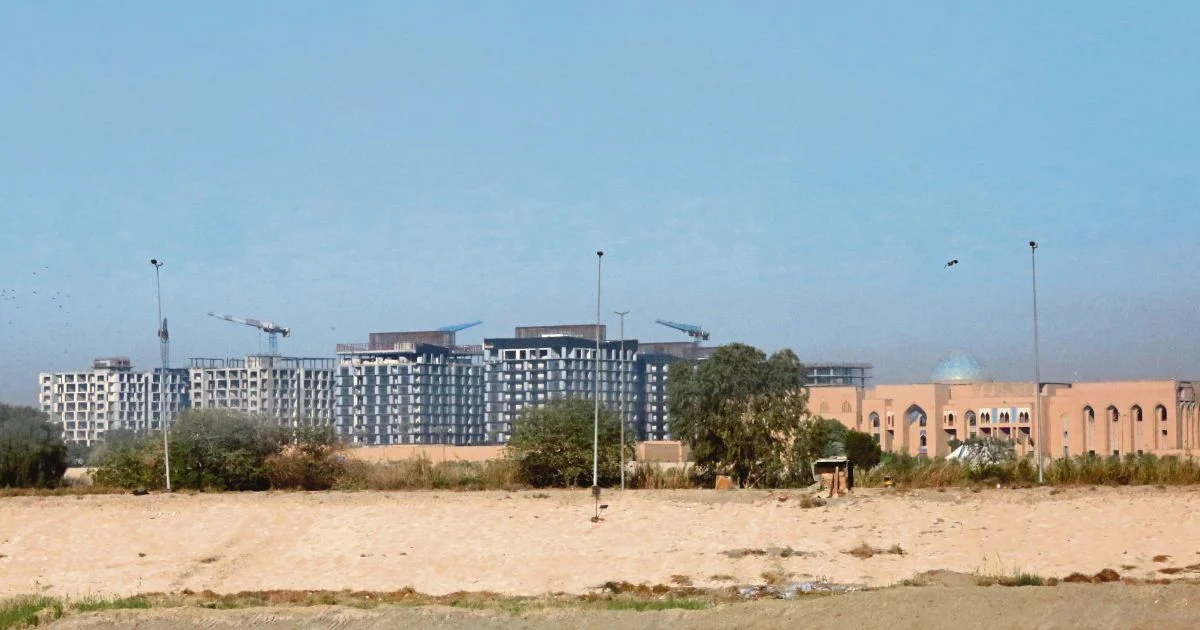
Iraqi authorities descended on Baghdad's heavily fortified Green Zone in pre-dawn operations Sunday, executing a coordinated series of raids that resulted in the detention of multiple parliamentary members and senior government officials. The sweeping enforcement action, carried out by security forces with substantial military deployment throughout the district, targeted individuals suspected of involvement in large-scale corruption schemes ranging from embezzlement to illicit financial transfers.
The timing of the operation reflects mounting political pressure within Iraq's government to demonstrate tangible action against endemic graft that has plagued state institutions for decades. Green Zone residents and officials witnessed unprecedented security presence as armoured vehicles cordoned off administrative compounds and ministerial buildings. The scale of the enforcement effort underscores the seriousness with which authorities are pursuing the investigation, signalling that no rank of official remains beyond judicial scrutiny.
Corruption has long represented one of Iraq's most intractable governance challenges, draining resources meant for infrastructure, healthcare, and education while eroding public confidence in institutions. International transparency organisations have consistently ranked Iraq among the world's most corrupt states, with estimates suggesting billions of dollars annually disappear through illicit networks spanning the bureaucracy, military, and security apparatus. Sunday's operation, therefore, carries symbolic weight in domestic politics and international relations alike.
The arrest of sitting parliamentarians represents a particularly significant development in Iraq's ongoing anti-corruption campaign. Members of parliament traditionally enjoy certain legal immunities, making their detention a relatively rare occurrence that demands extraordinary political consensus or overwhelming evidence. The willingness to pursue MPs suggests either strengthening resolve within the judiciary or shifts in political calculations regarding which officials remain protected by factional allegiances.
For Malaysia and Southeast Asia, Iraq's experience offers cautionary lessons about the intersection of weak institutional capacity and resource-based governance. While Iraqi authorities possess formal mechanisms to investigate and prosecute corruption, the endemic nature of the problem demonstrates how graft becomes embedded across multiple state layers simultaneously. Officials tasked with investigating corruption may themselves be compromised, creating circular accountability deficits that external enforcement efforts alone cannot resolve.
The Green Zone itself carries historical significance as a symbol of both centralised state authority and the isolation separating governing elites from ordinary citizens. Originally established as a protected enclave for foreign diplomatic missions and senior government personnel following the 2003 invasion, the district has evolved into a contested space reflecting Iraq's political fragmentation. Conducting high-profile raids there sends a message about state capacity and willingness to enforce the law against powerful actors.
Anticipating secondary effects from Sunday's operation proves complex. Targeted officials may enjoy backing from particular political blocs or armed factions, potentially triggering factional tensions. Conversely, successful prosecution of high-profile figures could strengthen institutions and restore public faith in judicial independence. Iraq's experience suggests that anti-corruption campaigns succeed only when political leadership commits to protecting investigators and prosecutors from interference and when institutional checks genuinely constrain executive power.
The detention of multiple individuals simultaneously indicates sophisticated coordination among security agencies, suggesting either pre-planned cooperation or emerging consensus within security hierarchies regarding corruption as a priority target. Building such consensus typically requires sustained political will, as some factions may benefit from status quo arrangements and resist enforcement efforts that threaten their revenue streams or influence networks.
For regional observers, Sunday's operations demonstrate that Iraq continues attempting governance reforms despite security challenges and political fragmentation. The country's trajectory influences broader Middle Eastern and Asian geopolitical dynamics, with institutional strengthening potentially improving Iraq's capacity to govern effectively and maintain territorial integrity. Conversely, uneven anti-corruption enforcement could intensify factional grievances and destabilise already fragile political equilibrium.
Longer-term success depends on whether Iraqi authorities establish credible, consistent prosecution mechanisms rather than conducting periodic dramatic operations. Sustainable anti-corruption requires institutional reform, transparent procurement processes, independent judiciary protection, and civil society participation. Isolated raids, however large in scale, represent necessary but insufficient steps toward systemic change in governance culture.
The broader geopolitical context matters significantly. External pressure from the United States and regional partners sometimes accompanies anti-corruption campaigns, raising questions about prosecutorial independence and whether investigations follow genuine evidence or reflect external policy preferences. Iraqi officials must balance international expectations with domestic legitimacy, ensuring that enforcement efforts appear domestically legitimate rather than serving foreign interests.
Public reception to Sunday's operations will likely prove mixed, reflecting broader political polarisation. Supporters may view the raids as overdue accountability action, while detained officials' constituencies may characterise proceedings as persecution. Managing these perceptions while maintaining investigative momentum requires sophisticated communications strategy and demonstrated commitment to impartial justice.
The coming weeks will prove critical in determining whether Sunday's operations represent sustained institutional change or temporary political theatre. Successful prosecution requires maintaining evidence integrity, protecting witnesses, preventing factional interference, and demonstrating judicial independence. For Iraq and broader regional audiences, these raids represent another chapter in the ongoing struggle between governance reform aspirations and entrenched corruption networks.

