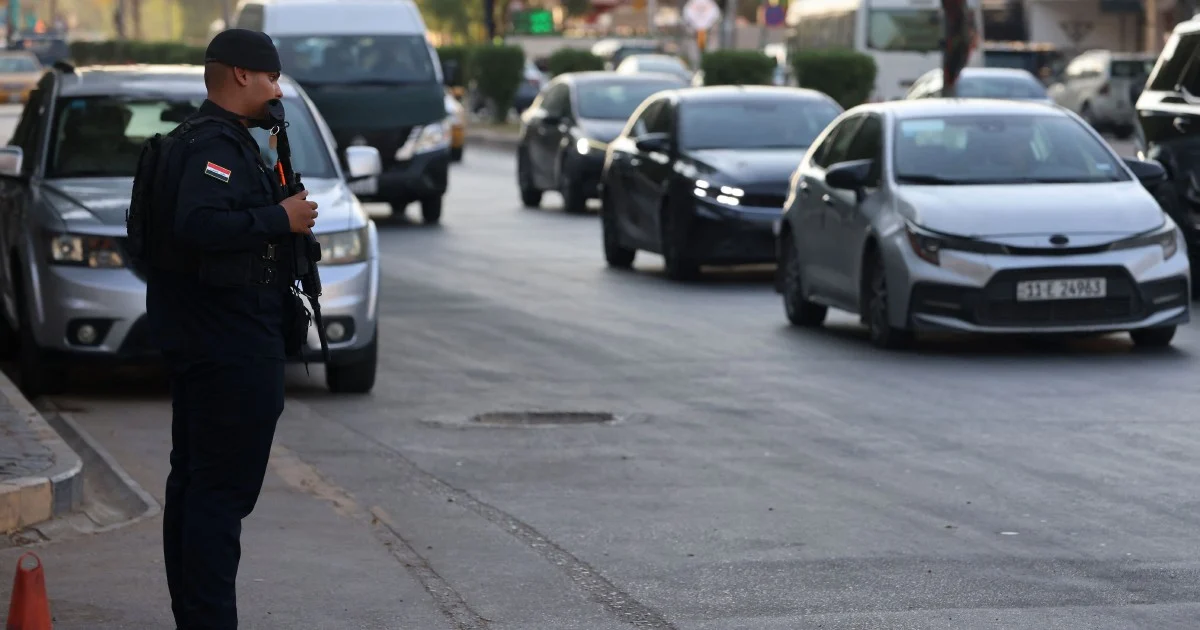
Iraq's law enforcement agencies have mounted a sweeping operation that netted 47 public officials on Sunday, including several sitting members of parliament, according to reports from state media. The coordinated arrests mark another chapter in Baghdad's ongoing battle against systemic corruption, a malaise that has sapped state resources and undermined public confidence in government institutions for years.
The scale of the operation underscores the persistence of graft throughout Iraq's administrative apparatus, from local bureaucratic offices to the highest levels of the legislative branch. Corruption has emerged as one of the most corrosive challenges facing Iraq's post-conflict state reconstruction, eroding the legitimacy of newly established democratic institutions and diverting funds that could otherwise support basic services and infrastructure renewal.
The timing of the crackdown reflects intensified political pressure on Iraqi leadership to demonstrate tangible progress against corruption. International observers and domestic constituencies have grown increasingly impatient with the pace of reform, particularly as oil revenues—the lifeblood of Iraq's economy—remain subject to large-scale theft and misappropriation. Each major anti-corruption operation serves partly as a signal that authorities are committed to accountability, though sceptics note that enforcement remains inconsistent across different political factions.
Political patronage networks have historically insulated many officials from prosecution, enabling high-level actors to operate with relative impunity while lower-ranking bureaucrats shoulder disproportionate legal consequences. The inclusion of parliamentary members in this arrest wave suggests, at least nominally, that investigative bodies are willing to target elected representatives—a politically sensitive move that carries risks for whichever faction initiated the operations.
For Malaysia and other Southeast Asian nations grappling with similar governance challenges, Iraq's experience offers sobering lessons about the structural difficulties of combating embedded corruption. When graft becomes woven into the fabric of state institutions, episodic crackdowns often prove insufficient without accompanying reforms to salary structures, procurement oversight, and institutional independence of anti-corruption bodies themselves.
The effectiveness of Iraq's anti-corruption efforts will ultimately depend on whether prosecutions result in convictions and meaningful prison sentences, or whether arrests function primarily as performative gestures toward international donors and civil society. Past campaigns have sometimes faltered when cases reached the judicial system, which itself contends with capacity constraints and political interference.
These operations occur within the broader context of Iraq's fragile political settlement, where multiple armed groups, ethnic communities, and foreign powers maintain significant leverage over state decision-making. Corruption frequently intersects with sectarian politics, making clean anti-graft campaigns exceptionally difficult when different constituencies view accountability measures through the lens of factional advantage rather than institutional integrity.
Regional observers in Southeast Asia should note that Iraq's experiences demonstrate how corruption can undermine state legitimacy precisely when post-conflict reconstruction requires maximum institutional capacity. When officials systematically divert resources meant for reconstruction and service delivery, it fuels grievances that militant groups exploit for recruitment, perpetuating instability.
The sustainability of anti-corruption campaigns depends critically on maintaining public visibility of prosecution outcomes. Arrests generate headlines, but only trials and convictions convince ordinary citizens that accountability mechanisms actually function. This distinction matters enormously in contexts where public trust in state institutions has already deteriorated significantly due to historical patterns of impunity.
Iraq's anti-corruption authorities face competing pressures: they must pursue high-profile cases to demonstrate credibility, yet must simultaneously navigate treacherous political terrain where targeting prominent figures can provoke retaliation or accusations of selective enforcement. This fundamental tension helps explain why anti-corruption drives in fragile states often plateau after initial bursts of activity.
International support for Iraq's anti-corruption institutions has expanded considerably, with foreign technical assistance aimed at strengthening investigative capacity and institutional independence. However, external support cannot substitute for domestic political will, and cases where anti-corruption bodies face pressure to drop charges against powerful figures have undermined confidence in reform efforts.
For policymakers across Southeast Asia monitoring Iraq's reconstruction trajectory, these developments underline that institutional reform requires sustained commitment extending far beyond individual campaigns. The region's own anti-corruption agencies would benefit from studying Iraq's experiences—both successes and failures—as they work toward building accountable governance structures capable of resisting political pressure and delivering genuine accountability.

