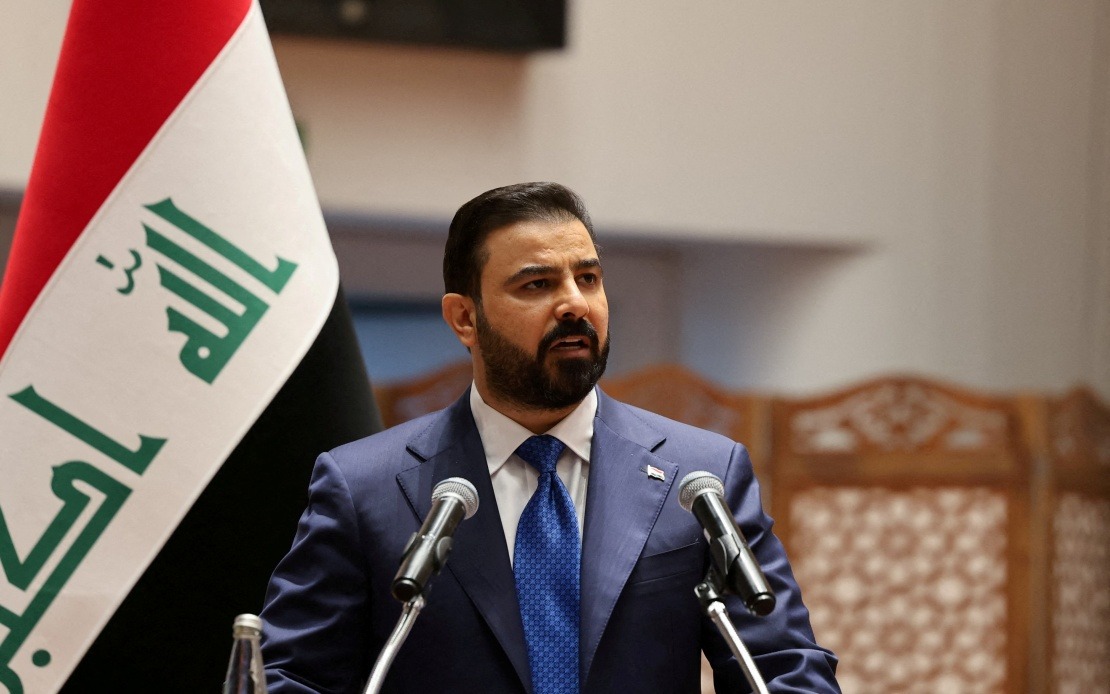
Iraq has no intention of abandoning its membership in OPEC, according to Prime Minister Ali Al-Zaidi, who emphasized on Thursday that Baghdad remains committed to the world's most influential oil cartel while pursuing what it regards as a fairer allocation of production rights. Speaking to the Al-Hadath broadcaster, Al-Zaidi sought to dispel any speculation about Iraqi withdrawal, stressing instead that the nation's focus centres on securing production quotas that better reflect its capabilities and reserves.
The statement carries significant weight given the recurring tensions within OPEC regarding quota distribution and the underlying disputes between member states over their respective shares of global oil supply. Iraq's reaffirmation of membership loyalty comes at a moment when the cartel faces mounting scrutiny over its production policies and their effects on global energy markets. By publicly defending Iraq's place within OPEC, Al-Zaidi appears to be signalling that despite frustrations with current arrangements, Baghdad views continued participation as preferable to isolation.
Recent quota decisions illustrate the complexities inherent in OPEC negotiations. In June, the organization approved production increases for three nations: Kuwait received permission to raise output by 16,000 barrels per day starting in August, reaching 2.66 million barrels daily, while Oman gained authorization for a 5,000 barrel daily increase to 836,000 barrels daily. Iraq's allocation proved more generous, with an approved increment of 26,000 barrels per day that would bring its total production to 4.405 million barrels daily. These figures underscore how OPEC differentiates quota treatment among members based on various criteria.
The distinction in approval levels reflects ongoing negotiations about production capacity assessments. Earlier in June, Iraqi Oil Ministry spokesman Salim Al-Ruqabi disclosed that OPEC+ had initiated a comprehensive evaluation of Iraq's petroleum production facilities and infrastructure capabilities. This technical review process directly informs quota recommendations, as member nations with greater demonstrable capacity typically receive larger allocations. The assessment signals that OPEC+ recognizes Iraq's potential to expand output beyond current levels, though the pace and scale of such expansion remains subject to organizational constraints.
For Malaysian and broader Southeast Asian audiences, Iraq's position within OPEC carries implications for regional energy security and economic planning. As one of OPEC's largest producers, Iraq's production decisions influence global crude prices, which in turn affect Asian economies heavily dependent on petroleum imports. Any disruption to Iraq's OPEC participation or sudden changes in its quota allocations could reverberate through regional markets, affecting fuel costs, industrial competitiveness, and government budgets across Southeast Asia.
Iraq's insistence on fair treatment within OPEC reflects deeper grievances shared by various member states regarding quota methodology. The cartel's allocation system attempts to balance multiple factors including proven reserves, production capacity, historical output levels, and broader geopolitical considerations. For Iraq, which possesses among the world's largest verified crude reserves, the gap between its resource endowment and assigned quota has historically generated friction. Baghdad's persistent advocacy for quota increases represents an effort to align production rights more closely with reserve ownership and extraction potential.
The technical capacity review initiated by OPEC+ appears designed to address precisely these concerns by establishing objective measurements upon which quota decisions can rest. By conducting thorough assessments of member infrastructure, drilling capability, and spare production capacity, the organization aims to create more defensible rationale for allocation decisions. For Iraq, a thorough evaluation of its Kirkuk, Basra, and other major fields could potentially strengthen its case for expanded quotas in subsequent negotiations.
Politically, Al-Zaidi's public commitment to OPEC membership demonstrates Iraq's preference for operating within established international frameworks rather than pursuing unilateral action. Given Iraq's geopolitical position and ongoing reconstruction following decades of conflict, maintaining productive relationships with OPEC partners serves broader strategic interests beyond oil revenues alone. The statement also reflects confidence that negotiation within the cartel mechanism can ultimately deliver acceptable outcomes, at least better than the uncertainty of independent action.
Looking forward, Iraq's approach suggests a calculated strategy of patient advocacy combined with technical demonstration of capacity. By allowing capacity assessments to proceed and publicly embracing OPEC membership while privately pressing for quota adjustments, Baghdad appears positioned to negotiate from a position of data-supported legitimacy rather than confrontation. This measured approach contrasts with more aggressive posturing occasionally adopted by other members and may ultimately prove more effective in securing incremental quota increases over time.
The outcome of Iraq's quota negotiations will bear watching, particularly given the organization's efforts to maintain production discipline while accommodating members' expansion ambitions. Iraq's success or failure in securing deemed-fair allocations could influence other members' confidence in OPEC's fairness and potentially shape the organization's cohesion in managing future production challenges. For energy-importing nations including Malaysia, the degree to which OPEC achieves internal agreement on sustainable quotas directly affects price stability and supply predictability in global crude markets.

