Iran's military leadership has made an unprecedented declaration of absolute control over one of the world's most critical shipping passages. The Islamic Revolutionary Guard Corps announced on Sunday that it had intercepted four vessels attempting to navigate the Strait of Hormuz and that henceforth, no commercial tanker—whether carrying crude oil, liquefied natural gas, or other commodities—would be permitted transit without formal Iranian authorisation. The announcement follows a series of maritime incidents that have roiled global energy markets and intensified the strategic confrontation between Tehran and Washington.
According to the IRGC's account, the four vessels ignored repeated warnings from Iranian naval forces as they sought passage through what the American-backed operators considered a navigable route. The Iranian military stated that the ships had disabled their navigation systems, a practice that heightened suspicion regarding their intentions. In response to the breach, the IRGC reported that two of the vessels were stopped following what it termed "incidents," whilst the other pair reversed course and withdrew from Iranian-declared waters. The specifics of these incidents remain contested, reflecting the broader information warfare that accompanies maritime confrontations in the region.
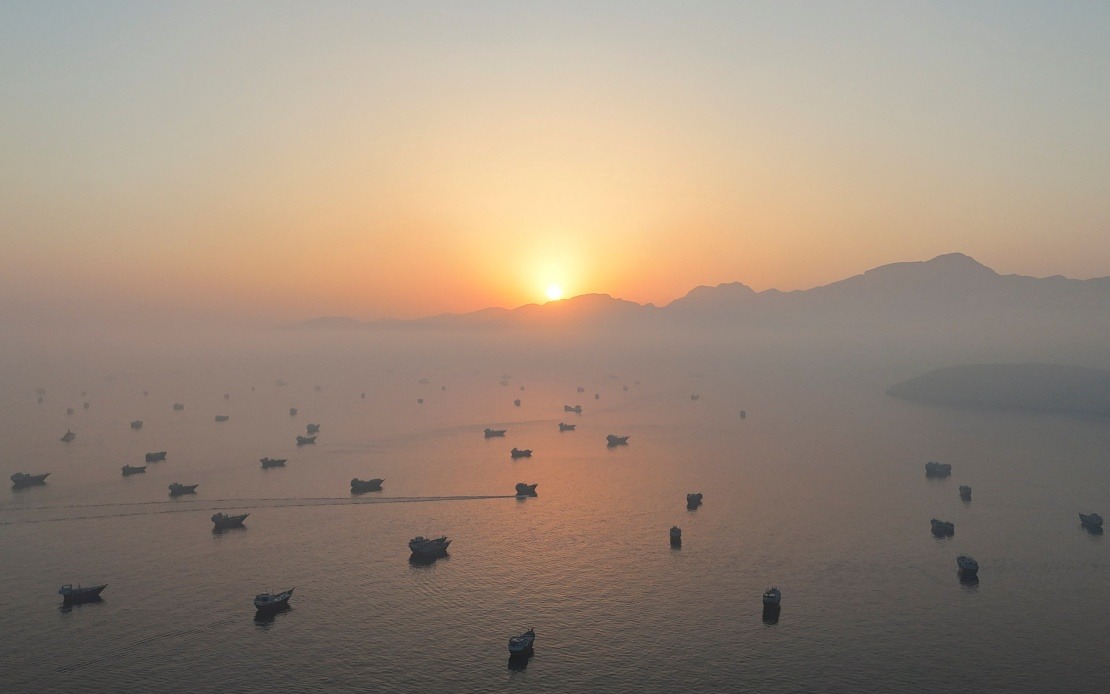
The Strait of Hormuz, a narrow waterway separating Iran and Oman, constitutes the world's most important oil transport corridor. Roughly one-third of all globally traded petroleum passes through its waters annually, making it indispensable to energy security across Asia, Europe, and beyond. Malaysia and other Southeast Asian nations depend substantially on unimpeded flows through the strait to maintain economic stability and secure fuel supplies. Any prolonged disruption reverberates through regional economies and can destabilise international energy pricing, making Iran's assertion of unilateral control a matter of concern far beyond the Middle East.
The IRGC's declaration that Iran alone determines safe passage routes represents a dramatic escalation in Tehran's approach to managing the waterway. Rather than merely defending against what it views as provocative incursions, the military is now asserting sovereignty over transit itself. The statement that "not even a drop of oil, gas or fertiliser" would pass without Iranian coordination and permission sets a new threshold for Iranian assertions. This language suggests that Tehran may use tanker traffic as leverage in its confrontation with the United States and its regional allies, potentially weaponising commerce in ways that could disrupt global supply chains.
The timing of Iran's hardline stance coincides with a broader escalation cycle initiated by the United States. Since 8 July, American forces have conducted multiple military strikes against Iranian targets and assets. The United States Central Command characterises these operations as responses to alleged Iranian actions targeting merchant vessels traversing the strait. Tehran disputes this framing, contending that American aggression prompted Iranian defensive reactions. This tit-for-tat dynamic, wherein each side attributes initial responsibility to the other, creates a perilous cycle wherein miscalculation or unintended escalation could trigger wider conflict.
The Iranian military's explicit mention of US-backed vessels reflects the geopolitical fault lines that have come to define the region. Washington has cultivated partnerships with Gulf Arab states and maintains a naval presence in the Persian Gulf specifically to secure freedom of navigation and protect shipping lanes from Iranian interference. Tehran, conversely, views American military deployments as intrusions into its sphere of influence and interprets Western support for neighbouring states as existential threats. Within this zero-sum framework, control of the Strait of Hormuz becomes not merely a commercial question but a test of regional power and resolve.
For Malaysian stakeholders and regional observers, the implications are substantial. Southeast Asia's energy-intensive economies rely on predictable access to Middle Eastern petroleum and liquefied natural gas. Should Iran systematically restrict tanker movement or use shipping as a negotiating tool, the consequences would ripple across the region's manufacturing sectors, transport industries, and power generation facilities. Insurance and shipping companies already face escalating premiums and operational uncertainties when conducting business through the strait. A formalised Iranian permitting system, enforced through military interception, would add layers of bureaucratic complexity and risk that could redirect trade flows or increase costs.
The broader geopolitical context underscores why this moment matters. The United States and Iran remain locked in strategic competition following Washington's 2018 withdrawal from the Joint Comprehensive Plan of Action, the multinational nuclear agreement. Iran's economy languishes under severe sanctions, fuelling internal pressures on the Tehran government whilst hardening its rhetorical posture. Military commanders, who wield considerable influence over Iranian policy, have increasingly adopted confrontational stances toward American interests. The Strait of Hormuz, where Iranian forces enjoy geographic advantage and can credibly threaten shipping, offers Tehran one of its few leverage points in this asymmetric contest.
Regional stability hangs precariously on the degree to which the United States and Iran can avoid direct military confrontation. Incidents at sea—where miscommunication, mechanical failure, or aggressive posturing can trigger unintended escalation—carry heightened risks. Previous encounters in the strait have sometimes culminated in shots fired, collisions, or near-misses. A single incident involving significant loss of life could precipitate broader regional conflict. The international community, including major trading nations and Gulf-dependent economies, has vested interests in maintaining some baseline of predictability and safety in one of the world's most trafficked waterways.
The announcement also reflects changing Iranian calculus regarding how it can project power without possessing conventional military superiority. Rather than challenge American naval supremacy directly, Tehran leverages geographic proximity, asymmetric tactics, and willingness to impose costs on global commerce. By declaring unilateral control over tanker movement, the IRGC signals that it possesses tools to disrupt international commerce and that it retains agency despite economic pressure. This posturing serves domestic audiences in Iran whilst communicating resolve to external adversaries, yet it simultaneously raises the stakes for all parties and increases the probability of miscalculation.
Moving forward, resolution will likely require diplomatic channels that remain functional despite overt military tensions. International organisations, neutral mediators, and pragmatic interlocutors must work to establish modus vivendi permitting shipping to resume without surrendering fundamental security concerns on either side. The alternative—a prolonged closure or severe restrictions on strait traffic—would impose costs on global energy markets, regional economies, and international security that extend far beyond the immediate combatants. For now, the Strait of Hormuz remains a focal point of great power competition where local incidents carry worldwide ramifications.

