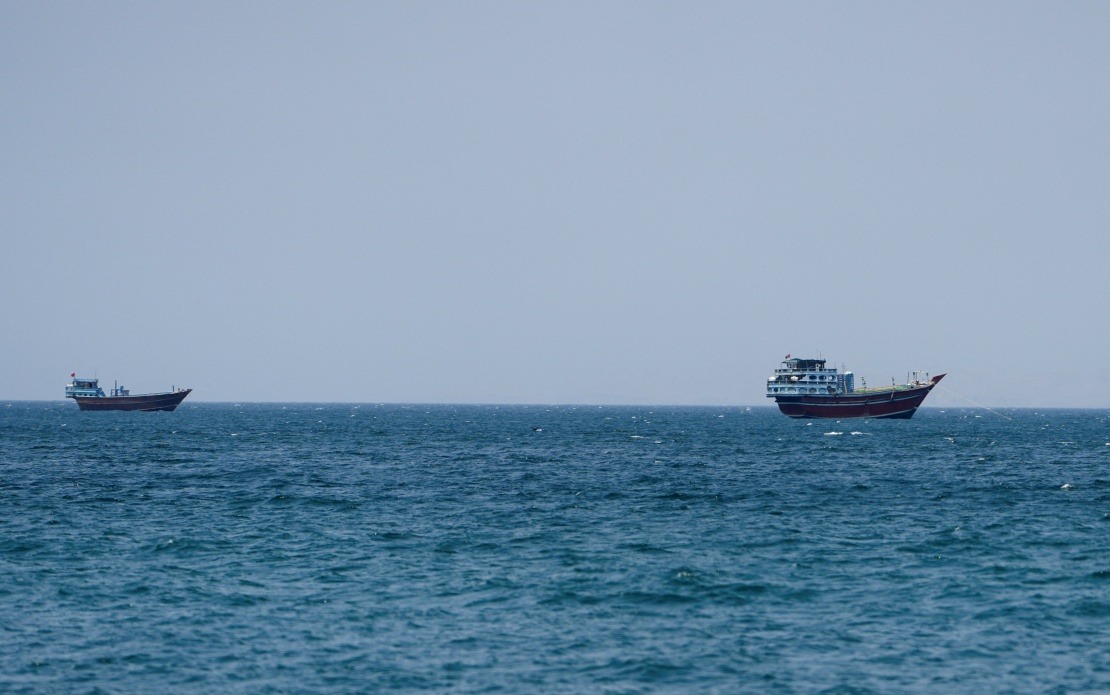
Iran has tied the reopening of the strategically vital Strait of Hormuz to Washington's acceptance of a comprehensive set of conditions, according to Mohsen Rezaei, the recently installed head of Iran's Supreme National Security Council. The declaration underscores deepening geopolitical friction in the Persian Gulf, a region whose stability reverberates across global energy markets and shipping networks that Southeast Asian economies depend upon. Rezaei's remarks, made during a meeting with Chinese Ambassador to Tehran Zong Piyu, represent an uncompromising stance from Tehran as it maintains restrictions on transit through the waterway, measures implemented since March in response to what Iranian officials characterize as US-Israeli military action.
The core of Iran's position centres on three interconnected demands: the United States must terminate what Tehran describes as military aggression targeting Iran and its regional network of allied forces, unfreeze Iranian financial assets that have been locked under international sanctions regimes, and formally acknowledge Iran's right to regional influence. These are not trivial concessions from the American perspective, representing fundamental shifts in US Middle Eastern policy. For Malaysia and other Southeast Asian nations that depend on energy imports transiting the Hormuz Strait—through which roughly one-third of global seaborne petroleum passes—the dispute carries profound economic implications. Any prolonged closure or severe restriction of transit would drive up fuel prices, increase shipping insurance premiums, and disrupt supply chains that feed manufacturing sectors across the region.
Rezaei emphasized that additional conditions have been conveyed to Washington through intermediaries engaged in the indirect diplomatic negotiations that have occurred intermittently over recent weeks. The involvement of third-party mediators suggests both sides recognize the catastrophic costs of complete breakdown, yet neither appears willing to make unilateral concessions. This dynamic creates a dangerous equilibrium where talks continue without genuine momentum toward resolution. The specificity with which Rezaei articulated Iran's position—particularly his assertion that the strait will remain closed as long as the US refuses to alter its behaviour—suggests Tehran views the closure as leverage rather than as a temporary punitive measure.
An important dimension of Iran's strategy involves its relationship with Oman, the other nation bordering the Strait of Hormuz. Rezaei clarified that even if Iran and Oman successfully negotiate separate arrangements governing transit routes through the waterway, any bilateral accord would not constrain Iran's unilateral authority to restrict or permit passage through the strait. This statement effectively reserves Iran's right to maintain closure regardless of accommodations with its neighbour, presenting a formidable obstacle to workarounds. For regional powers attempting to mediate or develop alternative solutions, this position removes a potential pathway toward de-escalation. The implication is that only direct negotiations with the United States, resulting in substantive American policy shifts, can resolve the impasse.
Rezaei's meeting with the Chinese ambassador also reflected Iran's strategic recalibration toward Beijing and away from Western capitals. He praised China's opposition to a UN Security Council resolution that Iran characterizes as illegitimate and anti-Iranian, viewing this stance as evidence of Beijing's principled alignment with Tehran. This positioning carries significance for Southeast Asia, where Chinese economic influence has grown substantially. As China expands its Belt and Road Initiative investments across the region, and as Southeast Asian nations seek to maintain balanced diplomatic relations, the deepening Iran-China partnership could create pressure on ASEAN countries to demonstrate similar solidarity with Tehran on international forums.
The invocation of the Shanghai Cooperation Organisation and BRICS as exemplars of fruitful multilateral cooperation signals Iran's pivot toward non-Western institutional arrangements. These platforms provide Iran with diplomatic platforms and economic partnerships that partially compensate for its isolation from Western-dominated international structures. For Malaysia, which maintains observer status in the Shanghai Cooperation Organisation, this development underscores how Middle Eastern geopolitical tensions increasingly intertwine with Asian regional security architectures. The expansion of Iran's strategic partnerships beyond the Middle East reflects a broader realignment where traditional Cold War alignments have fractured, replaced by fluid coalitions based on opposition to perceived American hegemony and economic coercion.
The practical consequences of prolonged Strait of Hormuz restrictions extend beyond energy costs. Insurance premiums for vessels transiting the region have already increased substantially, and shipping companies are forced to employ expensive security measures to protect against potential Iranian interdiction. These costs ultimately cascade through supply chains, affecting everything from petrochemical prices to electricity generation across Southeast Asia. Malaysian petrochemical industries, which rely on competitive energy inputs for export competitiveness, face margin compression if current tensions persist. Manufacturers in the region looking to maintain just-in-time supply chain efficiency must now factor in insurance surcharges and potential routing delays into logistical calculations.
The absence of breakthrough diplomatic progress also creates space for miscalculation and escalatory cycles. Each round of rhetorical positioning by Iranian officials, accompanied by military posturing and interdiction of foreign vessels, triggers Western responses that harden positions on both sides. Regional powers like the United Arab Emirates and Saudi Arabia, themselves targets of Iranian pressure, must simultaneously manage commercial relationships with China and the West while contending with Iranian assertiveness. Southeast Asian nations find themselves similarly positioned, attempting to maintain balanced relationships with all major powers while suffering collateral damage from their strategic competition.
Looking forward, the Hormuz situation appears likely to remain frozen at current levels of tension absent dramatic political changes in either Tehran or Washington. The incoming administration in the United States will inherit this intractable problem, with limited leverage to compel Iranian concessions without escalating confrontation. Iran, meanwhile, appears content to maintain restrictions as a demonstration of agency and as leverage in a prolonged contest of wills. For Malaysia and regional peers, this trajectory demands contingency planning around energy security, alternative supply routes, and potentially higher structural costs embedded in international trade. The Strait of Hormuz has become a microcosm of broader geopolitical fragmentation, with consequences that ripple far beyond the Persian Gulf.

