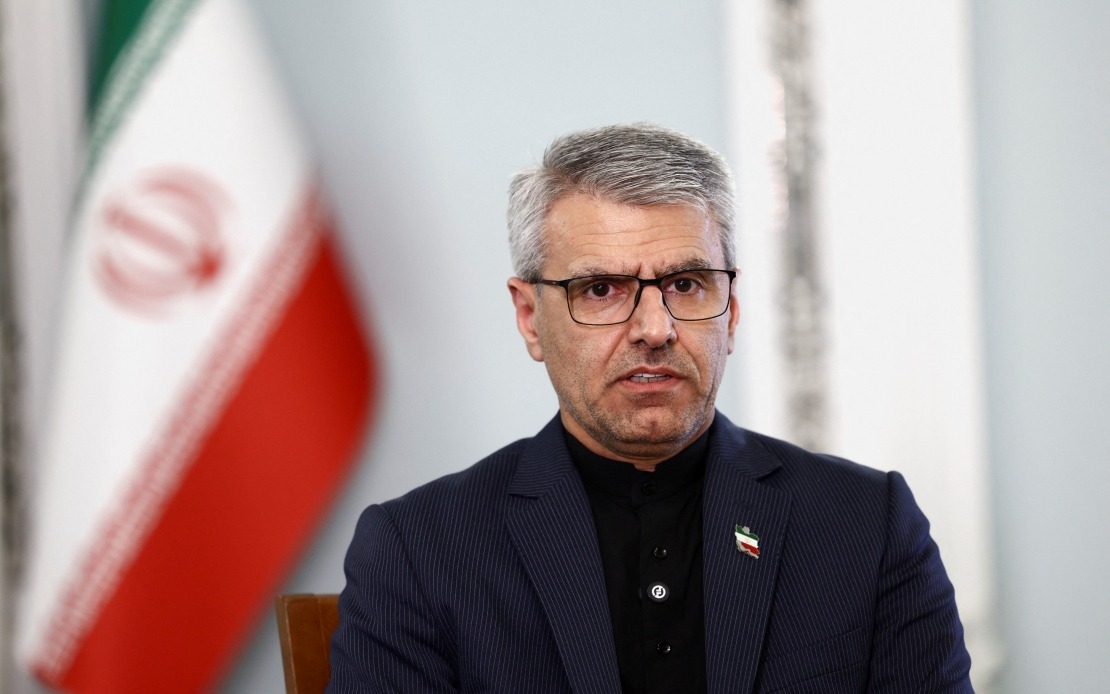
Iran signalled meaningful progress in its negotiations with the United States following intensive diplomatic talks held in Burgenstock, Switzerland, where representatives from both nations met to chart a path toward a comprehensive final agreement. Foreign Ministry spokesman Esmaeil Baghaei told reporters on Monday that the discussions had yielded what he described as "important steps" that would facilitate the launch of formal negotiations on the broader accord, though he cautioned that Tehran would be watching carefully for evidence of genuine commitment from Washington in the implementation phase.
The four-party talks brought together negotiators from Iran, the United States, and mediating nations to address an extensive agenda covering security, sanctions relief, and regional stability. Baghaei emphasised that the foundation laid during these discussions would be crucial for determining whether substantive progress could be made in coming weeks. The cautious optimism evident in his remarks reflects Iran's historical wariness about US follow-through on diplomatic commitments, a concern rooted in Washington's 2018 withdrawal from the previous Joint Comprehensive Plan of Action.
One of the most significant outcomes announced was the establishment of a new "deconfliction cell" designed to monitor adherence to ceasefire agreements and prevent renewed hostilities, particularly in Lebanon where regional tensions have periodically escalated into direct confrontation. This mechanism, which will include participation from mediating countries, represents an attempt to create institutional safeguards against miscalculation or sudden escalation. For Southeast Asian observers and policymakers, such security architectures are noteworthy as regional blocs increasingly explore similar confidence-building measures.
The Iranian delegation also reported progress on two economically critical fronts that have long been central to Tehran's negotiating position. Discussions concerning the licensing framework for Iranian oil exports and the release of Iran's frozen or restricted assets—funds sequestered by international financial institutions due to sanctions—were described as having advanced meaningfully. These monetary and commercial issues directly affect Iran's ability to finance its economy and have broader implications for global energy markets and international financial stability.
Maritime security in the Strait of Hormuz, through which approximately one-third of the world's seaborne oil passes, emerged as another key discussion point during the Switzerland negotiations. The parties agreed in principle to establish a mechanism aimed at safeguarding freedom of navigation and preventing disruptions to shipping in this strategically vital waterway. For Malaysia and other Southeast Asian economies dependent on stable energy supplies and secure maritime trade routes, any arrangements that reduce geopolitical friction in the Middle East carry direct economic significance.
Baghaei indicated that technical teams from all parties would reconvene to continue working through the detailed implementation of agreements reached and to address additional issues necessary for operationalising the understanding. This sequential approach—whereby political-level agreements are subsequently translated into technical arrangements—is a standard feature of complex multilateral negotiations but also represents a potential juncture where momentum can be lost if lower-level negotiations encounter obstacles.
In a parallel development, mediators Qatar and Pakistan jointly announced that the initial round of high-level discussions at the Lake Lucerne Summit had produced considerable momentum toward a comprehensive peace settlement. Both countries, which have maintained diplomatic channels between the disputing parties, indicated that negotiators had agreed upon a roadmap with an ambitious 60-day timeline for achieving a final accord. This timetable suggests that all participants recognise the importance of maintaining negotiating momentum and avoiding prolonged uncertainty.
The Switzerland negotiations form part of a broader diplomatic framework that includes a memorandum of understanding signed the previous week, with the stated aim of terminating hostilities that had been initiated on 28 February. This earlier agreement appears to have established the basic parameters within which the current negotiations are operating, providing a foundation of mutual commitment upon which more detailed agreements can be constructed.
For regional analysts and policymakers across Southeast Asia, these developments carry significance beyond the immediate parties involved. A stabilised Middle East reduces the risk of energy supply disruptions that could reverberate through global markets and affect the cost of imports critical to Asian economies. Moreover, the establishment of monitoring mechanisms and confidence-building measures between traditionally adversarial powers offers diplomatic lessons that regional organisations might consider as they navigate their own security challenges and seek to prevent escalation in areas of tension.
The emphasis Baghaei placed on anticipating future US "seriousness" in implementation reflects the lingering distrust stemming from previous diplomatic episodes. Iran's historical experience shapes its negotiating stance, and reassuring domestic audiences that hard-won concessions will not be squandered remains politically essential for Iranian negotiators. The coming weeks will be critical in determining whether the agreements reached in Switzerland translate into tangible steps toward a lasting accord or represent merely another temporary pause in a protracted standoff.