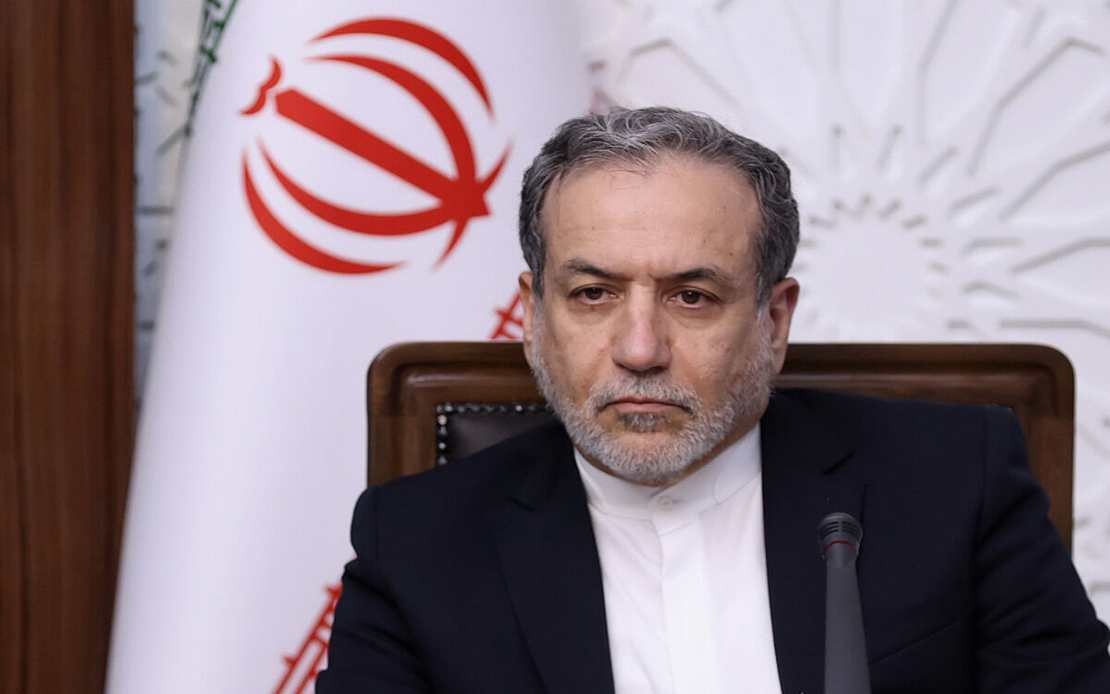
Diplomatic efforts to stabilise the volatile Middle Eastern region gained momentum on Tuesday as Iran's Foreign Minister Abbas Araghchi initiated a series of high-level conversations aimed at defusing escalating tensions. The Iranian official spoke separately with Pakistan's Army Chief, Field Marshal Asim Munir, and Qatar's Foreign Minister Mohammed bin Abdulrahman Al Thani, signalling Tehran's commitment to pursuing dialogue over confrontation despite months of military skirmishes with the United States and its regional allies.
During his exchange with Field Marshal Munir, Araghchi underscored the critical importance of sustained consultation and coordinated action between the two nations to advance peace and security across the broader region. The discussion reflected Pakistan's evolving role as a potential mediator in Middle Eastern disputes, a position that carries significant weight given Islamabad's strategic location and its relationships across the Islamic world. Pakistan has previously served as a channel for communications between adversarial parties and maintains diplomatic ties that few nations can replicate.
The conversation with Qatar's foreign minister centred on leveraging diplomatic channels and preserving coordination mechanisms to prevent further deterioration of an already fragile security environment. Al Thani underscored his country's commitment to supporting diplomatic initiatives and solutions that would guarantee unimpeded maritime traffic while creating conditions for broader regional peace agreements. Qatar, hosting numerous international organisations and maintaining balanced relationships across regional divides, has positioned itself as a neutral facilitator in multiple disputes.
Separately, Iran and Oman announced a significant framework proposal on the same day for establishing a temporary joint shipping corridor through the Strait of Hormuz, one of the world's most critical maritime chokepoints through which roughly one-third of seaborne traded oil passes annually. The two nations also committed to a collaborative mine-clearance operation in the strategically vital waterway. This announcement emerged from a Tehran meeting between Omani Foreign Minister Badr Albusaidi and Araghchi, demonstrating Oman's traditional role as a regional bridge-builder between conflicting parties.
The Strait of Hormuz has become a focal point of regional contention, with various parties holding divergent visions for its governance and management. The proposed corridor arrangement and joint mine-clearing initiative represent attempts to address legitimate maritime security concerns while accommodating different interests. For Southeast Asian nations with shipping interests transiting these waters, any arrangement affecting passage through the Strait carries direct economic implications, making regional stabilisation efforts relevant far beyond the Middle East itself.
US President Donald Trump asserted on Tuesday that the American Navy had removed or neutralised all mines present in the international waters of the Strait of Hormuz, a claim that underscores Washington's persistent focus on maintaining what it considers unrestricted freedom of navigation. The United States views the strait as an international waterway that must remain open without tolls or special arrangements that would grant Iran formal authority over maritime traffic management. This position reflects broader American strategy in the region, which opposes arrangements perceived as enhancing Iranian influence or control mechanisms.
American policy favours directing commercial shipping along a southern route operating closer to Omani territorial waters, an approach intended to circumvent Iranian influence while simultaneously maintaining rigorous economic sanctions and a de facto blockade of Iranian ports. This strategy reflects the ongoing sanctions regime that has devastated Iran's economy and constrained its oil exports, creating pressure on Tehran's government while generating incentives for negotiations.
The current diplomatic push occurs against a backdrop of escalating military incidents stretching back to late February, when American and Israeli forces launched unexpected strikes on Iran. Tehran responded with retaliatory attacks targeting Israeli and American military installations throughout the region. In mid-June, mediation efforts involving Pakistan and Qatar resulted in a memorandum of understanding between Washington and Tehran, though implementation subsequently stalled amid disagreements specifically concerning Strait of Hormuz arrangements and broader governance questions.
Last month, the situation deteriorated further when the United States resumed military operations against Iranian targets, prompting Iranian counter-strikes against American military assets positioned in allied Arab states. This cycle of escalation and retaliation has created a precarious situation where miscalculation could trigger broader conflict. The intensifying pattern of tit-for-tat military actions underscores why both sides may find diplomatic off-ramps increasingly attractive.
For Malaysian policymakers and business communities, these developments carry significant implications. Malaysia's substantial maritime trade, its geographic proximity to strategic waterways, and its economic dependence on reliable shipping routes make regional stability a national interest. Any prolonged disruption to shipping through the Strait of Hormuz would directly impact Malaysian import costs, energy security, and export competitiveness. Moreover, as a Muslim-majority nation with interests in Middle Eastern stability, Malaysia has strategic reasons to support mediation efforts that reduce conflict.
The involvement of Pakistan and Qatar in these discussions demonstrates how smaller nations and regional powers can exercise disproportionate diplomatic influence through careful positioning and trusted relationships. Both countries maintain channels to multiple regional actors and possess credibility that larger powers sometimes lack. Their participation in de-escalation efforts suggests that even amid deep antagonisms, pathways for dialogue remain available.
The proposed Strait of Hormuz shipping corridor represents an innovative approach to balancing competing security concerns with practical maritime necessities. If successfully implemented, such arrangements could establish precedents for managing other contested waterways and demonstrate that technical solutions can sometimes bridge political divides. However, success requires sustained commitment from all parties and willingness to compromise on symbolic and substantive issues.

