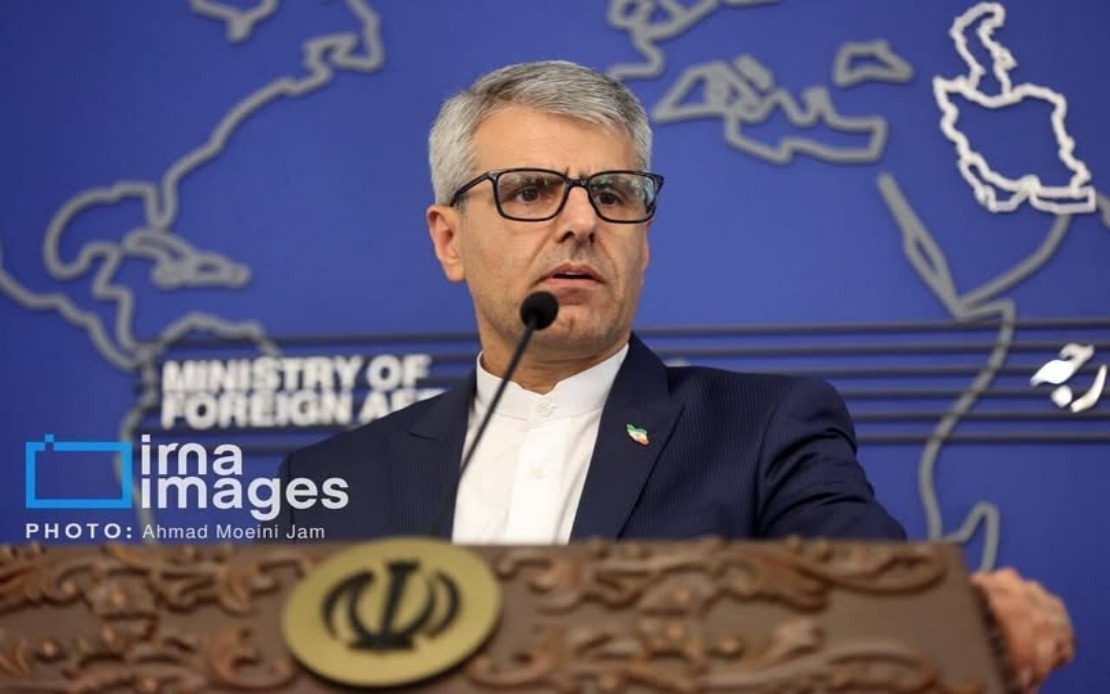
Iran has intensified diplomatic pressure on the United States to enforce what it describes as an immediate and unconditional Israeli military withdrawal from occupied Lebanese territories, positioning the demand as fundamental to any durable regional settlement. The assertion came during statements by Iranian Foreign Ministry spokesman Esmaeil Baqaei on Sunday, following weeks of high-stakes negotiations between Tehran and Washington over the implementation of agreements designed to ease tensions across the Middle East.
The Iranian position reflects deepening concerns in Tehran that without explicit timelines and American guarantees, Israel may maintain its military footprint in Lebanon indefinitely, undermining the stated objectives of recent diplomatic understandings. Baqaei characterised the complete removal of Israeli forces from all Lebanese territory as non-negotiable, arguing that any agreement lacking this provision would prove inherently unstable and fail to deliver the regional stability both capitals claim to seek.
For Malaysian and Southeast Asian observers, the Iranian stance reveals the precarious nature of Middle Eastern diplomacy, where fundamental disputes over military occupation continue to complicate broader strategic arrangements. The linkage between Lebanese territorial integrity and wider Iranian-American negotiations demonstrates how regional conflicts become leverage points in larger geopolitical standoffs, a dynamic with potential implications for international shipping, energy markets, and the broader Indo-Pacific security environment that affects Southeast Asian interests.
Iran has consistently elevated the Lebanon issue alongside its own security concerns in negotiations with Washington. According to Iranian officials, both the April ceasefire understanding and the June 18 memorandum place the cessation of military operations against Lebanon at the apex of Tehran's negotiating agenda, effectively coupling Lebanese sovereignty with Iranian strategic interests. This bundling of issues signals that Iran views Lebanon's fate as integral to its own security calculations and its standing within regional power dynamics.
Mohammad Bagher Qalibaf, who serves simultaneously as Iran's Parliament Speaker and chief negotiator in talks with the United States, reiterated these demands during communications with Lebanese Parliament Speaker Nabih Berri, emphasising Tehran's commitment to pursuing an end to military operations in Lebanon. The dialogue between Iranian and Lebanese legislative leaders underscores the diplomatic infrastructure that Iran has constructed to amplify pressure on both Washington and Israel, ensuring that Lebanese voices remain anchored to Iranian negotiating positions.
Crucially, recent talks conducted in Switzerland identified the Lebanon question as occupying the first substantive clause of what Iranian officials term the Islamabad memorandum, suggesting its prominence in the bilateral understanding. When Iran subsequently raised objections regarding alleged violations of this provision, both countries agreed to establish a dedicated conflict-control mechanism involving Iran, the United States, and Lebanon to oversee implementation of the agreement's terms.
This institutional innovation—the creation of a tripartite monitoring unit—represents an attempt to address the accountability gap that has plagued previous Middle Eastern peace arrangements. By embedding verification and enforcement mechanisms directly into the agreement structure, both parties appear to acknowledge historical patterns where commitments lapsed without consequences. For observers in Southeast Asia, such mechanisms echo the importance of institutional safeguards in regional arrangements, particularly relevant as ASEAN explores mechanisms to enhance compliance with its own codes of conduct and agreements.
Qalibaf articulated Iran's stated goals with unusual clarity, prioritising the termination of warfare, the return of displaced Lebanese populations to their homes, the complete cessation of occupation, and the secured withdrawal of Israeli forces. These objectives, while presented as humanitarian and restorative in character, also serve Iranian strategic interests by diminishing Israeli military capabilities in a critical arc of Iranian influence extending from the Persian Gulf through Iraq and Syria to the Mediterranean.
The broader context involves a 14-point understanding reached between Iran and the United States following weeks of regional military escalation and intensive diplomatic engagement. This overarching framework addresses multiple dimensions of Iranian-American competition and cooperation, yet appears increasingly constrained by disagreements over implementation details, particularly regarding enforcement mechanisms and timelines. The protracted nature of these implementation discussions suggests that reaching the accord represented only the initial phase of a much lengthier process of translating diplomatic language into operational reality.
For regional analysts, Iran's insistence on explicit American enforcement of Israeli compliance reveals strategic calculations about Washington's capacity and willingness to constrain its ally's military actions. The demand for a timetable effectively challenges the United States to demonstrate influence over Israeli decision-making and to prioritise the Lebanese settlement over other considerations in its Middle East policy. This pressure point may force American policymakers to clarify their actual leverage over Israeli military operations and their readiness to deploy consequences for non-compliance.
The implications for Malaysian interests extend beyond immediate concerns about Middle Eastern stability. Malaysian companies engaged in regional trade, logistics, and energy sectors face elevated uncertainty as long as the Lebanon question remains unresolved, potentially disrupting shipping lanes and investment climate. Furthermore, the visibility of these negotiations in Southeast Asian media and diplomatic circles shapes perceptions of American reliability as a security partner, a consideration relevant to multiple regional states navigating their relationships with Washington.
Looking forward, the degree to which the United States translates Iranian demands into concrete pressure on Israel will likely determine whether the broader Iranian-American understanding proves viable or dissolves under accumulated grievances. The Lebanese displacement of populations and military occupation provide humanitarian and moral dimensions that complicate straightforward realpolitik calculations, potentially constraining flexibility on both sides. How Washington navigates these cross-pressures will significantly influence both regional stability and the credibility of American commitments throughout Asia-Pacific.

