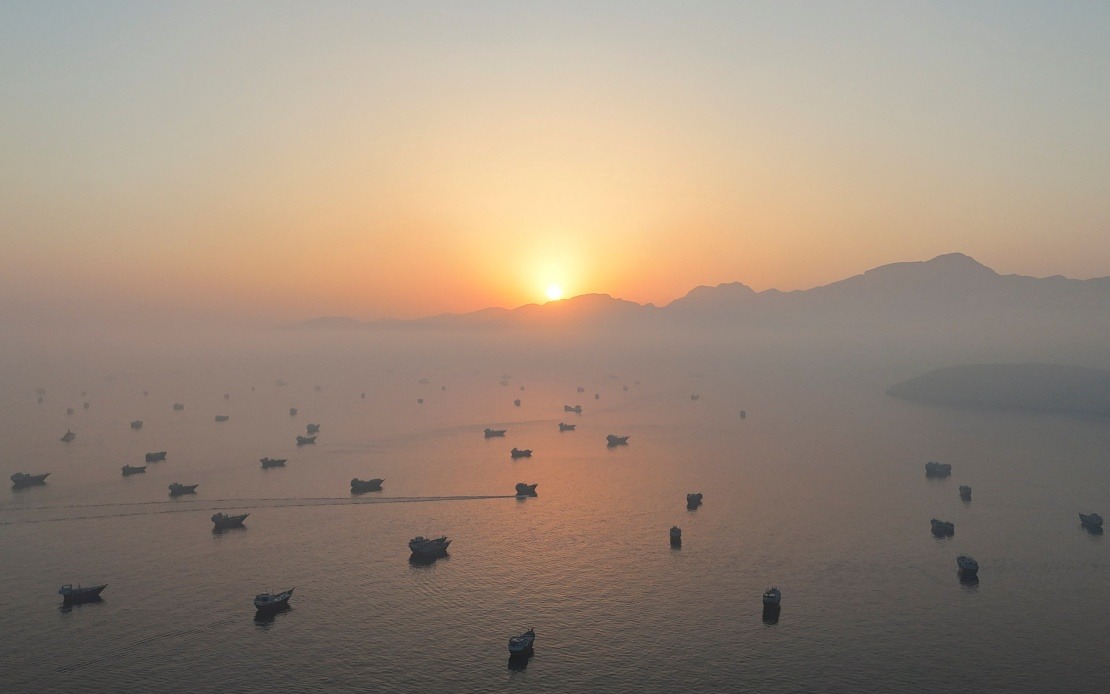
Iran has declared it will exercise exclusive authority over shipping operations through the Strait of Hormuz for the coming month, according to Foreign Minister Abbas Araghchi, who made the announcement at a Baghdad press conference. The assertion comes as the previously agreed ceasefire between Tehran and Washington shows signs of unravelling, with both sides engaging in fresh military confrontations that have intensified regional instability.
The strategic waterway, through which roughly one-third of the world's traded oil passes daily, represents one of the globe's most economically significant maritime chokepoints. Araghchi's declaration that Iran will "once again be placed entirely under Iranian administration within the next 30 days" underscores Tehran's willingness to weaponise control of this vital corridor to advance its geopolitical objectives. The language employed by the Iranian official—emphasising sole responsibility—appears designed to delegitimise any competing claims to authority and signal that no other regional or international actors will be permitted meaningful participation in strait management.
The foreign minister explicitly cautioned against what he characterised as interference or attempts to establish parallel governance structures, warning that such actions would "further complicate the situation, generate additional tensions, and delay the reopening of this strategically vital waterway." This framing suggests Iranian concerns about international maritime coalitions or security arrangements that might operate independently of Tehran's jurisdiction. For Malaysia and other Southeast Asian trading nations heavily dependent on Middle Eastern energy imports, the reinstatement of Iranian control raises serious questions about shipping safety, port congestion, and potential increases in insurance and transit costs.
The recent breakdown in US-Iran negotiations reflects deeper structural problems in their relationship. In February, when Israel and the United States first launched strikes against Iranian targets, Tehran responded by virtually closing the Strait of Hormuz through coordinated threats and attacks on commercial vessels. This blockade strategy demonstrated Iran's capacity to disrupt global trade flows and leverage maritime control as a bargaining chip in broader diplomatic disputes. By reverting to this tactic now, Iran appears to be signalling that negotiations have failed and it will rely on coercive measures to achieve its objectives.
The underlying agreement that briefly held centred on reopening the strait to normalised shipping traffic, contingent on a broader 60-day negotiating framework between Washington and Tehran. A critical provision of this accord stipulated that Iran would refrain from imposing transit fees on vessels during the talks, a compromise designed to preserve the waterway's accessibility while discussions proceeded. However, the current deterioration suggests this arrangement has dissolved, raising the prospect that Iran may now impose charges or restrictions that could fundamentally alter the economics of global energy trade.
Analysts monitoring the situation point to fee structures as a probable flashpoint in future negotiations. International maritime law imposes constraints on coastal states' authority to levy tolls on international straits, particularly those designated as international waters under the United Nations Convention on the Law of the Sea. Iran's potential assertion of unilateral fee authority would likely trigger legal and diplomatic disputes, as maritime powers including the United States, China, and European nations would resist arrangements they view as breaching established international norms. This tension between Iran's claimed sovereignty and globally recognised maritime law could become a defining challenge for regional stability.
Tehran has indicated it intends to convene discussions with Oman, a neighbouring state that maintains diplomatic ties with both Iran and Western powers, to address how best to proceed "in accordance with international law and in coordination with neighbouring states." Oman's role as a potential intermediary reflects the sultanate's longstanding position as a neutral diplomatic interlocutor in Gulf affairs. However, the emphasis on coordination with neighbouring states hints at Iran's desire to build a coalition supporting its maritime claims, potentially including countries such as the United Arab Emirates and Qatar, thereby isolating positions advocated by the United States.
For Malaysian policymakers and businesses, this escalation carries substantial practical implications. Malaysia's economy relies significantly on uninterrupted energy supplies from the Gulf, with crude oil and liquefied natural gas representing critical inputs for petrochemical industries and power generation. Disruptions to Hormuz shipping directly translate into supply uncertainties, price volatility, and heightened operating costs for Malaysian manufacturers and utilities. Regional shipping companies and logistics firms likewise face mounting insurance premiums and potential route modifications as underwriters assess heightened risks.
The broader context reveals a pattern of escalating brinksmanship between Washington and Tehran, with each side progressively more willing to weaponise control over critical infrastructure. The unravelling of the ceasefire suggests that underlying disputes—ranging from nuclear programme restrictions to regional proxy conflicts—remain fundamentally unresolved. Neither party appears willing to make meaningful concessions, indicating that the current impasse may extend beyond the 30-day window Iran has announced, with implications for global energy markets throughout the period.
Regional powers including Saudi Arabia, the United Arab Emirates, and other ASEAN-aligned Gulf partners are closely monitoring developments, as they too face potential disruptions to their own trade and security interests. The international community's capacity to impose constraints on Iranian actions appears limited, given Beijing and Moscow's reluctance to support measures perceived as hostile to Tehran. Consequently, the Strait of Hormuz may remain a contested zone of great power competition for the foreseeable future, with Southeast Asian nations forced to navigate the geopolitical complexities this situation creates.

