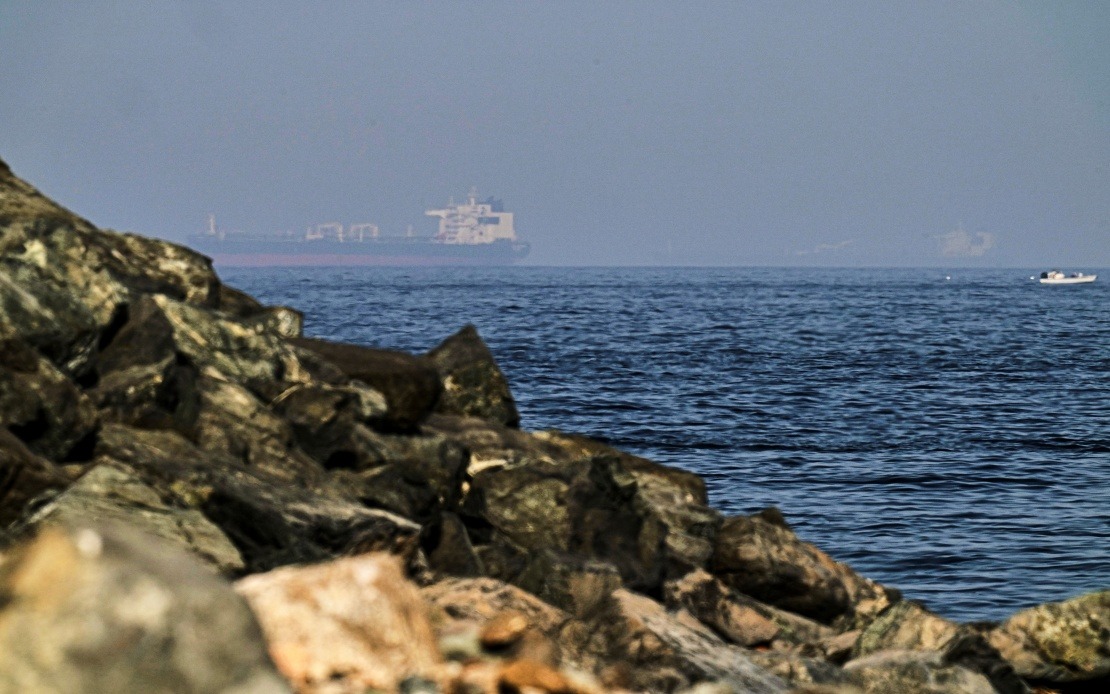
Iran and Oman have reached an agreement to establish a temporary shipping corridor through the Strait of Hormuz, according to Major General Mohsen Rezaei, who heads Iran's Supreme National Security Council. The announcement, made during an interview with Al-Manar TV, signals a potentially significant shift in one of the world's most strategically crucial waterways, though the arrangement comes with substantial political conditions attached.
The corridor structure reflects the geographic division of the strategically vital waterway between the two countries. Half of the passage falls within Iranian territorial waters while the other half sits in Omani waters, with both nations sharing responsibility for managing vessel entry and exit procedures. Rezaei emphasised that the corridor's precise location has been clearly delineated, providing a defined maritime route through the centre of the strait that addresses longstanding concerns about freedom of navigation in this critical choke point.
However, the temporary nature of this arrangement underscores its conditional foundation. Rezaei explicitly tied the corridor's full reopening and expansion to Washington's willingness to meet a comprehensive set of Iranian demands. Chief among these conditions is a commitment to ending multiple conflicts across West Asia, particularly the wars in Lebanon and Gaza. This linkage reflects Iran's broader strategic position that maritime security in the Persian Gulf cannot be divorced from the region's wider geopolitical turmoil.
The Iranian security chief laid out additional prerequisites that Washington must satisfy before any sustainable understanding can be reached. These include the withdrawal of Israeli forces from Lebanese territory, cessation of military operations in Gaza, and an end to Israeli attacks on Syria. Rezaei emphasised that the region functions as an interconnected system where instability in one nation cascades economically and strategically across borders, creating what he characterised as an interconnected chain of security challenges.
Rezaei's remarks reveal deep structural mistrust between Washington and Tehran, which he described as a profound chasm that cannot be bridged by temporary measures alone. The United States, he suggested, must demonstrate genuine seriousness in implementing commitments before any durable confidence can be established. This framing positions the shipping corridor as a provisional goodwill gesture rather than a permanent resolution, contingent upon fundamental shifts in American Middle Eastern policy.
The announcement also carries implications for Malaysia and other Southeast Asian economies heavily dependent on energy imports flowing through the Strait of Hormuz. As one of the world's most critical maritime chokepoints, any restrictions on shipping through this passage directly affect regional energy security and trade costs. The agreement with Oman potentially provides some relief from concerns about transit disruptions, though uncertainty persists regarding how long the arrangement will remain operational.
Rezaei addressed Iran's approach to potential escalation with the United States and Israel, describing a strategic evolution in Iranian military doctrine. He noted that Iran has progressively expanded the scope of its responses from initial restraint in targeting US bases in Gulf states to eventually including American installations across other regions. This incremental approach, according to Rezaei, allows for humanitarian considerations while building regional and international support for Iranian actions.
On economic dimensions, Rezaei cautioned that Iran would respond to any American economic escalation with countermeasures targeting US economic interests throughout the region. This warning reflects a broader shift in Tehran's strategy toward economic pressure tactics, which the Iranian security official interpreted as evidence that military force alone has proven insufficient to achieve Washington's objectives. The escalating economic dimension adds another layer of complexity to regional tensions.
Rezaei's comments on Turkish relations suggest that Tehran views Ankara as a potential stabilising force rather than a vector for pressure. He highlighted the depth of bilateral trade ties and recalled Türkiye's historical role as an essential trade corridor during the Iran-Iraq War in the 1980s. By emphasising these economic connections, Iran appears to be reinforcing relationships with key regional players who might serve as counterweights to American pressure.
The Iranian official characterised Iran's relationship with Lebanon as historically profound and enduring, pointing to centuries-old scholarly connections between Jabal Amel and Iran. This historical framing underpins Tehran's stated commitment to supporting Lebanon with all available resources, a position that carries significant implications given ongoing Israeli military operations in southern Lebanon and the role of Hezbollah as a major Iranian ally.
Rezaei's assessment of the military situation regarding Israeli operations suggests that Tehran views Israeli forces as having reached strategic limitations in their capacity to advance toward Beirut and southern Lebanese suburbs. He attributed this to casualties inflicted by Hezbollah over recent months combined with what he termed the full impact of the Iranian threat. This analysis, while reflecting Iran's perspective, indicates a confidence in deterrent capabilities that will likely influence calculations about potential military escalation.
For Southeast Asian policymakers and energy markets, the implications remain significant but uncertain. While the temporary corridor provides immediate relief regarding transit concerns, the conditional nature of the arrangement and its dependence on geopolitical developments suggest continued volatility. Malaysia and other regional economies with substantial oil and gas imports must monitor developments in these West Asian conflicts closely, as any deterioration could rapidly impact energy security and shipping insurance costs throughout the region.

