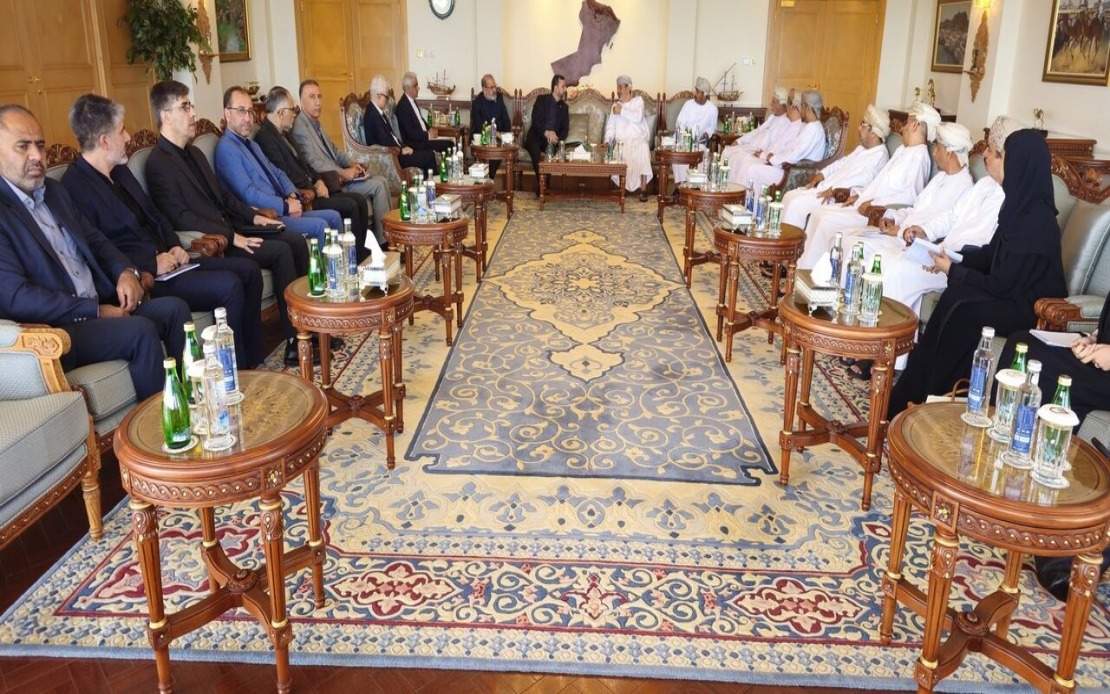
Iran and Oman have taken a significant diplomatic step by holding the inaugural session of their Joint Hormuz Committee, signalling renewed regional cooperation over one of the world's most critical maritime chokepoints. The meeting, announced on June 29 by Iranian Deputy Foreign Minister for Legal and International Affairs Kazem Gharibabadi, represents a formal mechanism to coordinate positions on the future management and governance of the Strait of Hormuz, through which approximately one-third of global seaborne traded oil passes annually.
Gharibabadi revealed that he travelled to Oman on Monday to meet with Oman's Ambassador-at-Large Abdulaziz Al Hinai for this historic first session. The two officials engaged in substantive discussions addressing immediate concerns affecting maritime operations through the Strait, while simultaneously laying groundwork for longer-term institutional arrangements. This bilateral initiative reflects a broader understanding that the Strait's management requires coordinated diplomacy between the adjacent regional powers rather than unilateral positioning.
The committee's mandate centres on achieving consensus regarding the governance of shipping operations through the Strait, encompassing service provision frameworks and the allocation of associated operational costs. These practical considerations carry substantial implications for international commerce, as disruptions to traffic flow or uncertainty over maritime fees directly impact global energy prices and supply chains. Both nations appear intent on developing arrangements compliant with established international maritime standards, potentially providing reassurance to the international shipping community that any new structures will operate within recognised legal frameworks rather than imposing arbitrary restrictions.
Gharibabadi emphasised that discussions proceeded within the context of Paragraph 5 of the Islamabad Memorandum of Understanding and the fundamental principle of littoral state sovereignty. This framing is crucial, as it anchors the bilateral initiative in recognised international maritime law and rejects any external interference in arrangements governing waters adjacent to Iranian and Omani territory. For Southeast Asian maritime observers, particularly those concerned with freedom of navigation principles, the emphasis on honouring existing international conventions provides some assurance that the committee will not pursue arrangements conflicting with broader global maritime norms.
The committee's establishment builds directly on diplomatic momentum generated by a June 23 joint statement issued following visits by Iranian Foreign Minister Abbas Araghchi and negotiating head Mohammad Bagher Ghalibaf to Muscat. That statement explicitly reaffirmed both nations' commitment to ensuring that all arrangements affecting the Strait respect the sovereignty and legitimate rights of the two littoral states. The language deliberately positions Iran and Oman as equal partners in governance discussions rather than establishing a hierarchical relationship, a diplomatic sensitivity important given historical power dynamics in the region.
For Malaysia and other Southeast Asian nations heavily dependent on Strait of Hormuz transit for energy imports, the establishment of formal bilateral mechanisms carries both reassuring and uncertain dimensions. On one hand, institutionalising discussions reduces the risk of ad hoc disruptions stemming from bilateral tensions. The creation of a structured committee suggests both parties recognise mutual interests in maintaining stable, predictable maritime operations. Conversely, the opacity surrounding the committee's internal workings and decision-making processes leaves open questions about how third-country interests will be considered in future governance arrangements.
The timing of this initiative reflects broader regional recalibration following years of heightened tensions and periodic incidents affecting shipping in the Strait. Oman has historically positioned itself as a neutral diplomatic actor in the Persian Gulf region, maintaining pragmatic relations across factional divides. Its willingness to host this committee mechanism and its appointment of a dedicated Ambassador-at-Large underscore Muscat's commitment to stabilising one of the world's most strategically consequential waterways. Iran, meanwhile, appears to recognise that sustainable arrangements for the Strait require negotiated consensus with adjacent states rather than unilateral assertions of control.
The committee's focus on aligning governance frameworks with international standards represents an implicit acknowledgement that sustainable maritime arrangements must accommodate the interests and regulatory expectations of the global shipping industry. This orientation potentially creates space for dialogue with maritime insurance companies, international shipping associations, and flag states concerned about operating conditions in the Strait. The emphasis on cost-sharing mechanisms through established service provision also suggests the committee intends to create legitimacy for any fees or charges by demonstrating that funds support genuine maritime safety and navigation services.
Regional observers will scrutinise whether this bilateral committee framework eventually incorporates other Gulf states with Strait interests, potentially evolving into a multilateral governance mechanism. Current composition limited to Iran and Oman leaves unaddressed the positions and concerns of the United Arab Emirates, Saudi Arabia, and other littoral states. The committee's early success in establishing working procedures and generating tangible outputs may determine whether other states seek inclusion or whether they develop alternative frameworks.
For global energy markets and international commerce, the emergence of this institutionalised dialogue mechanism should gradually reduce uncertainty premiums associated with Strait transit. Shipping companies and energy traders have incorporated significant risk valuations reflecting potential disruptions; evidence of sustained bilateral cooperation could eventually moderate these contingency costs. However, meaningful improvements in market sentiment will require extended periods of stable operations and transparent communications demonstrating that the committee has genuinely reduced sources of friction between the two states.
The initiative also carries symbolic significance for broader Iranian diplomatic strategy. By prioritising regional cooperation mechanisms and establishing formal committees focused on practical maritime governance, Tehran signals willingness to engage in structured dialogue on issues of mutual concern. This approach contrasts with more confrontational posturing and potentially creates openings for expanded regional cooperation on other maritime and security matters. Oman's participation reinforces its reputation as the Gulf's most consistently pragmatic diplomatic actor, willing to facilitate dialogue between parties with substantial differences.
Moving forward, the Joint Hormuz Committee will face the substantial challenge of translating diplomatic goodwill into concrete operational frameworks acceptable to both governments and satisfactory to international stakeholders. The committee's success will ultimately be measured by its capacity to reduce friction over maritime operations, provide transparent governance, and maintain stability without imposing arrangements that alienate the international shipping community or create new vulnerabilities. For Malaysia and regional trading partners, continued monitoring of this mechanism's evolution remains essential to understanding how future Strait governance may affect shipping costs, transit times, and energy security.

