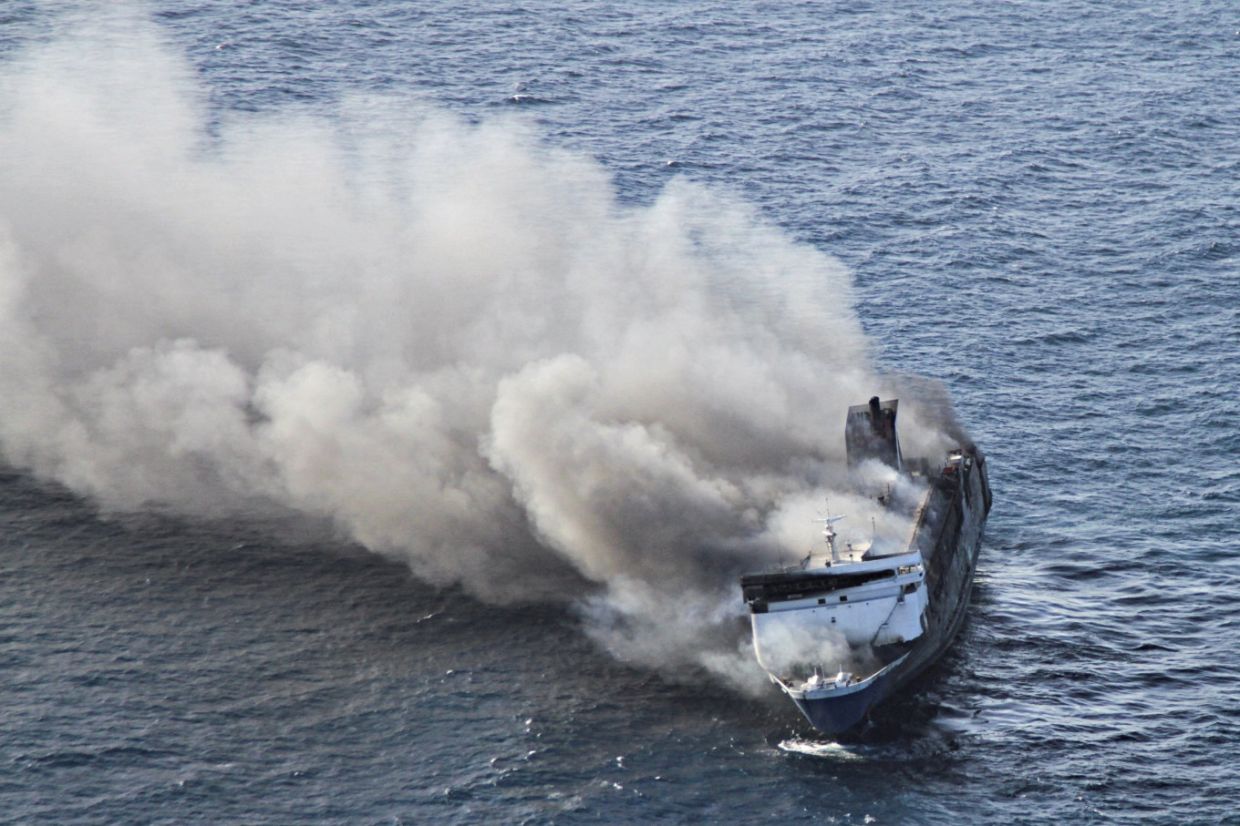
A catastrophic fire aboard the KMP Mutiara Sentosa II has reignited serious questions about the adequacy of maritime safety supervision in Indonesia. The vessel, operating between Surabaya in East Java and Makassar in South Sulawesi, caught fire in the early hours of Sunday, August 2, resulting in at least five confirmed deaths and two people still missing. With 236 passengers—predominantly logistics truck drivers—and 39 crew members aboard the 160-meter-long ferry at the time, the incident has become a focal point for broader concerns about whether Indonesia's regulatory framework can adequately protect those who depend on the nation's extensive maritime transport network.
Witnesses and survivors paint a disturbing picture of chaos during the evacuation, with the vessel's crew reportedly failing to execute organized emergency procedures. According to Udin Karo Karo, chairman of the Makassar–Surabaya Truck Drivers Association, approximately 40 percent of the drivers aboard managed to save themselves through improvised means rather than following coordinated evacuation protocols. Many passengers were forced to leap into the sea equipped only with life jackets, a grim testament to the apparent absence of functional lifeboats or inflatable rescue rafts during the emergency. Such failures stand in sharp contrast to the stringent safety standards that maritime regulations should mandate, prompting Udin to demand both a thorough investigation and meaningful accountability from port authorities and maritime regulators alike.
The deeper structural weaknesses exposed by this tragedy extend far beyond the immediate technical failures of the vessel. Edi Priyanto, deputy chairman of the East Java Occupational Safety and Health Council, has articulated a critical insight: the incident reveals troubling deficiencies in the operating company's safety culture, organizational learning capacity, and risk management frameworks. When fire swept through the KMP Mutiara Sentosa II, it was not merely a matter of equipment malfunction but rather the culmination of multiple systemic vulnerabilities operating in tandem. These vulnerabilities suggest that safety management at the operational level may be treated as a bureaucratic checkbox rather than an embedded commitment to protecting human life.
Particularly alarming is the historical pattern surrounding PT Atosim Lampung Pelayaran, the company operating the ill-fated vessel. Five years prior, another ferry bearing the same owner's name—the KMP Mutiara Sentosa I—caught fire near the same waters of Madura, also resulting in five deaths. The recurrence of such catastrophic events within the same company raises uncomfortable questions about whether regulatory actions taken after the 2017 incident actually led to meaningful improvements in safety practices and maintenance standards. Edi's observation that lessons from previous accidents may not have been properly translated into operational practice speaks to a troubling cycle where incidents occur, investigations conclude, recommendations are filed, and yet fundamental operational culture remains largely unchanged.
The investigation must transcend the narrow question of fire causation, according to safety experts. Rather, authorities need to examine why flames spread so rapidly throughout the vessel, whether emergency response systems functioned as designed, and whether the crew possessed adequate training to implement safety procedures under crisis conditions. These questions collectively point toward systemic gaps: inadequate maintenance schedules, insufficient crew preparation, and possibly inadequate oversight of safety management systems by both the operator and regulatory authorities. Transportation Minister Dudy Purwagandhi acknowledged this need for comprehensive evaluation, noting that the government would conduct a full assessment of PT Atosim Lampung Pelayaran only after the National Transportation Safety Committee completed its investigation—a process that underscores how incident response in Indonesia often proceeds methodically rather than with urgency.
The timing of the KMP Mutiara Sentosa II tragedy heightens concern about whether Indonesia faces a systemic maritime safety crisis rather than isolated mishaps. Merely one month before the ferry fire, another vessel carrying more than 70 passengers sank near Selayar in South Sulawesi, claiming at least four lives and leaving 14 people missing. These successive disasters within a tight timeframe suggest patterns that transcend individual operator negligence or technical failure. Abdul Hadi, a member of the House of Representatives Commission V which oversees transportation and infrastructure, articulated this concern pointedly: rapid-fire maritime accidents should no longer be dismissed as isolated incidents but rather understood as symptomatic of broader regulatory inadequacy.
The root cause analysis must confront uncomfortable realities about how Indonesia's maritime certification and inspection regimes function in practice. Safety inspections risk becoming routine administrative procedures rather than rigorous evaluations of actual vessel seaworthiness. Certificates issued by regulatory authorities may reflect compliance with paperwork requirements rather than genuine operational readiness. As Abdul Hadi emphasized, seaworthiness certificates and safety procedures must authentically represent whether vessels are genuinely safe, not merely whether operators have satisfied checklist requirements. When passengers entrust their lives to ferry operators, that trust depends on inspection and certification processes that maintain uncompromising standards rather than accepting minimal compliance.
The implications for maritime safety across Southeast Asia should not be understated. Indonesia, with its archipelagic geography spanning thousands of islands, necessarily relies on maritime transport for both passenger movement and cargo logistics. The sector employs hundreds of thousands of workers and serves millions of passengers annually. If major operators can repeatedly experience catastrophic fires—and if regulatory responses prove insufficient to prevent recurrence—then the entire regional transport ecosystem faces elevated risk. Malaysian readers, many of whom rely on cross-border maritime services or have family members working in Southeast Asian shipping, should recognize that safety failures in one nation's maritime sector create risks that ripple across regional waters.
The accountability framework surrounding this incident remains uncertain. While authorities have promised investigation and evaluation, the company has not been immediately available for comment, and the pathway from investigation to meaningful sanctions remains unclear. Udin Karo Karo's call for compensation for victims reflects a fundamental principle: when commercial operators profit from transporting passengers, they bear responsibility for maintaining safety standards that reflect the value of human life rather than minimizing operational costs. The absence of visible lifeboats and functioning emergency protocols aboard a vessel carrying hundreds of people suggests a fundamental disregard for passenger safety that extends beyond negligence into the realm of criminal negligence.
Government responses must move beyond promise into concrete action. Dudy Purwagandhi's stated intention to conduct evaluation following the KNKT investigation is appropriate procedurally, but Indonesia's maritime sector requires immediate interim measures: heightened inspections of aging Ro-Ro vessels, mandatory crew training demonstrations, and surprise safety audits of major operators. The fact that PT Atosim Lampung Pelayaran's safety record has already been compromised should trigger precautionary suspension pending investigation rather than continued operation pending bureaucratic evaluation. Passengers boarding ferries should be able to rely on the assumption that regulatory authorities have already verified seaworthiness, not that regulators will investigate only after catastrophic failure.
The KMP Mutiara Sentosa II fire represents a critical inflection point for Indonesia's maritime safety regime. The question now is whether authorities will treat this as yet another tragedy to investigate or as a catalyst for systemic reform. Industry observers and safety advocates across Southeast Asia will be watching closely to see whether Indonesian regulators can implement meaningful changes that prioritize passenger safety over operator convenience. Until robust safety culture becomes embedded at operational levels—backed by inspectors with genuine authority and willingness to enforce standards—maritime tragedies will continue to mark Indonesia's shipping sector, undermining confidence in regional transport networks and endangering thousands of passengers who depend on ferries for their livelihoods and daily mobility.

