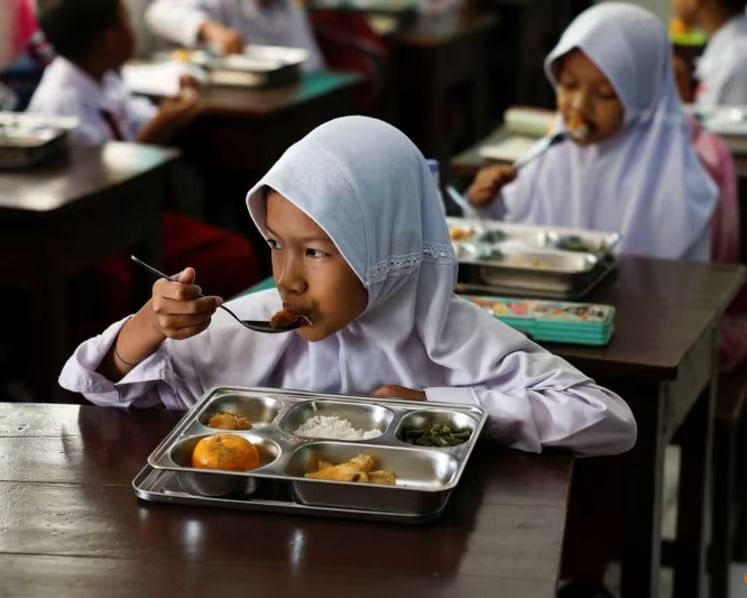
The Indonesian government's ambitious free meals initiative has experienced fresh leadership turbulence, with the head of the National Nutrition Agency announcing her resignation on Wednesday. Nanik Sudaryati Deyang, who assumed leadership of the agency only in June, cited medical reasons for stepping down, becoming the second senior official to depart the beleaguered programme within little more than a month. Her departure underscores the mounting difficulties facing one of President Prabowo Subianto's most significant electoral commitments and raises further questions about the viability of the sprawling public feeding scheme.
Nanik's decision to step aside came amid mounting pressure from multiple quarters, including substantial budget reductions and an ongoing criminal investigation into programme operations. In statements posted to social media, she indicated that a heart condition requiring urgent overseas treatment had forced her hand, with her physician warning of arterial complications resulting from occupational stress. The timing of her departure, following shortly after her predecessor's dismissal and arrest on corruption charges, highlights the toxic environment surrounding the agency's management and the broader scrutiny now attached to the initiative.
The National Nutrition Agency has become a focal point for deepening concerns about the programme's implementation and Indonesia's broader fiscal position. The initial administration of the free meals scheme, launched in January 2025, encountered multiple setbacks including logistical bottlenecks, complaints about food quality, and several incidents of mass food poisoning that damaged public confidence. These operational failures have added layers of complexity to an already contentious project, with critics questioning whether the government possessed the administrative capacity to execute such a large-scale intervention.
Budget constraints now represent an acute threat to the programme's continuation and expansion. The National Nutrition Agency announced this week that allocations for 2026 had been reduced for the second time, declining from 268 trillion rupiah to 229 trillion rupiah, equivalent to approximately $12.79 billion. This represents a dramatic shortfall compared to the original budgetary allocation of 335 trillion rupiah, meaning the agency is now operating on funding more than 100 trillion rupiah below initial projections. Officials acknowledged that further reductions remained possible pending an additional budgetary review, creating profound uncertainty about future operations.
The successive budget cuts have forced the programme to scale back its ambitions considerably. Originally conceived to deliver free meals to 83 million individuals encompassing schoolchildren and pregnant women, the initiative has yet to reach full operational capacity. Prior to the latest budgetary adjustment, the agency reported that meals had been provided to 62.5 million people, leaving a significant gap between intended coverage and actual delivery. The widening disparity between initial promises and achievable outcomes reflects the collision between Prabowo's expansive campaign pledges and the practical constraints of government budgeting.
Nanik's predecessor faced more severe consequences than mere resignation. The previous agency chief was dismissed by Prabowo last month and subsequently arrested following allegations of corruption directly connected to the multibillion-dollar programme. A raid on the agency's offices preceded these legal actions, suggesting that investigative authorities suspected systematic mismanagement or financial impropriety. The swift transition from office to arrest intensified scrutiny of the entire institutional structure overseeing the initiative and raised questions about whether corruption had compromised the programme's integrity from inception.
Responding to accumulating criticism that the free meals scheme represented merely political theatre, Nanik pushed back against characterisations of the programme as a politically motivated gesture. She framed the initiative instead as a legitimate public health intervention designed to address childhood malnutrition, attempting to reorient public debate away from questions of electoral posturing toward substantive nutritional outcomes. This rhetorical repositioning reflects broader government efforts to defend the programme against detractors who view it as expensive electioneering disconnected from genuine development priorities.
Prabowo has indicated that institutional reforms may accompany the leadership transition. Nanik mentioned that the president was considering establishing a supervisory board to provide administrative oversight of the agency, with herself potentially leading this new body. Such governance restructuring might represent an attempt to restore confidence in the programme's management and introduce external accountability mechanisms capable of preventing future scandals. However, the effectiveness of such reforms remains uncertain, particularly given the depth of institutional dysfunction that has already surfaced.
The succession question remains unresolved. While Nanik indicated that her replacement would emerge from within the agency hierarchy and would be junior to her in organisational rank, the National Nutrition Agency provided no formal announcement regarding her successor or the timeline for appointing new leadership. This vacuum at the top of the institution responsible for delivering meals to tens of millions of Indonesians creates obvious management risks and suggests that continuity may suffer during the transition period.
For Malaysia and other Southeast Asian observers, the Indonesian experience offers cautionary lessons regarding the administrative demands of universal social programmes. The free meals initiative, conceived as a straightforward expression of presidential commitment to welfare, has instead exposed the intricate challenges of coordinating nationwide food distribution, maintaining quality standards, preventing fraud, and securing consistent funding. These difficulties are not unique to Indonesia but reflect common implementation obstacles that plague large-scale public provision across the region. The programme's unfolding difficulties may influence how other Southeast Asian governments approach similarly ambitious welfare projects, encouraging more realistic expectations about implementation timelines and administrative capacity.

