Indonesia's ambitious free nutritious meal programme has become a flashpoint for public discontent, spawning waves of competing demonstrations across the archipelago that reflect deeper anxieties about government spending, institutional integrity and economic management under President Prabowo Subianto's administration. The escalating protests reveal significant fractures in how different segments of Indonesian society view one of the government's most expensive and visible welfare initiatives, with students, workers, farmers and beneficiaries increasingly mobilising to push conflicting agendas.
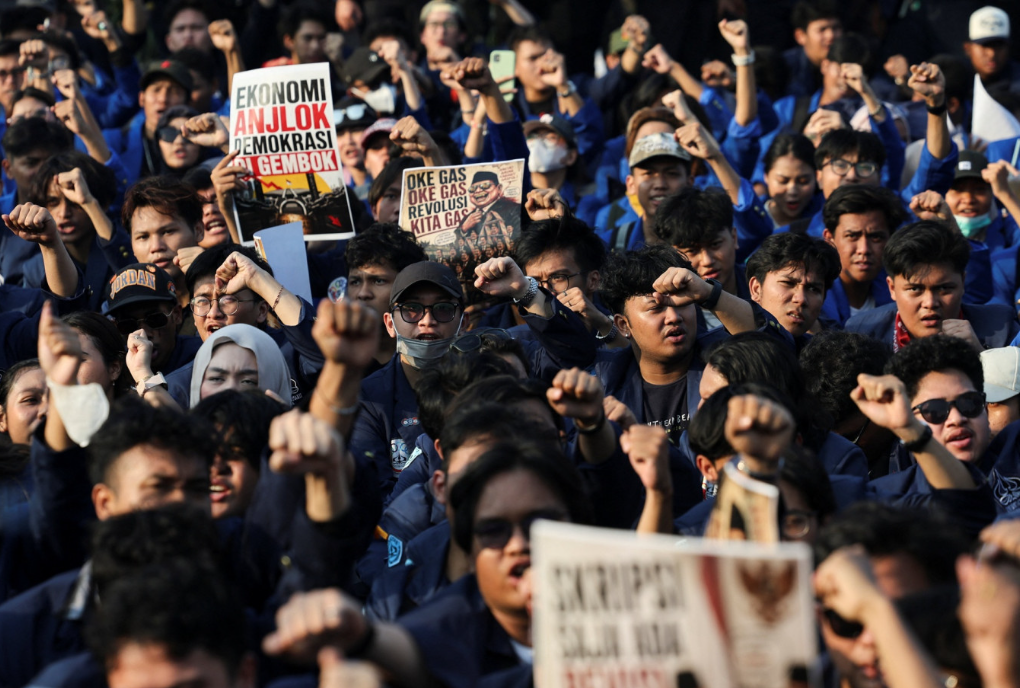
Students have emerged as the primary force pushing for scrutiny of the programme, which launched in January of last year with an initial ambition to address malnutrition and child stunting among Indonesia's 83 million intended beneficiaries, including schoolchildren and pregnant women. In Bali, hundreds of university students congregated outside the regional legislative building in Denpasar on Monday demanding a comprehensive audit by the Supreme Audit Agency and questioning whether such lavish expenditure makes sense when the government is simultaneously implementing austerity measures elsewhere. Their concerns centre on three interconnected problems: the sheer fiscal burden of allocating Rp335 trillion annually for the initiative, documented instances of food poisoning linked to meal distribution, and mounting allegations of financial misappropriation within the National Nutrition Agency that oversees implementation.
The institutional corruption dimension has sharpened public criticism significantly. Three senior officials from the National Nutrition Agency were arrested on allegations of graft, an event that prompted thousands of students affiliated with the Indonesian Islamic Student Movement to gather outside the House of Representatives in Jakarta demanding a complete overhaul of the agency's leadership structure. These demonstrations, which drew participants from multiple universities including Trisakti, Mercu Buana and Esa Unggul, articulated a broader indictment of what protesters characterised as wasteful state expenditure, with the free meal programme becoming emblematic of a government that throws money at problems without adequate oversight or accountability mechanisms.
Yet the narrative is considerably more complex than simple opposition to wasteful spending. The government has already responded to criticism by trimming the budget allocation to Rp228.4 trillion and introducing efficiency measures including suspension of meals during the late June through mid-July school holiday period and halting distribution in 76 schools located in affluent areas where families presumably possess greater purchasing power. These adjustments represent a tangible recognition of fiscal constraints and concerns about targeting effectiveness, even as senior government officials, including the Government Communications Agency head Muhammad Qodari, insist the programme will continue albeit in refined form.
The opposition to proposed cuts has mobilised hundreds of kitchen workers and agricultural producers who depend directly on programme expenditure for their livelihoods. In Batam, Riau Islands, approximately 1,500 daily-wage workers employed in meal preparation staged their own demonstration opposing reductions in distribution from six to five days weekly, arguing that suspension during school holidays would devastate household incomes already stretched thin by cost-of-living pressures. This perspective illuminates a dimension largely absent from student-led critiques: the programme's function as de facto employment support and stimulus for the agricultural sector, which absorbs substantial volumes of locally-grown commodities including rice, corn, cassava and seasonal vegetables.
Local farmers and agricultural advocates have similarly rallied in support of programme continuation, viewing it as a critical market for produce that has helped stabilise and improve commodity prices in regions like Bandar Lampung, Lampung. Field coordinators emphasised that the initiative benefits not merely direct recipients but entire supply chains, rural economies and communities dependent on agricultural income. This perspective reflects how major welfare programmes inevitably become woven into broader economic ecosystems, creating constituencies whose material interests transcend the nominal purpose of the intervention. Suspending or severely curtailing the programme therefore carries consequences beyond the immediate nutritional status of target populations, affecting employment, farm incomes and rural price stability across multiple provinces.
Pregnant women, breastfeeding mothers and toddlers constitute another constituency requiring year-round nutritional support regardless of school calendars, as opponents of the holiday suspension point out. The timing of school breaks often coincides with agricultural seasons and family periods when access to affordable nutrition becomes more rather than less critical. This consideration complicates the efficiency argument, suggesting that some proposed cuts may inadvertently undermine the programme's foundational health objectives in pursuit of budgetary savings.
The underlying tension reflects fundamental questions about how Indonesia balances fiscal discipline with welfare provision during an era of global economic uncertainty and domestic spending pressures. President Prabowo inherited an economy navigating multiple headwinds including currency volatility and infrastructure investment demands, forcing difficult choices about resource allocation. The free meal programme, despite its genuine social benefits, represents a substantial ongoing commitment that competes with other priorities for limited fiscal space. Yet the competing demonstrations suggest that different communities reasonably perceive this trade-off differently based on their economic positions and dependencies.
For Malaysian observers, the Indonesian experience offers instructive parallels regarding the political economy of large-scale welfare initiatives. Malaysia's own food assistance and school meal programmes similarly navigate tensions between fiscal sustainability, targeting accuracy, corruption risk and livelihood impacts for workers and suppliers. The Indonesian protests underscore how such programmes, once established, rapidly accumulate stakeholder constituencies whose interests resist retrenchment, even when genuine efficiency concerns warrant adjustment. The corruption allegations against National Nutrition Agency officials also resonate with Southeast Asian governance challenges, where large-scale welfare programmes create procurement opportunities and distribution networks vulnerable to misappropriation without robust institutional oversight.
The student movement's focus on transparency and institutional accountability reflects broader regional youth activism around governance quality. Indonesian university students, organised through movements like PMII and HMI, have emerged as consequential civil society actors willing to challenge government spending and demand institutional reforms. This represents a potentially stabilising force insofar as it channels discontent into institutional rather than extra-institutional channels, though it also complicates policymaking by subjecting every major initiative to sustained scrutiny and requiring administrators to justify expenditure publicly and comprehensively.
Moving forward, the viability of Indonesia's free meal programme will depend on whether the government can simultaneously maintain fiscal discipline, demonstrate genuine commitment to rooting out corruption, and preserve sufficient benefits to justify the programme's continuation. The current posture of targeted cuts and efficiency measures without complete suspension represents a pragmatic middle path that attempts to acknowledge both cost concerns and livelihood dependencies. However, the intensity of competing mobilisations suggests that no adjustment will satisfy all constituencies, and that the programme will remain a flashpoint for broader debates about government priorities, institutional integrity and social responsibility throughout Prabowo's administration.