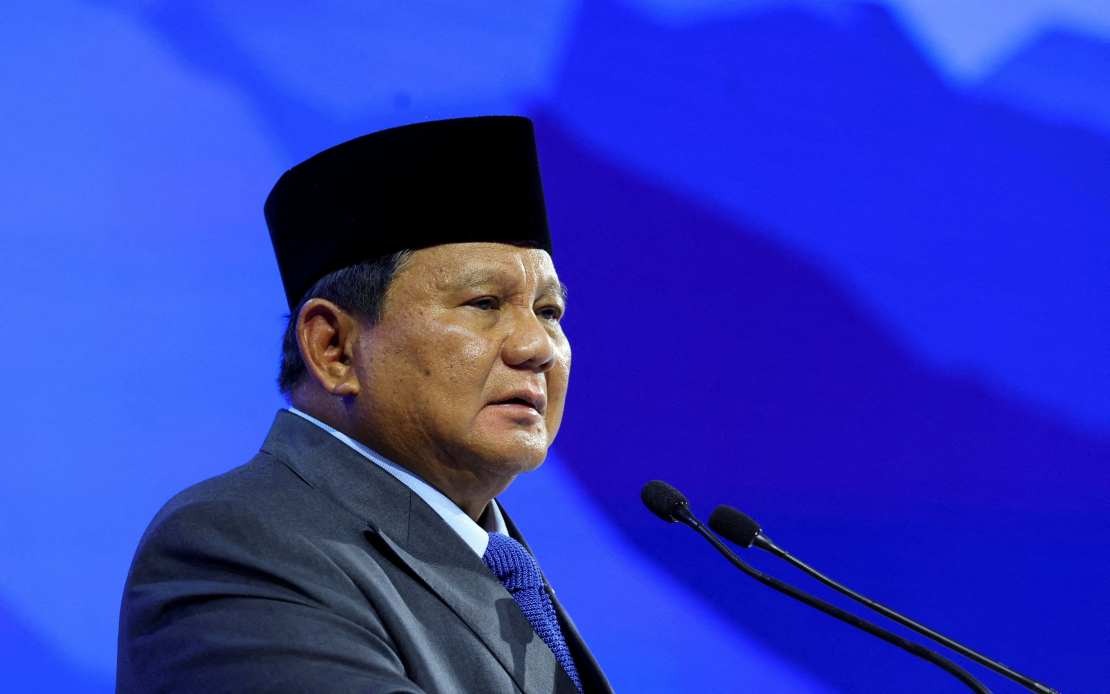
Indonesia's forest and land fires are showing signs of improvement, according to President Prabowo Subianto, who expressed cautious optimism that the country's ongoing battle against the blazes could reach conclusion within the next fortnight. Speaking at the launch of Indonesia's 100-gigawatt solar power programme in Jembrana, Bali, on Tuesday, the president indicated that coordinated efforts across several regions have begun yielding positive results in stemming the spread of fires that have plagued the archipelago.
The magnitude of the government's response underscores the severity with which authorities are treating the disaster. Prabowo disclosed that substantial operational capacity has been deployed nationwide, encompassing dozens of helicopters and more than a dozen fixed-wing aircraft dedicated to fire suppression operations. Beyond aerial assets, the response includes hundreds of water wells and pumps strategically positioned across affected zones, supplemented by thousands of personnel drawn from various government agencies, military units, and emergency management services.
Prabowo's optimism must be understood within the context of regional climate dynamics that have intensified the fire risk. He emphasised that Indonesia is currently experiencing exceptionally strong El Niño conditions this year, potentially among the most severe on record. This meteorological phenomenon typically brings drier conditions to Southeast Asia, creating ideal circumstances for rapid fire propagation and complicating containment efforts. The president acknowledged that this climate reality demands heightened vigilance and sustained preparedness from all stakeholders involved in fire management operations.
To demonstrate the government's commitment and gain firsthand understanding of the situation, Prabowo has undertaken personal inspection tours of the affected regions. Last Saturday, he travelled to West and Central Kalimantan, where he directly observed firefighting operations and provided on-site presidential leadership. His visit to Sumatra on Monday continued this hands-on approach, allowing him to assess the scale of operations and coordinate response mechanisms across Indonesia's most fire-prone provinces.
The president praised the operational effectiveness demonstrated by regional administrations, relevant ministries and agencies, military personnel, police forces, and disaster management authorities. His assessment suggests that institutional coordination, which often proves challenging across Indonesia's archipelago, has functioned smoothly in managing this crisis. This collaborative framework involves numerous stakeholders with distinct mandates and operational procedures, yet appears to be functioning with sufficient cohesion to generate tangible progress.
The forest fire crisis arrives amid broader disaster management challenges confronting Indonesia. The country recently experienced a devastating earthquake that struck the Flores region in East Nusa Tenggara (NTT) on August 15. The magnitude 7.7 tremor claimed 103 lives, left 1,666 people injured, and displaced 185,131 residents as of Tuesday afternoon. Subsequent seismic activity has been recorded extensively, with the National Disaster Management Agency (BNPB) documenting 7,029 aftershocks, including 141 that were perceptible to local populations.
Prabowo referenced the government's rapid response to the NTT earthquake as evidence of institutional capacity for disaster management. He highlighted how the administration deployed resources with speed and scale that external observers characterised as impressive, suggesting that competent crisis response mechanisms exist within the government apparatus. He also alluded to earlier responses, such as relief efforts following disasters in Aceh, positioning the current forest fire response within a broader narrative of government effectiveness.
For Malaysian and Southeast Asian observers, Indonesia's forest fire situation carries particular significance. Transboundary haze has historically affected Malaysia, Singapore, and other regional neighbours, creating public health hazards, economic disruption, and diplomatic tensions. While Prabowo's timeframe for resolving the fires within one to two weeks suggests containment rather than complete elimination, the deployment of substantial resources indicates serious commitment. Should these optimistic projections materialise, neighbouring countries would benefit substantially from reduced air quality impacts and corresponding health and economic effects.
The sustainability of Indonesia's fire management efforts remains a longer-term concern. While military and disaster management resources have proven effective in responding to acute crises, addressing the underlying causes of forest degradation and agricultural practices that facilitate fire spread requires sustained policy attention. The solar power programme launch, occurring simultaneously with fire management operations, symbolises the government's recognition that energy transition represents part of the broader environmental resilience strategy.
The convergence of El Niño conditions and ongoing forest clearing activities underscores structural vulnerabilities in regional environmental management. Even as current fires show signs of control, the climatic patterns supporting fire risk will persist throughout the remainder of the El Niño episode. This reality suggests that while Prabowo's two-week projection may prove accurate for severe active fires, lower-level fire incidents and prevention efforts will likely require continued attention throughout the dry season.
Regional governments and international observers will closely monitor whether the predicted resolution timeline materialises. Success would demonstrate institutional capacity improvements in disaster response, while setbacks would raise questions about resource allocation and coordination effectiveness. For Malaysia and Singapore, outcomes in Indonesia's fire management carry direct implications for air quality, public health, and regional environmental stability.

