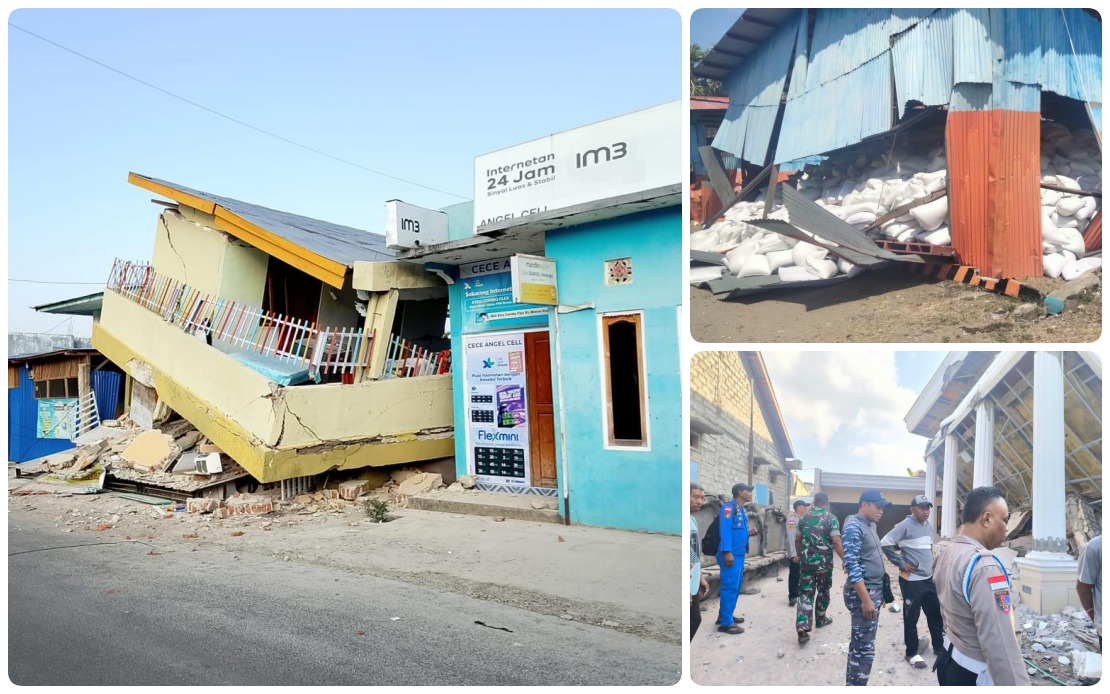
Indonesia's Flores Island continues to reel from a powerful magnitude 7.7 earthquake that struck early Sunday morning, with seismic activity showing no signs of abating as the country's disaster management authorities grapple with the aftermath. The tremor, which hit at 4.58 am local time with its epicentre approximately 30 kilometres offshore from Mbay in Nagekeo district at a depth of 15 kilometres, has left at least 53 people dead and triggered an unprecedented swarm of nearly 1,000 aftershocks that have kept residents in a state of heightened anxiety.
The sheer volume of seismic activity following the initial quake underscores the geological instability of the region and the challenging conditions facing rescue and recovery operations. According to Abdul Muhari, Deputy for Prevention at Indonesia's National Disaster Management Agency (BNPB), the Meteorology, Climatology and Geophysics Agency (BMKG) recorded 995 aftershocks by mid-afternoon Sunday, though most were of insufficient magnitude to be felt by the population. This relentless seismic activity compounds the difficulties facing authorities attempting to assess damage and conduct rescue operations, as structural integrity of buildings remains questionable and the psychological toll on survivors intensifies.
The human toll reflects not only the immediate destructive force of the earthquake but also the vulnerability of communities in this earthquake-prone region. Beyond the 53 confirmed deaths, authorities have documented 135 injured individuals across the seven affected regencies and cities. Remarkably, no missing persons have been reported to Basarnas, the National Search and Rescue Agency, suggesting that initial search efforts have been relatively comprehensive despite challenging circumstances. Authorities cautioned that casualty figures remain subject to verification as emergency response teams complete their assessments, indicating that the final death toll may yet shift as damaged areas receive fuller scrutiny.
The decision by thousands of residents to remain at evacuation centres despite the passage of time reveals the psychological weight of seismic trauma in this region. As of Saturday midnight, 9,290 people occupied evacuation sites, a figure that remained substantial 24 hours later. Abdul Muhari attributed this reluctance to return home not merely to the immediate danger of aftershocks but to deeper collective memory. The devastating 1992 Flores earthquake and tsunami, which claimed thousands of lives, continues to shape risk perception among island residents, making them understandably cautious about returning to structures that may have sustained structural damage from Sunday's quake.
The earthquake prompted immediate tsunami warnings as BMKG observed sea-level changes following the offshore epicentre. However, observations conducted in the crucial hours following the tremor indicated that water levels were stabilising, allowing authorities to lift the tsunami alert at 7.31 am, just two and a half hours after the initial shock. This rapid assessment proved critical in preventing additional panic or unnecessary evacuation complications, though the threat had served as a potent reminder of the multiple hazards facing this eastern Indonesian region where tectonic activity and oceanic systems intersect.
Indonesian authorities have mobilised a comprehensive response infrastructure to address the multifaceted challenges confronting the affected region. Emergency efforts have concentrated on three immediate priorities: delivering assistance to earthquake victims, distributing essential food and water supplies to displaced populations, and systematically documenting damage to residential and commercial structures. Abdul Muhari outlined progress on logistical fronts, noting that a landslide-affected road section in Reok, Manggarai—a critical access route—had been cleared sufficiently to permit fuel tanker trucks to pass through. Similarly, electricity service restoration had commenced in multiple blackout-affected zones, a significant achievement given the importance of power for pumping water, refrigeration of medical supplies, and communication systems.
The scale of the relief operation reflects the geographic challenges inherent to responding to disasters in eastern Indonesia. The BNPB has established dedicated response posts in both Labuan Bajo and Maumere, strategic locations within the affected zone that serve as coordination hubs for rescue teams and damage assessment personnel. Complementing these field operations, the agency has activated logistics posts in Jakarta, the national capital, as well as in Labuan Bajo and Maumere, creating supply chain redundancy that accelerates the movement of relief equipment, personnel, and provisions from national warehouses toward affected communities. Aircraft and helicopter assets have been positioned on standby alert, ready for rapid deployment should access routes prove impassable or medical evacuations become necessary for severely injured individuals requiring facilities beyond regional capacity.
The disaster holds particular significance for Southeast Asia more broadly, as it highlights the seismic vulnerability affecting numerous countries across the region. The Pacific Ring of Fire, the tectonically active zone encircling the Pacific Ocean, extends through the Indonesian archipelago and continues through the Philippines and beyond. Indonesia, positioned at the junction of multiple tectonic plates, experiences frequent significant earthquakes, and the Flores region has proven especially active historically. For Malaysian readers, the Flores earthquake serves as a reminder that while Malaysia's seismic risk is considerably lower than Indonesia's, the broader regional context emphasises the importance of earthquake preparedness and building code standards that could mitigate casualties should major seismic events occur.
The response by Indonesian authorities also demonstrates the institutional capacity and international standards being applied to disaster management in the region. The BNPB's structured approach to casualty verification, the BMKG's technical monitoring of aftershock activity, and Basarnas's search and rescue coordination represent established procedures refined through previous earthquakes and tsunamis. However, the sustained duration of the aftershock sequence and the continued displacement of thousands of residents underscore that recovery from major earthquakes extends far beyond initial emergency response, encompassing psychological rehabilitation, structural reconstruction, and the restoration of normal economic and social functioning to communities that may take months or years to achieve complete normalcy.

