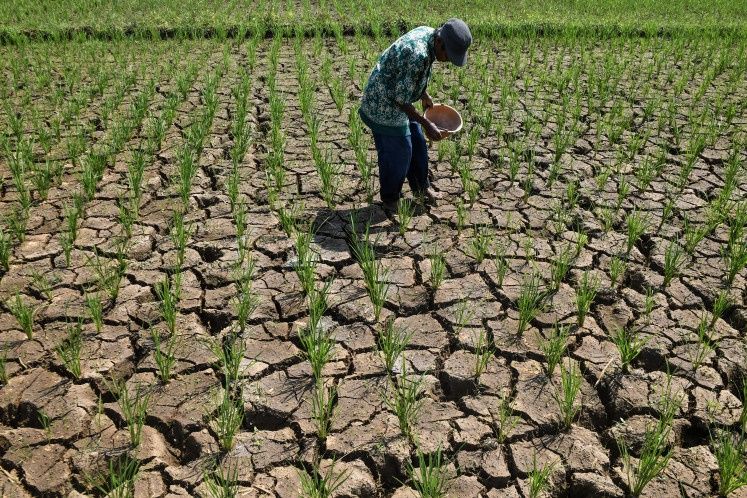
Indonesia is confronting an accelerating water shortage crisis that spans multiple regions as El Niño-induced dry conditions deepen across the archipelago. The National Disaster Mitigation Agency (BNPB) has added three new areas—Gunungkidul in Yogyakarta, Semarang in Central Java, and Jember in East Java—to its growing roster of water-stressed zones, bringing the total affected households to more than 7,800 within weeks. Authorities have begun deploying tanker trucks to deliver drinking water to affected communities, a measure that underscores the severity of the unfolding humanitarian challenge.
The geographic spread of this crisis reveals a troubling pattern across Java, with hardest-hit regions including Cilacap, Klaten, and Jepara in Central Java; Bantul in Yogyakarta; and Karawang, Tasikmalaya, and Sukabumi in West Java. Beyond Java, the island of Seram in Maluku has also entered emergency water-supply mode. Several provincial and district administrations have formally declared 90-day drought alert status, a measure designed to expedite emergency response protocols and mobilize resources more swiftly than standard procedures would allow. Gunungkidul initiated this alert mechanism in June, while West Java followed suit early this month, signalling official recognition of the severity facing farming communities and urban populations alike.
Weather analysts at the Meteorology, Climatology and Geophysics Agency (BMKG) have projected that this year's dry season could prove exceptionally severe. The phenomenon, driven by warmer sea surface temperatures across the Pacific Ocean associated with El Niño conditions, is forecast to peak between July and September, with below-normal rainfall expected to blanket more than 80 percent of Indonesia's territory. As of mid-June, over one-third of the nation's climate zones had already shifted into the dry season, yet nearly half the country was already experiencing rainfall deficits. This combination portends an extended period of water stress that could cascade into agricultural disruptions if mitigation measures fail to take hold.
The agricultural implications carry particular weight for a nation where rice cultivation remains central to food security and rural livelihoods. The BMKG's deputy for climatology, Ardhasena Sopaheluwakan, has called for farmers to adopt immediate adjustments, including rejigging planting calendars, prioritizing drought-resistant crop varieties with shorter maturation cycles, and expanding the agricultural portfolio beyond traditional rice monoculture. These recommendations acknowledge that water availability will constrain production volumes unless farmers fundamentally alter their operational assumptions. Irrigation infrastructure will prove decisive—regions with robust pump systems may navigate the crisis, while areas reliant on seasonal rainfall face genuine food production hazards.
Government officials have sought to contain public anxiety regarding food supplies through reassurances about stockpiled reserves. Agriculture Minister Amran Sulaiman has stated repeatedly that Indonesia's national rice reserves stand at historically elevated levels, sufficient to meet domestic demand through the following year. His ministry has accelerated the deployment of irrigation pumps to ensure agricultural water availability persists despite the meteorological headwinds. Yet these statements, while statistically accurate regarding current stock levels, do not address underlying vulnerability in supply chains should production volumes decline sharply or price shocks ripple through rural markets.
The Parliament's Commission IV, which oversees agricultural and food production policy, has urged the executive branch to intensify assistance targeting drought-prone regions. The commission's recommendations encompass seed distribution, fertilizer provision, farming equipment deployment, and livestock feed supplies—a comprehensive package acknowledging that drought impacts extend beyond water availability into broader agricultural viability. Such interventions can cushion immediate shocks, though they remain fundamentally reactive rather than preventative in orientation.
Critical gaps in Indonesia's approach to chronic drought vulnerability have become apparent to policy researchers monitoring water security. Bagas Yusuf Kausan, a researcher at the water policy think tank Yayasan Amerta Air Indonesia, contends that emergency tanker-truck distribution, while necessary during acute crises, cannot substitute for systemic investment in piped water infrastructure operated by regional utilities known as PDAM systems. Expanding affordable, subsidized access to piped water in chronically vulnerable districts would represent a concrete political commitment to drought-prone communities and could reduce dependence on emergency measures. Such infrastructure development would require sustained capital investment and political will across electoral cycles—precisely the conditions that have historically proven elusive in Indonesian governance.
Environmental degradation extending beyond climate variability has rendered many regions increasingly fragile. Land-use conversion, particularly the transformation of water catchment areas into agricultural or urban zones, has degraded natural water retention systems. Simultaneously, groundwater reserves in numerous districts have undergone depletion from extraction exceeding recharge rates, a trajectory driven by agricultural intensification and urban expansion. These human-induced pressures have compounded the effects of natural climate variation, creating compound vulnerabilities that climate events alone would not produce. Kausan has proposed that the government treat the current El Niño event as a strategic window for strengthening restrictions on land conversion, particularly across water catchment zones, thereby reducing human contributions to drought susceptibility.
For Malaysia and the broader Southeast Asian region, Indonesia's unfolding crisis carries indirect but material significance. Cross-border agricultural trade, commodity price transmission through regional markets, and potential migration pressures stemming from rural livelihood disruption all merit monitoring. Indonesia's status as a major rice producer means that sustained production deficits could influence regional food prices and trade flows. Additionally, the policy responses Indonesia adopts—whether emphasizing infrastructure investment or remaining oriented toward emergency management—may signal approaches relevant to other Southeast Asian nations facing similar climate pressures and water security challenges in coming decades.
The next three months will prove consequential for assessing whether Indonesia's current response framework—combining emergency water distribution, agricultural adjustment directives, and reserve-stockpiling reassurances—can adequately navigate the forecasted drought peak. Success would hinge on effective implementation at the district level, adequate coordination between national and regional authorities, and the absence of unexpected secondary shocks. Failure could translate into broader food-price inflation, rural distress, and pressure on government budgets to sustain extended emergency assistance. The underlying structural vulnerabilities that researchers have identified—inadequate water infrastructure, environmental degradation, and groundwater depletion—remain unaddressed by current crisis-response measures, suggesting that Indonesia faces a recurring cycle of drought vulnerability unless more fundamental investments and restrictions take shape.

