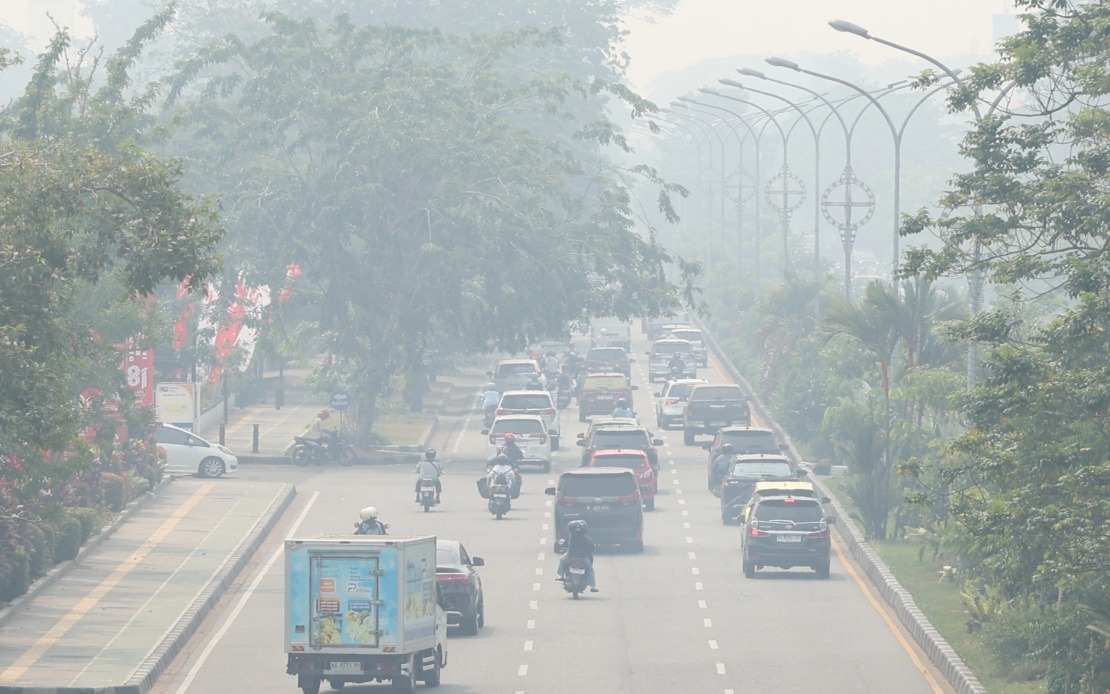
Indonesia is grappling with a deepening environmental crisis as raging forest and land fires have triggered hazardous air quality readings across multiple provinces, raising serious concerns for public health and regional stability. The Air Pollutant Index in Jekan Raya, a subdistrict of Palangka Raya in Central Kalimantan, reached 573 on Wednesday morning—far exceeding safe thresholds and placing the region in the most critical pollution category. Health Ministry Environmental Health Director Then Suyanti disclosed these readings based on measurements from 17 monitoring stations across the affected region, underscoring the widespread nature of the contamination.
The pollution crisis extends well beyond Central Kalimantan's epicentre. Muaro Jambi Regency in the neighbouring province of Jambi recorded a hazardous API of 302, while several other locations across Sumatra and Kalimantan registered very unhealthy air quality scores between 201 and 300. Pelalawan in Riau, the Penukal Abab Lematang Ilir and Ogan Ilir districts in South Sumatra, Southeast Pontianak in West Kalimantan, and both Gunung Mas and Katingan in Central Kalimantan all reported dangerously poor air conditions. The geographic spread of these readings demonstrates that this is not a localised problem but rather a systemic environmental emergency affecting an entire region.
For Malaysian readers and neighbouring Southeast Asian nations, the implications are particularly relevant given the cross-border nature of transboundary haze. Indonesia's recurring fire seasons have historically impacted Malaysia's air quality, particularly in states like Sarawak and Peninsular regions. The severity of current conditions suggests that neighbouring countries should prepare for potential haze episodes in the coming weeks, especially given seasonal wind patterns that typically carry smoke northward toward the Strait of Malacca and beyond.
Health authorities have issued strict guidance for residents in affected areas. In zones classified as hazardous, Then Suyanti explicitly recommended that the public avoid all outdoor activities, recognising that exposure at these pollution levels poses immediate and serious health risks. For areas with very unhealthy air quality, residents should limit time spent outdoors to minimise exposure, with particular concern for vulnerable populations including children, the elderly, and those with respiratory conditions. The directive reflects the genuine health threat posed by prolonged exposure to such contaminated air.
The Indonesian Health Ministry is accelerating protective measures to mitigate public health impacts. A comprehensive circular is being prepared by the ministry's secretary-general, expected within two days, which will outline emergency protocols for affected regions. Among the proposed measures is permission for educational institutions to transition to distance learning when air quality deteriorates beyond safe levels, protecting students and staff from hazardous exposure during their commute and at school. Such adaptive measures highlight the unprecedented scale of disruption caused by these fires.
The human toll of the crisis is becoming increasingly apparent. According to Agus Jamaludin, head of the Health Crisis Centre, approximately 3.4 million people across seven provinces have been affected by the fires. These provinces—Riau, Jambi, and South Sumatra on the island of Sumatra, alongside West, Central, East, and South Kalimantan on Borneo—have all declared emergency alert status, indicating authorities recognise the severity but have not yet escalated to full emergency response protocols. Forty-two individuals have sustained minor injuries thus far, while two people in South Kalimantan suffered serious burns requiring hospitalisation. Remarkably, no deaths or mass evacuations have been reported, though the situation remains fluid.
Responding to the emergency, the Indonesian government has deployed 321 health personnel across the affected provinces to provide medical assistance and public health monitoring. This mobilisation represents a significant commitment of healthcare resources, yet the scale of the affected population means that many areas remain underserved. The authorities have expressed hope that firefighting efforts will accelerate, gradually reducing haze concentrations, though the scope of ongoing fires suggests rapid improvement is unlikely in the short term.
Satellite data from the Forestry Ministry reveals the alarming extent of active fire activity across the region. As of Tuesday evening, monitoring systems detected 805 high-confidence hotspots and 11,313 medium-confidence hotspots nationwide. Among six priority provinces, South Sumatra showed the highest concentration of confirmed fires with 239 high-confidence hotspots, followed by Central Kalimantan with 113, South Kalimantan with 89, and West Kalimantan with 86. Jambi and Riau recorded seven and one respectively. The distribution of medium-confidence hotspots was even more alarming, with West Kalimantan alone accounting for 2,447 potential fire locations, and Central Kalimantan registering 2,168.
The persistence of thousands of medium-confidence hotspots suggests that authorities face a prolonged battle against these fires, with new fire ignitions potentially occurring faster than suppression efforts can contain existing blazes. This dynamic indicates that air quality may remain hazardous for an extended period, with implications for public health, economic activity, and regional stability. For Malaysia and Singapore, such sustained pollution episodes historically disrupt air travel, strain healthcare systems managing respiratory issues, and impact outdoor economic activities.
The root causes of Indonesia's recurring fire crises typically involve a combination of factors: seasonal dry weather, land-use conversion practices, agricultural burning, and in some cases, deliberate arson. While not explicitly detailed in current reports, understanding these drivers is essential for developing long-term solutions. Addressing the immediate air quality crisis requires intensive firefighting efforts, but preventing future episodes demands comprehensive land management reforms, enforcement of anti-burning regulations, and international cooperation on transboundary environmental issues.
For the broader Southeast Asian region, Indonesia's current crisis serves as a reminder of the environmental vulnerabilities inherent in shared geography. The fires demonstrated again that environmental problems do not respect political borders, and that regional cooperation mechanisms must remain robust and responsive. Malaysia, Singapore, and other ASEAN members should maintain readiness for potential haze impacts while supporting Indonesian efforts to control the fires and implement prevention strategies for future seasons.

