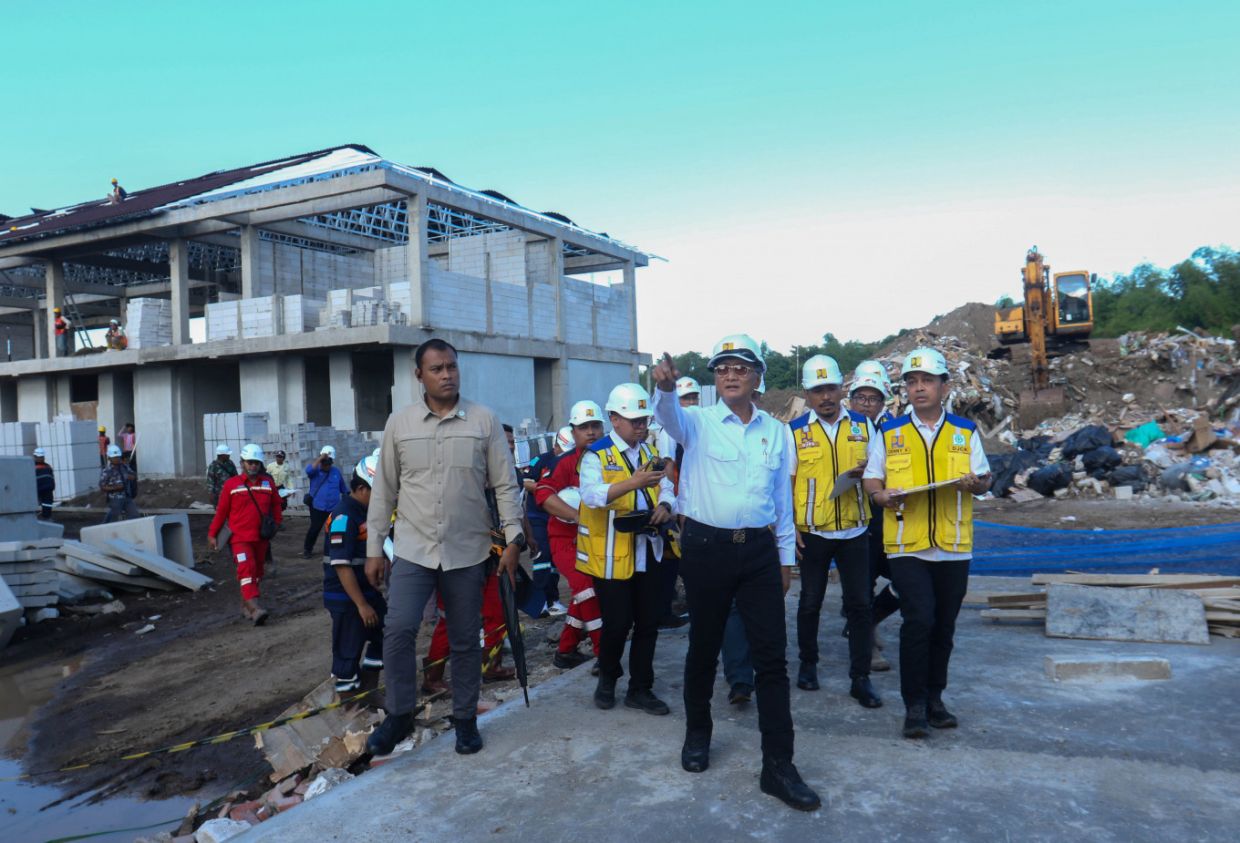
Indonesian Public Works Minister Dody Hanggodo has drawn intense scrutiny following revelations that his wife and daughter appeared on official travel documents for a planned delegation to the United States, renewing concerns about ministerial accountability and the proper use of government resources in Southeast Asia's largest economy.
The controversy centred on a letter issued by the Public Works Ministry and shared widely across Indonesian social media platforms, which identified eight individuals scheduled to travel to New York between July 13 and 19. The document, bearing the signature of Ministry Secretary-General Apri Artoto and dated June 29, explicitly listed Irma Hermawati, the minister's wife, and Aurellia Tsabitha Meidirama, his daughter, among the scheduled delegates. According to the letter, Irma would travel using a diplomatic passport whilst Aurellia would carry an ordinary passport.
The delegation's stated purpose was to represent Indonesia at the High-level Meeting on the Midterm Review of the New Urban Agenda, a conference organised by the United Nations General Assembly and the UN Human Settlements Programme on July 16 and 17 in New York. Urban development matters carry particular weight in Indonesia, where rapid urbanisation continues to strain infrastructure across the nation's sprawling archipelago, making attendance at such international forums potentially legitimate for government officials.
Yet the inclusion of Hanggodo's family members sparked immediate backlash online, with numerous critics questioning whether their participation served any genuine governmental purpose and whether it aligned with the administration's stated commitment to fiscal discipline. President Prabowo Subianto has made austerity a centrepiece of his economic agenda, intensifying scrutiny of perceived ministerial extravagance. The controversy touched a nerve in a nation where public sector ethics remain contentious, particularly given Indonesia's ongoing battles with corruption across multiple government institutions.
The ministry's response attempted to address the most immediate concern by asserting that no state budget would finance the family members' expenses. Apri Artoto explained that Irma and Aurellia's names appeared on the travel documents solely to streamline visa application procedures through the Foreign Ministry. He further contended that issuing a diplomatic passport to the minister's wife was entirely permissible under existing regulations, positioning the decision as procedurally sound rather than exceptional.
However, this explanation failed to mollify public anxiety or satisfy institutional watchdogs. Maneger Nasution, a member of the Indonesian Ombudsman, directly challenged the ministry to demonstrate greater transparency regarding the family members' inclusion and to provide concrete assurances that state facilities and publicly funded resources would not subsidise their participation. Nasution's intervention elevated the dispute from online gossip to formal institutional scrutiny, signalling that oversight bodies viewed the matter as potentially meriting official investigation.
Beyond the immediate financial question, Nasution articulated a broader governance concern, emphasising that the ministry must independently verify that the family members' participation carried genuine legitimacy, operated within legal boundaries, avoided conflicts of interest, and involved no abuse of ministerial authority for private advantage. This formulation reflected deep-rooted Indonesian anxieties about power asymmetries, where family connections to government officials frequently translate into preferential treatment and resource capture.
Handogg's political trajectory adds contextual weight to these concerns. Before joining the Democratic Party and entering elected office, he maintained substantial business relationships with Andi "Haji Isam" Syamsuddin Arsyad, a South Kalimantan-based entrepreneur whose corporate portfolio encompasses enterprises directly involved in President Prabowo's ambitious food estate development scheme in Merauke, South Papua. Such historical connections inevitably invite speculation about potential conflicts of interest whenever ministers' decisions affect areas touching their previous business associates.
The 60-year-old minister has previously claimed that institutional enemies were orchestrating campaigns against him, alleging that a leaked internal audit document from his ministry represented a deliberate attempt by unnamed "deep state" actors to entangle him in corruption allegations. These assertions, whether accurate or exaggerated, suggest a ministry environment characterised by internal tensions and competing power centres, circumstances that complicate efforts to evaluate the family delegation controversy on purely technical grounds.
For Malaysian observers and Southeast Asian governance specialists, the Hanggodo episode illuminates persistent institutional weaknesses affecting the region's largest democracies. Although Indonesia has established formal oversight mechanisms including an Ombudsman office, enforcement remains inconsistent and dependent upon political will. The controversy demonstrates how ministers can exploit procedural flexibility and technical regulatory compliance to advance arrangements that, whilst perhaps not explicitly illegal, violate broader norms of transparency and public trust.
The incident also reflects broader patterns whereby family members and close associates frequently accompany high-ranking officials on international missions, with justifications ranging from administrative necessity to cultural tradition. Yet in an era of heightened anti-corruption consciousness and fiscal austerity, such practices face mounting resistance from both digital-native populations and formal accountability institutions.
As the case develops, its resolution will likely influence ministerial behaviour across Indonesian government and possibly signal broader institutional attitudes toward nepotism and preferential treatment. For regional observers, the Ombudsman's response offers some reassurance that systematic checks exist, though questions remain about whether formal findings will produce meaningful consequences or whether political considerations will ultimately limit accountability.

