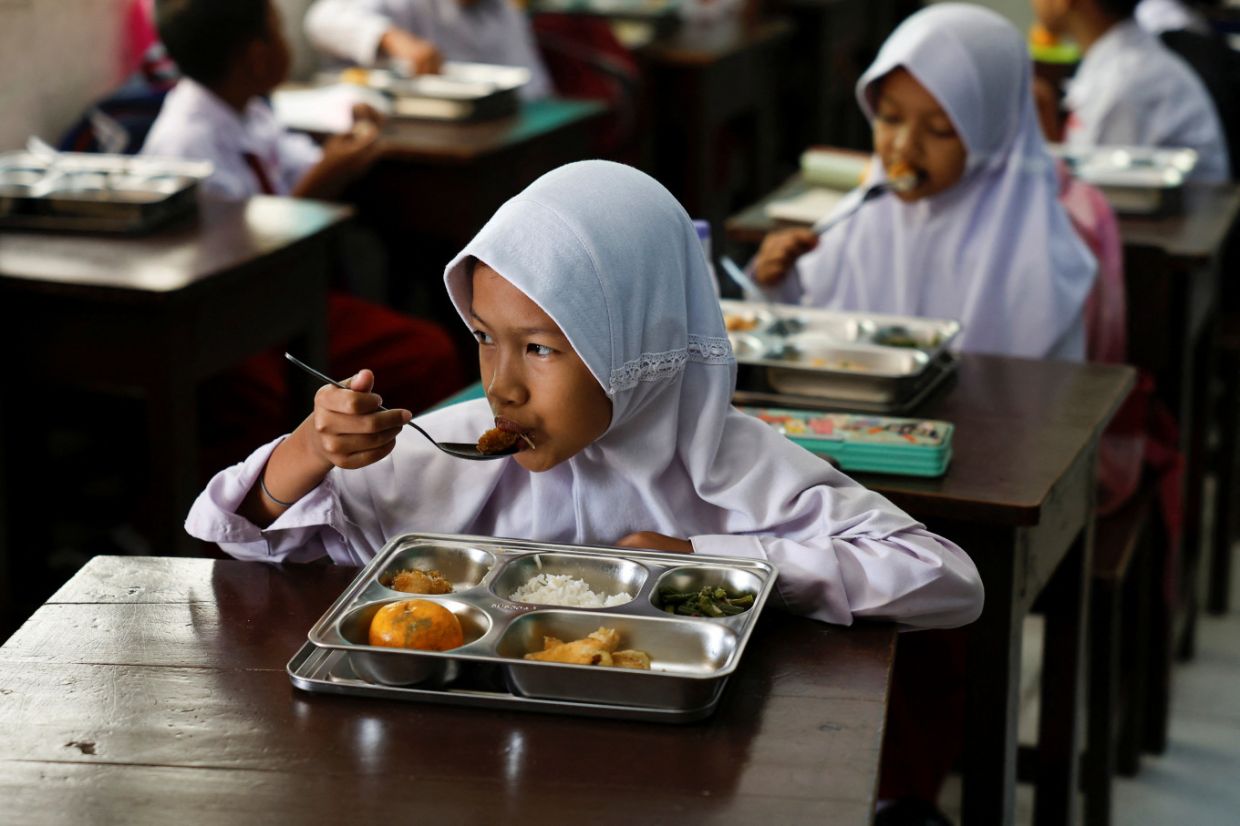
The Indonesian government faces mounting scrutiny over proposals to amend the national education system law, with educators warning that vague wording in the draft legislation could resurrect funding for the free nutritious meals program through education allocations—a manoeuvre that would directly contradict a Constitutional Court decision issued in July. The Indonesian Teachers Association (P2G) and allied civil society groups have flagged the contentious provisions as a potential legal end-run designed to circumvent constitutional protections for education spending.
The dispute centres on language in the draft revision to the National Education System (Sisdiknas) Law, which the House of Representatives is currently debating. A clause dated July 8 directs the government and civil society to "provide health services, including those concerning mental health, at educational institutions in a manner that is integrated with the national health policies as well as the national education goals." P2G national coordinator Satriwan Salim expressed deep concern that this formulation could be weaponised to classify the free meals initiative as a health service component of education, thereby legitimising its financing through education funds.
The practical stakes are enormous. Indonesia's Constitution mandates that a minimum of 20 percent of annual state revenue be dedicated to education. This year, however, approximately Rp 223 trillion (US$12.5 billion) from the total Rp 769 trillion education budget was channelled to the free meals program—consuming nearly one-third of constitutionally protected education spending. Defenders of this allocation argue the program targets nutritional security and child development; critics contend it improperly displaces resources that should strengthen teaching quality, school infrastructure, and educator compensation.
The Constitutional Court addressed this conflict directly on July 30, ruling that President Prabowo Subianto's free meals initiative falls outside the scope of education and therefore cannot legitimately draw from education allocations. The verdict upheld petitions filed by teachers, university lecturers, students, and nonprofit organisations who argued that the program had dangerously eroded funding available for core educational functions. The court directed the government to remove the meals initiative from the education budget line for the 2028 fiscal year, though it acknowledged that adjustment would require some flexibility for the upcoming budget cycle.
Constitutional law scholar Feri Amsari has warned that the court's legal reasoning applies broadly to all legislation, not merely budget laws. Under this interpretation, any future legislative amendment—regardless of how carefully worded—that attempts to reclassify the free meals program as an education expense would violate constitutional principles. "It does not matter which law it is placed in; the program cannot be funded from the education budget again under any name or in any other form," Amsari stated. This position reflects a fundamental constitutional principle: the binding force of court rulings cannot be evaded through administrative relabelling or legislative creativity.
Civil society organisations, including the MBG Watch coalition and Transparency International Indonesia (TII), have mobilised to prevent such circumvention. Agus Sarwono of TII emphasised that any strategy to maintain education financing for the meals program through "budget nomenclature, budget engineering or regulatory adjustments" would constitute a direct denial of the court's authority and Malaysia's broader system of constitutional governance. The coalition's vigilance reflects broader regional concerns: across Southeast Asia, the integrity of court rulings faces pressure from executive and legislative branches seeking to preserve favoured policies.
Parliamentary momentum behind the education law revision remains unclear. Hetifah Sjaifudian, the Golkar Party lawmaker chairing the House Commission X on education and leading the deliberation process, acknowledged that concerns had reached the commission but insisted the bill "was not yet ready for publication." She pledged that every provision would be drafted with precision to preclude multiple interpretations and maintain fidelity to constitutional intent. Sjaifudian reaffirmed the commission's commitment to ensuring education funds support "the education sector's primary needs, particularly improving learning quality, teacher welfare and education service, and not to fund programs outside the main function of education."
The education law revision addresses several substantive issues beyond the funding mechanism. The House is examining explicit provisions to regulate teacher salaries and allowances—a persistent vulnerability in Indonesia's education system—and to strengthen protections for students from violence and harassment. These reforms enjoy broad support from educators and civil society. Yet the free meals funding controversy threatens to overshadow legitimate improvements and inject distrust into an already fragile legislative process.
The broader institutional concern is systemic. Indonesia has experienced previous delays and resistance in implementing Constitutional Court rulings, most notably a December 2025 decision banning active-duty police officers from simultaneously holding government positions. When courts issue determinations of constitutional principle and the executive or legislature appears disinclined to comply, democratic institutions weaken and the rule of law erodes. For Malaysian observers, the Indonesian case illuminates how even well-intentioned social programs—nutritional support for children is unquestionably worthy—can become vehicles for constitutional overreach if procedural safeguards falter.
Educators' organisations maintain that genuine investment in school meals, if pursued, should be funded through health or social welfare budgets rather than education allocations. This approach respects constitutional divisions of fiscal responsibility while acknowledging that child nutrition affects learning outcomes. The current impasse reflects a collision between administrative convenience—the government's preference for funding the program from the education budget—and constitutional principle. How Indonesia resolves this tension will establish precedent for the region and signal whether constitutional courts retain practical authority or serve merely as symbolic institutions that executive and legislative branches can circumvent through legislative draftsmanship.
The deliberative process remains open. Hetifah Sjaifudian invited continued public input and acknowledged that provisions could be modified throughout the amendment process. Teachers groups, civil society organisations, and constitutional scholars have made their positions clear. The coming weeks will reveal whether the House Commission X responds to these warnings or proceeds with language that, however carefully framed, opens pathways to renewed education-funded meals financing. The outcome will demonstrate whether Indonesia's constitutional order functions as a binding legal framework or merely as an aspirational statement.

