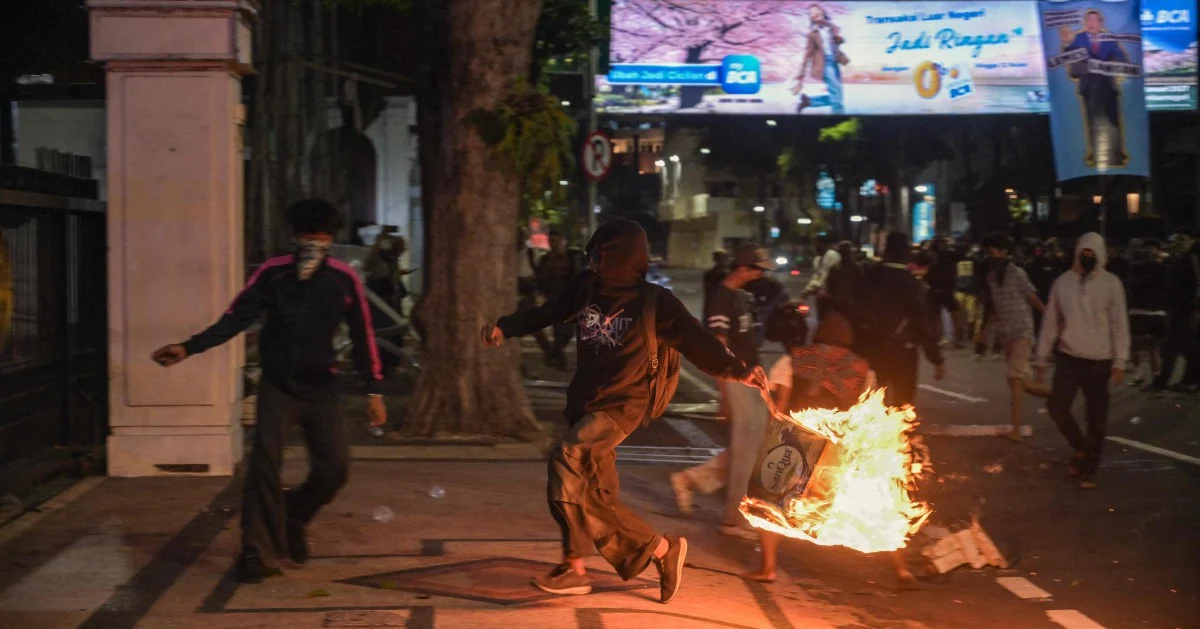
Law enforcement in Indonesia has intensified its response to dissent, detaining scores of demonstrators who participated in a public gathering opposing President Prabowo Subianto's government agenda in Surabaya, Indonesia's second-largest urban centre. The action signals escalating tensions between state authorities and citizens exercising their right to assembly, according to civil rights observers who documented the incident.
Surabaya, located in East Java and serving as the economic hub of the eastern Indonesian region, has historically been a flashpoint for political activism. The city's concentration of university students, labour unions, and civic organisations creates an environment where public demonstrations frequently occur. This particular rally emerged as part of broader discontent with the direction of Prabowo's administration since it assumed power, reflecting divisions within Indonesian society over economic policies, governance priorities, and reform initiatives.
The detention of protest participants represents a troubling pattern for democratic freedoms in Southeast Asia's largest economy. Human rights organisations monitoring the situation have raised concerns about whether authorities followed proper legal protocols during arrests and whether the detainees have received appropriate access to legal counsel and their families. These procedural questions matter significantly in Indonesian law, where citizen protections and due process standards require strict adherence to established regulations.
President Prabowo Subianto, a retired military general and controversial figure due to alleged human rights violations during his military career, has faced criticism from various quarters since taking office. Labour groups have expressed alarm over employment policies, environmental advocates question regulatory rollbacks, and political opposition parties challenge the administration's constitutional interpretations. The Surabaya gathering reflected these multifaceted concerns, drawing participants from different social sectors united by dissatisfaction with government direction.
The timing of mass arrests carries particular significance for regional observers assessing Indonesia's democratic trajectory. While the nation maintains formal democratic structures including competitive elections and multiple political parties, concerns persist about restrictions on protest freedoms and the treatment of demonstrators by security forces. Neighbouring countries including Malaysia, where public assembly regulations differ substantially, watch Indonesia's handling of dissent as indicative of regional democratic health.
Surabaya's police response must be understood within Indonesia's complex security framework, where local authorities operate under national guidelines while maintaining operational discretion. The decision to arrest protesters—rather than permit lawful assembly to proceed under standard police supervision—suggests either volatile crowd conditions or policy directives emphasising order over expressive freedoms. Without detailed accounts of specific incidents, determining which factor predominated remains challenging, but the scale of detentions indicates a firm enforcement approach.
The practical consequences for arrested individuals extend beyond immediate custody. Indonesian criminal law permits extended detention for investigation purposes, meaning detainees may remain in police custody for extended periods before charges materialise. This procedural reality creates hardship for families and raises questions about the sufficiency of evidence required for arrest, as distinct from charges and prosecution. Civil society groups typically scrutinise whether arrests target specific alleged crimes or aim to discourage future participation in demonstrations.
For Malaysian and broader Southeast Asian readers, Indonesia's handling of political protests carries relevance. As the region's population centre and economy, Indonesia's political stability affects regional investment flows, trade patterns, and security dynamics affecting neighbouring states. Democratic deterioration or enhanced restrictions on public expression in Jakarta reverberate throughout ASEAN, influencing foreign policy calculations and international standing. Conversely, robust civil freedoms in Indonesia strengthen regional democratic norms and provide bulwarks against authoritarian drift.
The Prabowo administration's first months in office have already generated friction with different constituencies, suggesting this particular Surabaya demonstration reflects genuine popular concerns rather than isolated agitation. Youth unemployment, infrastructure investment priorities, and regional development remain contested issues across Indonesian society. That demonstrations occur across diverse social groups indicates broad-based questioning of government direction rather than opposition limited to particular ideological factions or partisan competitors.
International human rights bodies have consistently emphasised that governments retain legitimate authority to manage large public gatherings for public safety and order, but that such management must respect fundamental freedoms of assembly and expression. The distinction between proportionate police presence ensuring orderly demonstration and heavy-handed suppression discouraging future participation carries profound implications for democratic health. Documentation by independent monitors becomes essential for determining whether authorities maintained appropriate restraint or exceeded legitimate enforcement boundaries.
Moving forward, attention will focus on whether detained individuals face substantive charges, what legal processes unfold, and whether additional arrests accompany subsequent demonstrations. These developments will indicate whether Indonesian authorities view protest as legitimate democratic exercise warranting tolerance or as disorder requiring suppression. The international community, regional organisations, and Indonesian civil society will likely maintain scrutiny of these cases as indicators of broader democratic commitments.

