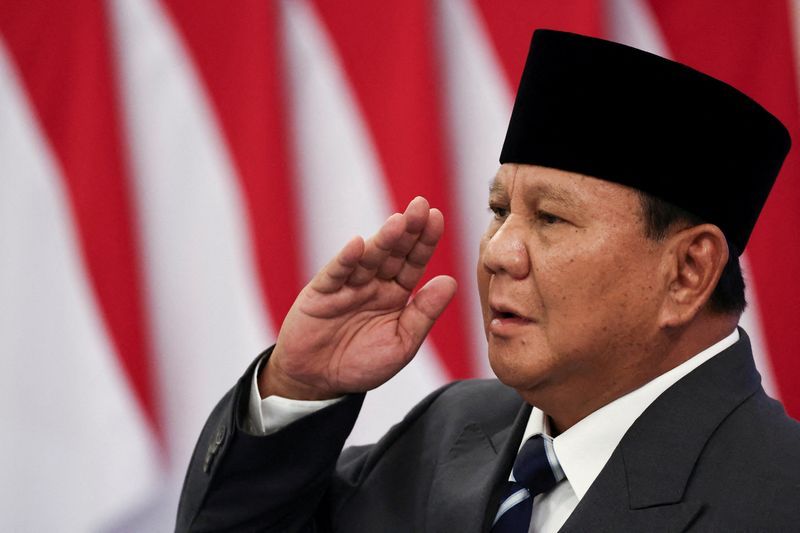
Indonesia is moving to systematically embed artificial intelligence across its core government operations, with a presidential regulation draft that targets everything from school feeding schemes to public health services. The initiative represents a significant pivot toward technology-driven governance, with policymakers hoping the shift will generate substantial economic gains over the next five years. The proposed regulation, currently awaiting signature from President Prabowo Subianto, outlines a phased deployment schedule from 2026 through 2029 and reflects input from major global technology firms including Meta Platforms, IBM, and Microsoft, signalling the scale of international engagement around Indonesia's AI ambitions.
The centrepiece of this digitalisation effort is the application of AI to President Prabowo's flagship free meals programme, a $15 billion commitment aimed at improving nutrition across the archipelago. According to the regulatory draft, artificial intelligence would be deployed across multiple dimensions of the scheme's operations. The technology would support the design of region-specific meal plans tailored to local nutritional needs and food availability, monitor kitchen hygiene standards through automated systems, forecast demand patterns to minimise waste, and identify operational irregularities that might otherwise go undetected. Beyond logistics, the system would integrate health data to enable early warning systems for potential public health emergencies, addressing concerns that have plagued the programme since its inception.
The timing of this AI integration underscores the urgency with which Jakarta views the need for improved oversight. The free meals initiative has faced sustained criticism over transparency gaps, mismanagement, and safety failures. Earlier this month, the programme's operational head was dismissed and arrested following investigations into irregularities. Last year, tens of thousands of schoolchildren fell ill from food poisoning incidents linked to the scheme, prompting questions about kitchen standards and emergency response protocols. These failures have amplified concerns about budgetary waste at a moment when Indonesia's fiscal constraints are already tight. Officials argue that AI-driven automation could simultaneously address these governance weaknesses while delivering the efficiency gains that tighter budgets demand.
Beyond the food initiative, the regulation proposes expanding artificial intelligence into Indonesia's free health screening programme and tuberculosis testing efforts. AI systems would analyse health check data to identify patterns and flag potential cases requiring intervention. This layering of AI across multiple social programmes reflects a broader governmental philosophy that automation can enhance service delivery while reducing per-unit costs. The draft explicitly notes that AI-driven automation enables organisations to achieve "remarkable efficiency while reducing operational costs," a calculation that carries particular weight in an economy where public spending constraints limit the scope for expanding services through traditional means alone.
However, Indonesia's position in the regional AI race remains considerably behind its more advanced neighbours. Singapore and Malaysia have already positioned themselves as development hubs for artificial intelligence infrastructure, attracting billions of dollars from technology giants seeking to establish data centres, cloud services, and AI research facilities. Indonesia's progress has moved at a slower pace, constrained by fundamental gaps in infrastructure, particularly the lack of domestic semiconductor capabilities and the shortage of skilled AI professionals throughout the workforce. Derwin Suhartono, an artificial intelligence professor at Bina Nusantara University in Jakarta, has cautioned that Indonesia is unlikely to develop into an AI developer nation in any meaningful timeframe and may instead remain dependent on consuming products marketed by foreign technology corporations.
The gap between stated ambition and operational reality looms large in critical assessments of Indonesia's AI strategy. While the regulatory framework provides structure and official commitment, implementation remains the persistent weak point. Suhartono noted that "at the execution level, it's all rhetoric," highlighting the distance between publishing ambitious roadmaps and successfully translating them into functioning systems embedded across government operations. This credibility gap reflects Indonesia's track record of announcing technology initiatives that encounter significant obstacles during deployment, particularly where coordination across dispersed regional administrations is required.
The government has projected remarkably optimistic economic returns from AI adoption, claiming the technology could increase Indonesia's gross domestic product by 12 percent by 2030, equivalent to approximately $366 billion in additional output. This projection anchors much of the political enthusiasm for the AI strategy, though independent economists have offered more measured assessments. The calculation assumes successful, widespread deployment across the economy and government sectors simultaneously, an outcome dependent on factors largely beyond government control, including private sector investment levels and the pace of global technology development.
Supporting this overarching AI adoption plan, the government is advancing the concept of a "sovereign AI fund," which would be administered primarily through Danantara Indonesia, the country's newly established sovereign wealth vehicle. This financing mechanism is intended to channel capital toward AI research and development while providing fiscal incentives for researchers and addressing documented talent shortages throughout the sector. The strategy acknowledges that capital allocation alone cannot resolve Indonesia's skills deficit, requiring parallel investments in education and workforce development that extend beyond simple budgetary measures.
The regulatory framework accompanying AI deployment also addresses governance risks and safeguards. A companion draft regulation mandates that government agencies report on artificial intelligence-related risks, encompassing misuse of biometric data, intellectual property violations, and the generation of deepfake content. This risk-focused component reflects growing international concern about unintended consequences of AI adoption, particularly in government contexts where systems control access to services, make resource allocation decisions, or process sensitive personal information. Whether Indonesia's developing institutional capacity can effectively monitor and respond to these risks remains an open question.
The broader regulatory structure builds upon foundations laid in a white paper released in 2022, suggesting that AI integration represents a policy direction that has undergone several iterations and refinements. The current draft represents accumulated learning from earlier discussions between government ministries, technology firms, and analysts. Nonetheless, the uncertain timeline for President Prabowo's signature introduces ambiguity about when implementation would commence and how quickly the stated deployment schedule could be executed. His office has not indicated when the regulation might be formally adopted, leaving the initiative in a holding pattern despite the urgency officials attribute to the AI transition.
For Malaysia and other Southeast Asian nations closely watching Indonesia's technological trajectory, the AI strategy carries regional implications. If Indonesia successfully executes its programme, it could establish a template for government-directed AI adoption that other developing economies might emulate. Conversely, if implementation falters—a plausible outcome given historical governance challenges—it may reinforce regional assumptions that developing countries are most effective as AI consumers rather than developers. Either outcome shapes the competitive landscape across Southeast Asia as nations vie for investment and position within the evolving global AI economy.