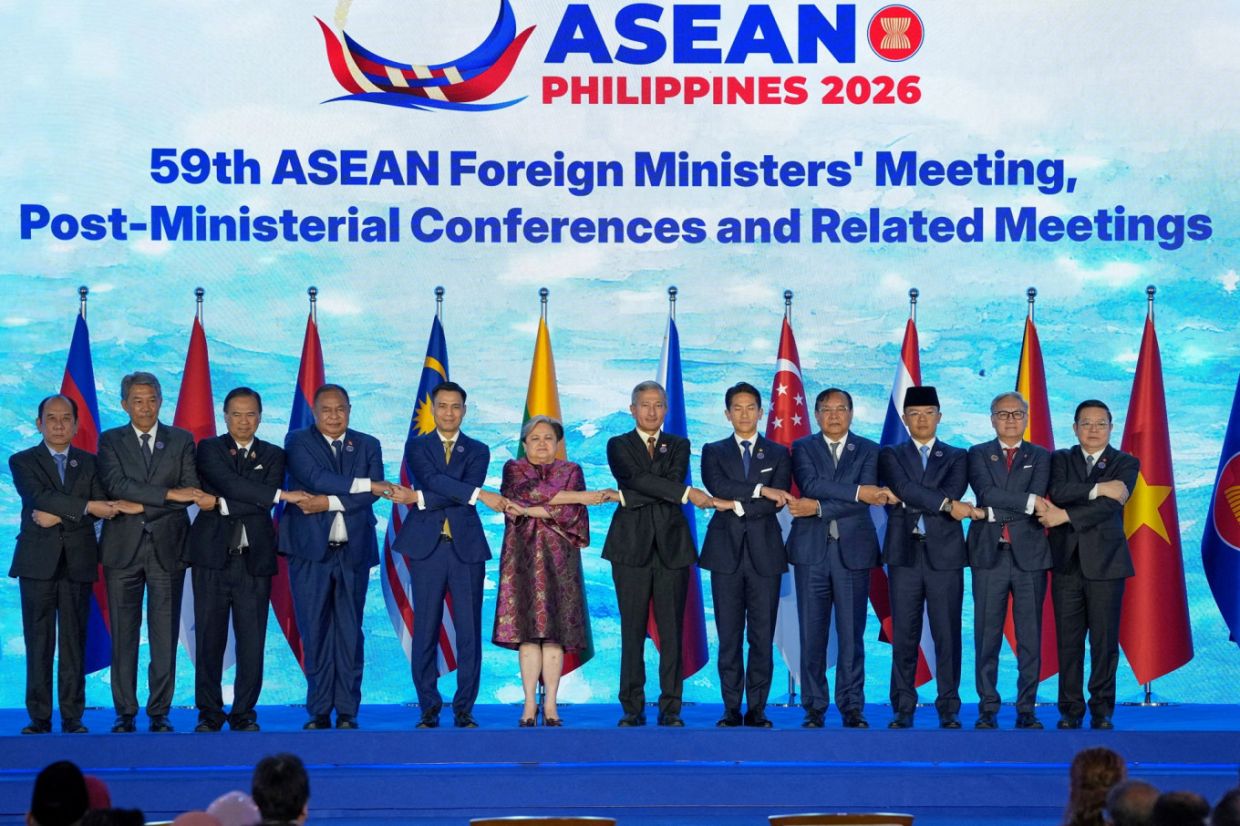
Indonesia has challenged the Association of Southeast Asian Nations to move beyond rhetoric and demonstrate concrete results from its regional agreements and partnerships, as mounting geopolitical tensions place the bloc's credibility under intensifying pressure. The warning emerged during Tuesday's discussions in Manila, where foreign ministers from all eleven Asean member states convened to establish unified positions ahead of Wednesday's sessions with major external partners. The gathering underscored the organisation's struggle to forge consensus on critical issues ranging from the economic consequences of Middle East instability to longstanding maritime disputes and Myanmar's ongoing political crisis.
Indonesian Foreign Minister Sugiono framed the challenge in stark terms, suggesting that recent global turbulence has exposed both the necessity and difficulty of anticipating ripple effects from distant conflicts. He advocated that Asean member states must capitalise on a pivotal moment to reaffirm their commitment to the organisation's founding principles, particularly regarding the maintenance of regional political, economic and social equilibrium. The timing carries particular weight given that Asean only recently achieved a significant institutional milestone—amending its charter in May to formally admit Timor-Leste as the bloc's eleventh member during the annual summit. That expansion, while historically momentous, now coincides with questions about whether the organisation can actually translate its ambitious governance frameworks into practical policy outcomes.
Sugiono's central interrogative—"Can Asean deliver on its promises?"—articulated the fundamental tension confronting Southeast Asia's premier multilateral institution. The question transcends diplomatic courtesy and strikes at the heart of Asean's regional relevance. Member states have historically relied on the organisation's institutional mechanisms to manage disputes and coordinate responses to external shocks. Yet observers increasingly question whether consensus-based decision-making, designed to protect each nation's sovereignty, has become too unwieldy to generate timely, meaningful action. This structural challenge becomes most apparent when examining how Asean has grappled with persistent regional conflicts that seem to defy collective solutions.
The Middle East conflict loomed large throughout Tuesday's deliberations, prompting the ministers to issue a joint statement acknowledging its multifaceted regional consequences. Beyond the immediate security concerns affecting Asean nationals in conflict zones, the statement emphasised anxieties about economic disruptions and their destabilising effects on vulnerable populations across Southeast Asia. The ministers noted various mitigation initiatives underway at both regional and national levels, signalling awareness that energy price volatility and supply chain disruptions stemming from tensions near the Strait of Hormuz present genuine challenges to economic stability. However, the statement's measured language masked deeper strategic vulnerabilities that the conflict has exposed within Asean's collective negotiating position.
Energy insecurity emerging from Middle East turbulence has inadvertently strengthened China's hand in ongoing South China Sea negotiations, a development with profound implications for Asean's long-term strategic autonomy. As member states search for alternative energy sources following disruptions to their traditional suppliers, several have intensified their reliance on Chinese imports, including renewable technologies. The Philippines, currently chairing Asean, exemplifies this pattern—more than doubling its solar panel imports from China during the first five months of this year compared with the equivalent 2023 period. This commercial dependence subtly undermines Asean's negotiating leverage with Beijing regarding the South China Sea Code of Conduct, as member states become increasingly reluctant to antagonise a crucial partner in their energy transition strategies.
The Code of Conduct itself represents perhaps the most visible measure of Asean's capacity to translate commitments into tangible governance frameworks. Negotiations on this document, intended to establish rules governing conduct in one of the world's most contested maritime zones, have stretched across nearly a quarter-century with no completion in sight. Sugiono's emphatic statement that "our people have waited 24 years for rules at sea" underscored both the urgency and the frustration surrounding this protracted process. His assertion that a rules-based region proves stronger than one dominated by raw power dynamics articulated Asean's fundamental aspiration, yet the prolonged negotiation timeline raises uncomfortable questions about the bloc's ability to enforce such principles against determined major powers with competing strategic interests in Southeast Asian waters.
Myanma's ongoing political catastrophe added another layer of complexity to the Manila discussions, with ministers devoting a dedicated retreat session to reviewing implementation of the Five-Point Consensus framework that Asean adopted as its peace roadmap. This agreement, billed as a pathway toward Myanmar's political stabilisation, has struggled to generate meaningful progress since its inception, reflecting deep divisions within Asean regarding how forcefully to pressure the military junta in Naypyidaw. Philippine Foreign Secretary Theresa P. Lazaro indicated that ministers had agreed to recalibrate how Asean measures progress on the consensus and explore potential reforms to the annual special envoy mechanism—administrative adjustments that hint at acknowledgment that existing approaches have proven insufficient. The ministers evidently believe they can complete this review by November's leaders' meeting, though scepticism persists about whether procedural reforms can overcome the fundamental disagreement among member states about how aggressively to confront Myanmar's military government.
The divisions over Myanmar encapsulate Asean's broader institutional predicament. The organisation's founding principle of non-interference in member states' internal affairs, designed to protect national sovereignty, increasingly appears incompatible with meaningful intervention in serious regional crises. When confronting a military coup and subsequent humanitarian catastrophe, member states must choose between honouring non-interference principles and exercising meaningful diplomatic pressure. No procedural innovation can resolve this fundamental tension, yet Asean continues cycling through bureaucratic reforms as though structural adjustments might substitute for genuine political consensus among members with divergent interests and strategic relationships with Myanmar's ruling generals.
The conversations extending into Wednesday would incorporate perspectives from Asean's eleven dialogue partners, including the United States, China and Russia, broadening the lens through which Southeast Asian nations confront these interconnected security, economic and geopolitical challenges. This engagement pattern reflects Asean's strategic positioning as a sought-after partner for multiple major powers, yet it also perpetuates the risk that member states' own priorities become obscured amid competing great power interests. As Indonesia emphasised throughout the Manila talks, Asean's credibility ultimately depends on demonstrating that it can formulate and implement unified positions serving its constituent nations' collective interests, rather than becoming a forum where external powers project their own strategic preferences onto Southeast Asian screens.

