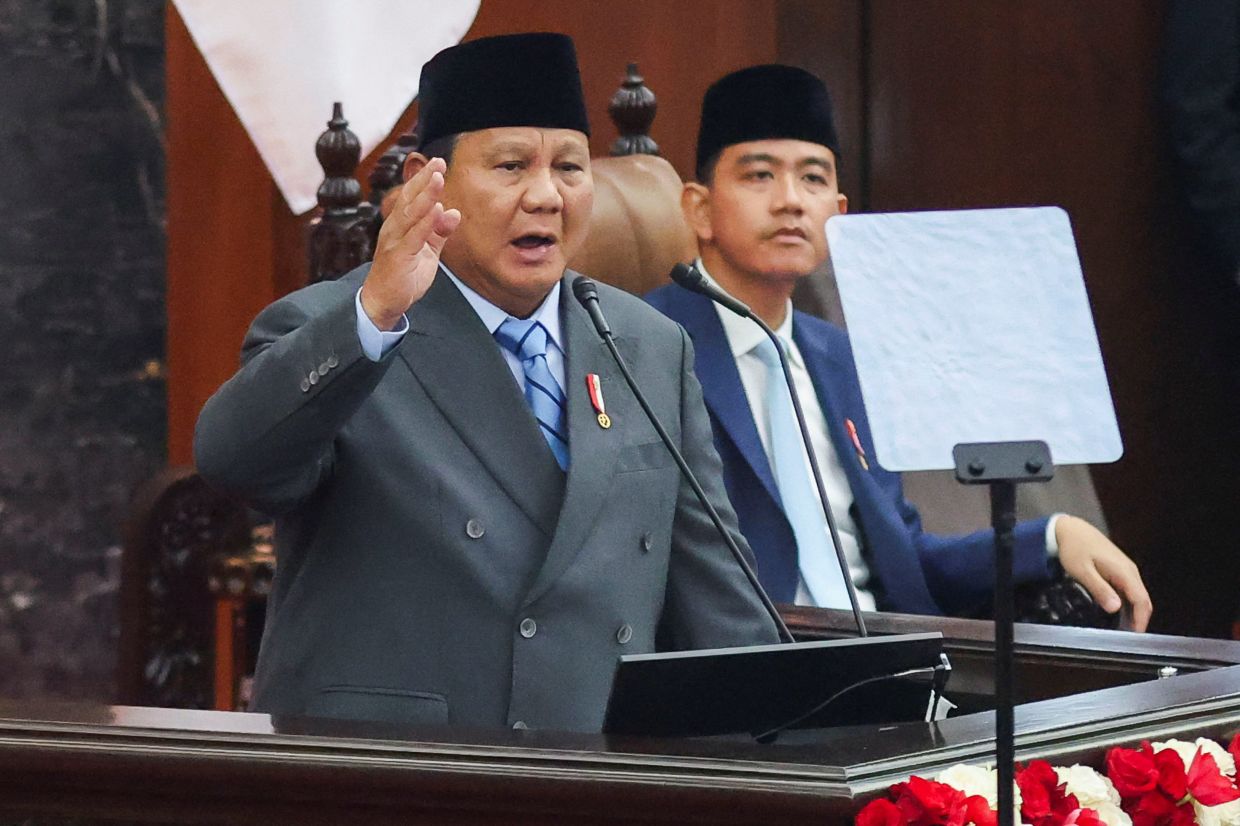
Indonesia is undertaking what President Prabowo Subianto described as potentially the world's largest corporate restructuring, with plans to close more than 750 of the country's state-owned enterprises before year-end. The announcement, made during his state of the nation address to parliament on Friday, represents a dramatic reckoning with decades of institutional bloat and mismanagement that has cost Southeast Asia's largest economy billions in unnecessary expenditure and lost productivity.
The scope of the overhaul became apparent only after Jakarta established the Danantara sovereign wealth fund last year to consolidate state assets. The discovery that Indonesia operated 1,074 state-owned enterprises came as a shock to Prabowo himself, who had assumed the figure was substantially lower. This revelation underscores a fundamental disconnect between political leadership and the sprawling nature of the state apparatus, a common challenge across developing economies where institutional expansion often outpaces effective governance mechanisms.
So far, 290 enterprises have already been shuttered, leaving approximately 300 still operating by the planned December 31 deadline. The administration's aggressive timeline reflects urgency about stemming financial haemorrhaging from inefficient operations. State-owned enterprises have been characterized by the president as reporting fabricated profits while accumulating genuine losses, a pattern consistent with findings from Indonesia's long struggle against institutional corruption despite strengthened anti-corruption legislation and high-profile arrests over recent decades.
The financial impact of maintaining these underperforming entities has been substantial. The closure programme has already recovered approximately 50 trillion rupiah—more than USD 2.8 billion—in overhead costs spanning executive salaries, facility rentals, vehicle expenses, and corporate travel. The government projects saving a further 20 trillion rupiah this year, demonstrating the scale of waste embedded in the current system. These resources, once redirected, could address pressing social needs that have dominated public discourse.
Improved management of the remaining state enterprises has yielded measurable returns. Profits increased by more than 75 percent from 2024 to reach 326 trillion rupiah last year, suggesting that strategic consolidation and accountability measures can generate substantial economic gains. The correlation between enterprise closure and profit growth indicates that retention of only the most productive and value-creating entities may indeed strengthen overall state sector performance.
Beyond administrative restructuring, Prabowo signalled intent to address historical corruption within state enterprises through potentially unprecedented accountability mechanisms. He proposed establishing a special ad hoc court to investigate management practices and board conduct spanning three decades, recognizing that contemporary inefficiency often reflects decisions made across multiple administrations. However, the president also indicated willingness to offer amnesty to those willing to cooperate, suggesting pragmatism about prosecutorial strategy and an understanding that institutional reform requires balancing accountability with cooperation.
Indonesia's governance challenges are reflected in its Corruption Perceptions Index score of 34 out of 100 for 2025, underscoring endemic difficulties in containing graft across public and private sectors. This assessment carries particular weight for Malaysian observers, as regional governance standards remain interlinked through investment flows, institutional benchmarking, and investor confidence dynamics. The credibility of Indonesia's reform programme may influence regional competitiveness and capital allocation patterns affecting Southeast Asia more broadly.
Public dissatisfaction with corruption has intensified amid economic pressures including elevated living costs, partly attributable to regional energy market volatility stemming from Middle East geopolitical tensions. State spending programmes, particularly Prabowo's flagship free school meals initiative, have attracted scrutiny regarding implementation efficiency and value-for-money considerations. The president addressed this critique by reaffirming commitment to the programme while pledging enhanced operational efficiency, acknowledging that stunting affects one in four Indonesian children and remains a development priority despite budgetary constraints.
Economic growth projections provide context for these institutional reforms. Indonesia recorded second-quarter GDP growth of 5.3 percent, following 5.1 percent in the first quarter, with official targets of 6.0 percent by end-2026. However, international analysts have expressed repeated scepticism regarding official growth statistics, suggesting underlying economic dynamics may be weaker than headline figures suggest. This data reliability concern reinforces the importance of operational transparency and institutional accountability within state enterprises.
Prabowo's emphasis that growth represents a means rather than an end reflects acknowledgment of development priorities beyond conventional macroeconomic metrics. He stated explicitly that investment must translate into employment creation and improved living standards for marginalised populations. This framing aligns with emerging consensus across Southeast Asia that inclusive growth requires directing economic gains toward poverty alleviation and human capital development rather than pursuing growth as a standalone objective.
The enterprise closure programme carries implications extending beyond Indonesia's borders. Regional economies with comparable state sector challenges may reference this restructuring as precedent for institutional reform. Malaysia, which maintains its own portfolio of government-linked companies with varied performance records, may draw lessons regarding portfolio management, consolidation strategies, and accountability mechanisms. The technical and political dimensions of Indonesia's approach—including workforce transition planning and stakeholder management—provide useful reference points for policymakers considering similar initiatives across Southeast Asia.
Successful implementation faces substantial practical challenges beyond policy announcement. Managing the transition of workforce displaced through enterprise closures, ensuring service continuity in essential sectors, and maintaining momentum against bureaucratic resistance will test administrative capacity. The speed of the proposed timeline, with 750 closures within months, suggests potential coordination challenges and implementation risks that could affect outcomes and public acceptance of the broader reform agenda.

