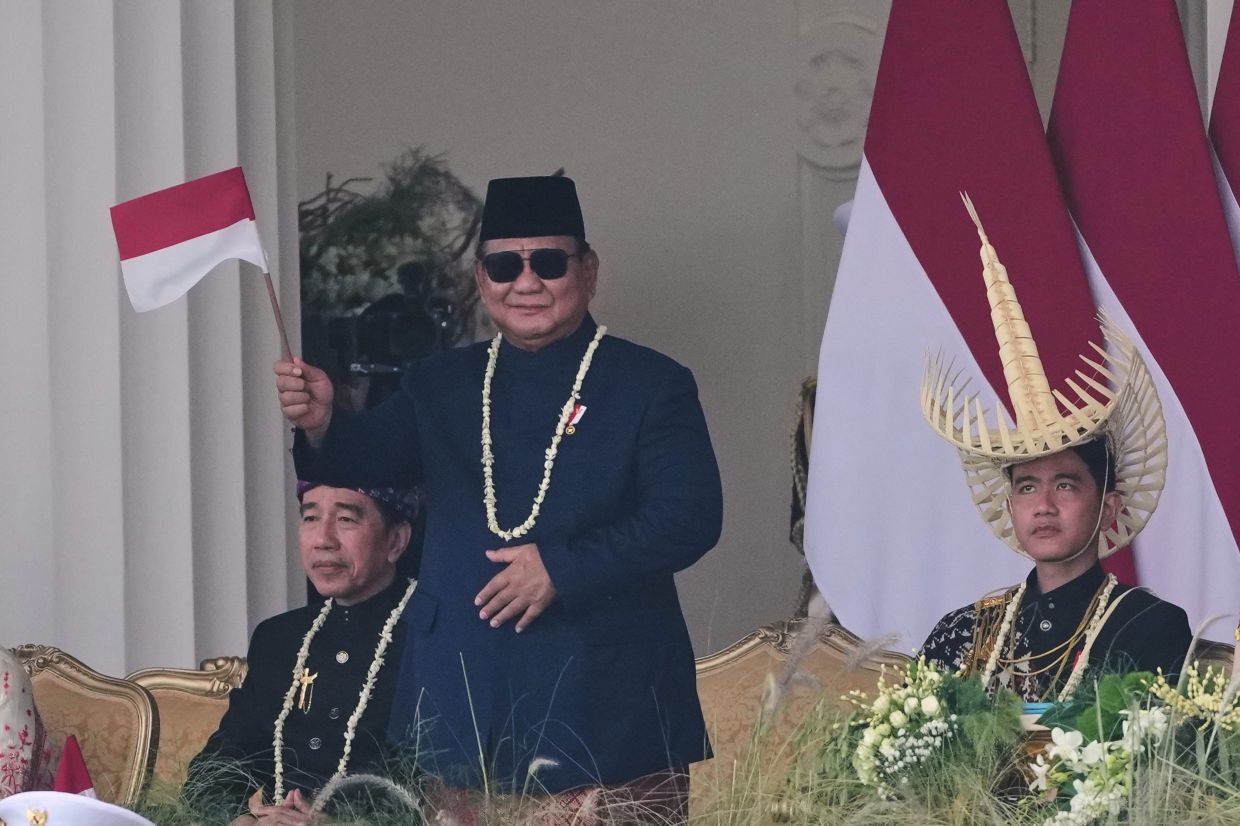
President Prabowo Subianto presided over Indonesia's 81st Independence Day commemoration in Jakarta on Monday, conducting the ceremonial flag-raising at Merdeka Palace while the nation grappled with the immediate aftermath of a catastrophic earthquake that struck Flores Island over the weekend. The competing demands of national celebration and disaster response illustrated the complex realities facing Indonesia's new administration, as officials balanced ceremonial duties with the urgent need to coordinate humanitarian efforts across the archipelago.
The formal proceedings in the capital unfolded with considerable pageantry. Prabowo dressed in traditional navy beskap adorned with a black peci and jasmine garland, embodying the ceremonial role expected of the presidency on this momentous occasion. The centrepiece of the morning's events involved a gilded carriage carrying both a replica of the red-and-white flag and the original Proclamation text from the National Monument, which processed from Monas to Merdeka Palace under an impressive security escort comprising 114 cavalry troops and 45 military police officers on motorcycles from the presidential detail.
Yet the official solemnity took on deeper resonance given the timing. Following the traditional arts performances and parade, Prabowo led a moment of silence dedicated to the country's national heroes whilst explicitly calling attendees to pray for Indonesians confronting natural disaster. This dual acknowledgement—honouring the nation's founding sacrifice whilst recognising contemporary suffering—captured the gravity of governing a tectonically volatile archipelago where independence celebrations frequently coincide with geological calamity.
The Flores earthquake that struck early Saturday morning registered 7.7 on the magnitude scale, making it a major seismic event by international standards. The initial violent shaking proved catastrophic for the island's communities, killing 53 people and destroying hundreds of residential and commercial structures. The disaster's scale became apparent through the displacement figures: approximately 5,400 residents abandoned their homes in fear of further collapses, whilst the ground itself remained unstable. The National Disaster Mitigation Agency reported that nearly 1,000 aftershocks of varying intensities followed the main quake, creating an environment of sustained anxiety and complicating rescue and recovery operations that require stable ground conditions.
Injury tolls underscored the violence of the seismic event. More than 130 people sustained injuries, with medical authorities noting that many victims suffered broken bones—injuries requiring hospitalisation and extended treatment in a region where health infrastructure may face strain during disaster responses. The concentration of fracture injuries suggests people were caught indoors when structures failed, a common pattern in earthquakes striking populated areas without rigorous building code enforcement. Early Monday morning, before the Jakarta ceremony concluded, another substantial aftershock measuring 5.8 magnitude struck offshore approximately 39 kilometres north of NTT at a depth of 10 kilometres, according to the Meteorology, Climatology and Geophysics Agency.
The practical implications of the disaster proved immediately apparent in the composition of the Independence Day ceremony itself. State Secretary Prasetyo Hadi disclosed that several cabinet ministers were absent from Jakarta's proceedings, having been deployed to NTT to oversee disaster response coordination and human development initiatives. Coordinating Human Development Minister Pratikno, Home Minister Tito Karnavian, Public Works Minister Dody Hanggodo, and Deputy Health Minister Benjamin Paulus Octavianus had all travelled to the affected region rather than attending the capital's celebrations, reflecting the Indonesian government's pragmatic decision to prioritise disaster management over ceremonial attendance.
Prasetyo emphasised that this deployment represented an intentional policy choice reflecting presidential values. Commenting that "as we celebrate Independence Day, we also need to ensure that our fellow citizens who are affected by the disaster are being cared for," he articulated a governing philosophy wherein national commemoration could not proceed without simultaneously addressing citizens' immediate needs. This framing acknowledged that the meaning of independence itself extends beyond historical commemoration to encompass the state's contemporary capacity to protect and support its population during vulnerability.
The question of presidential travel to Flores remained unresolved. When queried about whether Prabowo himself would journey to NTT to inspect conditions and meet affected victims—a customary gesture of presidential engagement—Prasetyo indicated no firm decision had been made. His statement that "the ministers are already there" and "we will see what the situation is like and then decide" suggested a wait-and-assess approach, potentially acknowledging that presidential movements during active disaster response phases can create logistical complications, consuming security resources and potentially disrupting ongoing relief operations.
For Malaysian observers, Indonesia's experience carries instructive resonance. Both nations occupy seismically active regions of Southeast Asia where major earthquakes occur with irregular but persistent frequency. The Flores disaster demonstrates how quickly natural events can test governmental capacity and redirect political attention toward immediate humanitarian crises. The coordination challenge evident in Indonesia's response—simultaneously managing national ceremonies and disaster coordination across multiple agencies and distant regions—reflects organisational complexities that any multi-archipelago state must navigate. Malaysia's own experience with earthquake threats along the Sunda Strait and periodic tremors in Sabah and Sarawak underscores the need for robust inter-agency coordination and pre-positioned disaster response capabilities that can activate rapidly when geological events strike.
The intersection of Independence Day with earthquake response also illustrates how natural disasters reshape political calendars and priorities within Southeast Asian governments. National ceremonies typically command significant resources and presidential attention, yet geological events recognise no calendar and demand immediate response. Indonesia's decision to proceed with formal celebrations whilst simultaneously deploying senior ministers to the disaster zone reflects a mature institutional approach to balancing symbolic national duties with substantive governance responsibilities—a model that other regional governments might examine when considering how their own disaster response systems integrate with other governmental functions.

