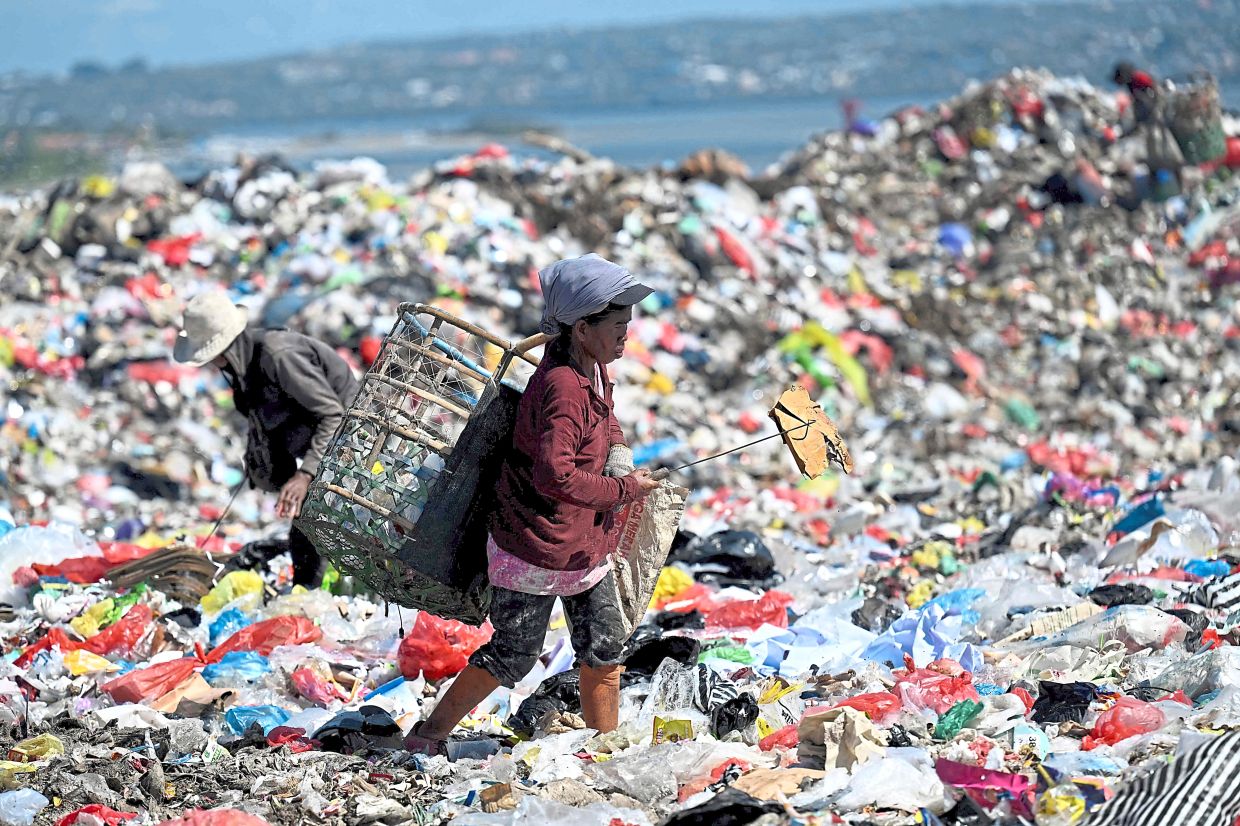
Indonesia has taken a significant step toward addressing its waste crisis by inaugurating the country's first waste-to-energy facility in Pedungan Village, South Denpasar, on Wednesday. The groundbreaking ceremony marked the formal launch of an ambitious national initiative aimed at transforming how the archipelago manages its daily refuse, signalling a strategic pivot toward more sustainable waste disposal and renewable energy generation. The project represents both an environmental commitment and a practical response to the sheer volume of waste Indonesia generates each day, a challenge that has become increasingly urgent as urbanisation accelerates across the region.
Rosan Roeslani, chief executive officer of Danantara Indonesia, framed the initiative within the broader policy direction set by President Prabowo Subianto, emphasising that waste management demands immediate action to prevent burdens falling on future generations. The project is being developed collaboratively through Danantara Investment Management, the sovereign wealth fund managing the initiative, and Daya Energi Bersih Nusantara, the specialist project developer overseeing construction and operations. This partnership structure reflects a growing trend in Southeast Asia where government agencies work alongside private developers to mobilise capital for infrastructure projects that deliver both social and environmental benefits.
The facility itself will employ moving grate incinerator technology, a globally proven approach to waste combustion that has been refined and deployed successfully in developed nations across Europe and Asia. The technology selection is deliberate: the plant has been engineered to comply with the European Industrial Emissions Directive, a stringent environmental standard that ensures air quality, emissions control, and operational transparency exceed typical requirements in developing economies. This commitment to international standards addresses longstanding concerns among environmentalists and local communities about waste-to-energy plants, which have historically faced resistance due to perceptions of pollution and health risks.
The environmental benefits outlined for the Bali facility are substantial. By converting municipal waste into electricity through combustion rather than allowing it to decompose in open landfills, the plant is projected to reduce greenhouse gas emissions by up to 80 per cent per tonne processed. This represents a meaningful contribution to Indonesia's climate commitments, particularly given that methane released from decomposing waste in landfills is a potent greenhouse gas with warming potential far exceeding carbon dioxide over shorter timeframes. For a country already vulnerable to climate impacts, shifting waste management practices offers a dual advantage: reducing environmental harm while simultaneously generating clean electricity.
The employment dimension of the project deserves attention, particularly for Malaysia and other Southeast Asian economies grappling with job creation in the green energy transition. Danantara estimates the facility will create up to 1,200 green jobs during both construction and operation phases. These positions span engineering, maintenance, operations, and administrative roles, offering pathways for workers transitioning from traditional waste management sectors into higher-skilled renewable energy employment. As Malaysia pursues its own net-zero ambitions, similar projects could provide templates for scaling sustainable job creation rather than merely cutting employment as old industries phase out.
The commercial viability of the project hinges on a critical agreement reached during the groundbreaking ceremony: a Power Purchase Agreement signed between the project company and PLN, Indonesia's state-owned utility. This contract guarantees long-term purchase of electricity generated by the facility, providing investors with stable revenue streams necessary for financing and operational planning. For Malaysian readers following energy infrastructure developments, this arrangement mirrors successful models adopted in other regional waste-to-energy projects, though it also highlights how state utility backing remains essential to project bankability in Southeast Asia, where private renewable energy offtake agreements remain less common than in more mature markets.
Indonesia's waste generation presents a scale challenge that underscores the urgency of this project. The country produces more than 140,000 tonnes of waste daily, a figure that continues growing as the middle class expands and consumption patterns shift. To contextualise this for regional audiences: this daily volume would fill approximately 56 Olympic-sized swimming pools, and most of it currently ends up in landfills that are rapidly reaching capacity. Traditional approaches focused solely on landfill expansion are becoming economically and environmentally untenable, compelling governments to pursue diversified waste management strategies.
The Bali facility represents the opening salvo in what Danantara characterises as a national programme, implying multiple plants will follow across Indonesia's archipelago. This staged rollout approach reflects practical realities: establishing supply chains, training workforces, and proving technology viability at one location before replicating it elsewhere. For Malaysia, which has invested in waste-to-energy projects in Johor and Selangor, the Indonesian initiative offers both competitive and collaborative dimensions. Competition exists insofar as both nations vie for renewable energy investment and regional sustainability credentials, yet collaboration opportunities arise through technology sharing and regulatory harmonisation across ASEAN.
The timing of this project aligns with intensifying pressure from investors, consumers, and multilateral institutions for Southeast Asian nations to accelerate decarbonisation. Indonesia's commitment to waste-to-energy infrastructure demonstrates responsiveness to these expectations while tackling a domestic crisis that affects public health, land use, and economic productivity. The European emissions compliance standards selected for the facility signal Jakarta's determination to integrate Indonesian infrastructure into global best-practice frameworks rather than accepting lower environmental thresholds sometimes associated with developing-economy projects.
Looking forward, the success or underperformance of this inaugural facility will shape investor confidence and government policy regarding subsequent projects. If operations meet or exceed technical and financial projections, capital will likely flow toward additional waste-to-energy development, potentially creating a regional hub for expertise and technology deployment. Conversely, operational challenges or community opposition could cool enthusiasm, reverting Indonesia toward landfill-dependent strategies that offer short-term cost savings but long-term environmental and social costs. For Malaysia and other Southeast Asian economies, monitoring this project's trajectory offers insights into whether waste-to-energy can meaningfully scale in the region or whether alternative waste management approaches deserve greater priority.

