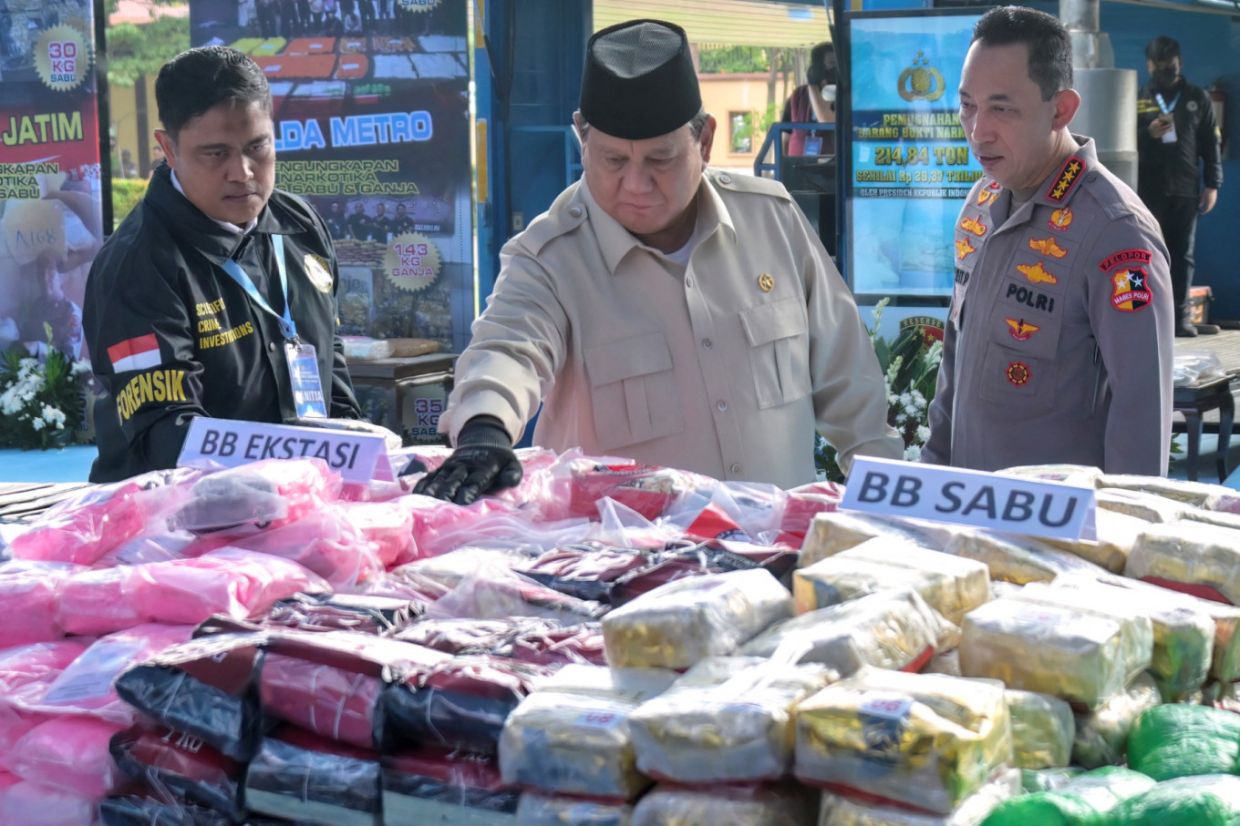
Indonesia's narcotics enforcement officials have dismantled another significant drug trafficking operation, intercepting a vessel carrying 2.6 tonnes of liquid methamphetamine in waters off Bengkalis, Riau province. The seizure, announced by the National Narcotics Agency late on Tuesday, August 18, represents a major victory in the nation's ongoing struggle against the sophisticated networks smuggling synthetic drugs through Southeast Asian shipping lanes. The scale of the operation—involving a carefully concealed contraband stash aboard a commercially operated freighter—underscores the resourcefulness and audacity of international drug syndicates targeting Indonesia's ports and territorial waters.
Intelligence gathered by the National Narcotics Agency had flagged the MV Rain Maker as a vessel of concern, prompting investigators to track its movements as it travelled from Malaysian Sarawak through the Andaman Sea towards Indonesian destinations. The ship was sailing under an assumed identity, a common tactic used by traffickers to evade detection at border checkpoints and maritime monitoring stations. Working in coordination with customs authorities, the agency's operational teams conducted the interception late on Monday in a region where maritime traffic converges, creating both logistical challenges and opportunities for enforcement officials.
Upon boarding and searching the vessel, inspectors uncovered the methamphetamine concealed within eight water barrels and an integrated water tank system—a method designed to blend illicit cargo with legitimate shipboard supplies. Roy Hardi Siahaan, a senior official with the National Narcotics Agency, confirmed the discovery and detailed the seizure's dimensions during the agency's public statement. The liquid form of the drug, which can be reconstituted into crystal methamphetamine for street distribution, represents a particularly potent trafficking medium given its concentration and transportability across maritime routes.
The criminal enterprise was not limited to methamphetamine trafficking alone. Sniffer dogs deployed during the inspection uncovered more than 1.5 million illegal cigarettes stashed aboard the same vessel, suggesting the operation served as a multi-commodity smuggling platform. This diversification of contraband reflects how transnational criminal syndicates exploit shipping networks for various illicit goods simultaneously, maximizing profits from each voyage and complicating law enforcement's detection efforts.
All 10 crew members apprehended during the operation were identified as nationals of Myanmar, consistent with patterns observed in previous drug trafficking incidents throughout the region. The arrest of foreign nationals in smuggling operations raises questions about recruitment practices within maritime industries and the vulnerability of shipping crews to exploitation by organized crime networks. Many crew members aboard trafficking vessels operate under conditions of duress or financial desperation, though Indonesian authorities typically prosecute all participants regardless of their role or circumstances.
This recent seizure is not an isolated incident but rather part of an accelerating pattern of drug interdictions in Indonesian waters. The National Narcotics Agency's announcement specifically noted that this represented the second major interception involving a Tanzanian-flagged vessel intercepted in the vicinity within a single month. Just ten days earlier, on August 8, authorities had seized 1.3 tonnes of ketamine from another ship operating in waters surrounding the Riau Islands, positioned strategically near Singapore. That operation resulted in eight arrests—seven crew members from Myanmar and one from Taiwan—indicating the international composition of trafficking networks in the region.
Context matters considerably for understanding Indonesia's enforcement landscape. The previous calendar year had witnessed Indonesia's most significant drug seizure on record: two tonnes of crystal methamphetamine discovered aboard a fishing vessel that had originated from the Andaman Sea and was bound for Batam Island, a major transshipment hub for contraband heading into the broader Southeast Asian market. The August seizure, while substantial, measures slightly below that benchmark but nonetheless demonstrates the continuing scale of trafficking attempts penetrating Indonesian territorial waters. These operations collectively suggest that interdiction efforts are successfully disrupting some criminal operations, though the persistence of attempts indicates that supply-side enforcement alone has not deterred systematic smuggling.
The geographic pattern is revealing. The Andaman Sea, Riau Islands, and waters adjacent to Malaysian Sarawak form a corridor where multiple drug trafficking networks converge, drawn by proximity to production sources in the Golden Triangle, established transit routes through sympathetic jurisdictions, and access to distribution networks throughout Indonesia and beyond. Bengkalis, where this latest interception occurred, sits along major shipping lanes where commercial vessels intermingle with specialized smuggling operations, complicating the detection burden faced by monitoring agencies.
Indonesia's legislative framework represents among the world's most stringent drug control regimes, with trafficking charges carrying potential capital punishment. However, the nation has maintained a de facto moratorium on executing drug offenders for several years, creating a policy tension between statutory severity and actual enforcement practice. This reality shapes both the calculation of international traffickers and the diplomatic context surrounding Indonesian drug cases, particularly when foreign nationals face prosecution under these provisions.
The seizures underscore the necessity for sustained regional cooperation in maritime law enforcement. Drug trafficking networks operate transnationally, exploiting jurisdictional gaps and varying enforcement capacities across Southeast Asian nations. Intelligence sharing between Indonesia, Malaysia, and Singapore regarding vessel movements and suspected trafficking activity has clearly improved detection capabilities, yet the frequency of interceptions indicates that only a fraction of trafficking attempts are successfully interdicted. The relative openness of maritime commerce, combined with corruption vulnerabilities and the sheer volume of shipping traffic, creates persistent operational challenges for enforcement authorities.
For Malaysia specifically, these incidents carry particular resonance given that trafficking routes originate from Malaysian territory and major transshipment hubs like Port Klang and Penang serve as strategic nodes in regional drug distribution networks. The involvement of Sarawak as a departure point for this operation highlights how East Malaysian ports remain focal points in international smuggling operations. Regional governments face mounting pressure to strengthen port security, improve intelligence coordination, and enhance vessel inspection protocols.
These enforcement victories, while significant, must be contextualized within the broader dynamics of global methamphetamine markets. The expansion of synthetic drug production and consumption throughout Asia has created robust demand dynamics that sustain trafficking networks despite consistent law enforcement pressure. Unless supply-side interdiction efforts are accompanied by demand reduction initiatives, treatment infrastructure expansion, and precursor chemical controls, seizure statistics alone cannot meaningfully disrupt the fundamental economics driving the trade. The 2.6-tonne seizure represents a substantial temporary disruption, but systematic dismantling of trafficking networks requires sustained, coordinated pressure across multiple enforcement domains and jurisdictions.

