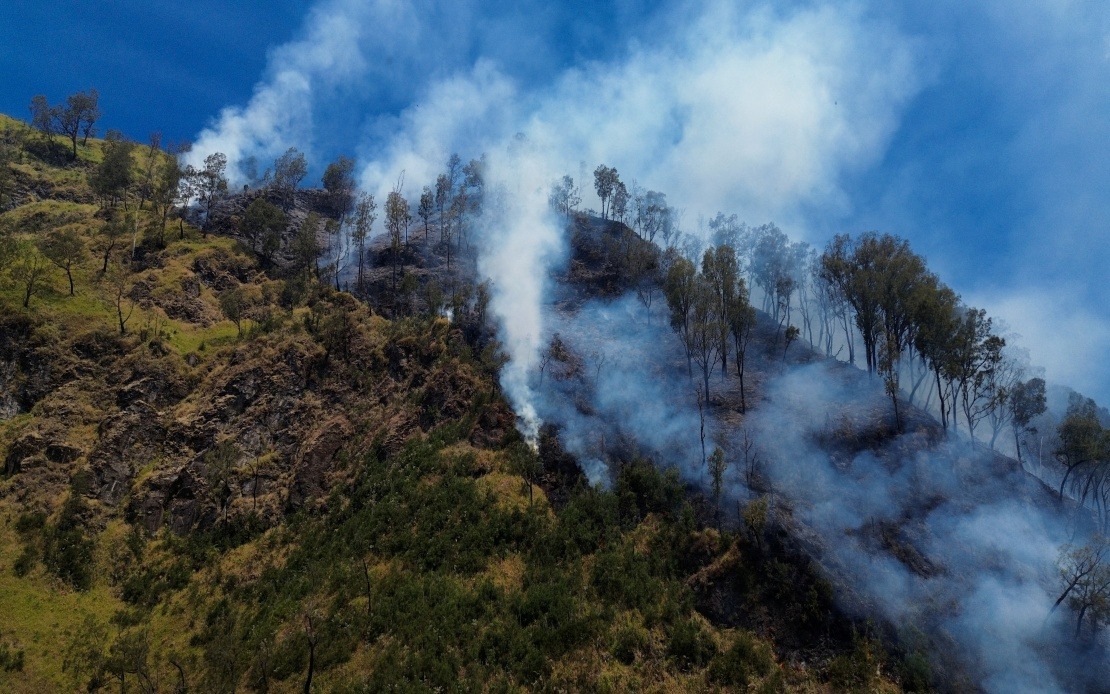
Indonesia's iconic Mount Bromo has been sealed to the public as authorities mobilize to contain a spreading wildfire across one of the country's most visited natural attractions. The Bromo Tengger Semeru National Park authority implemented a complete closure of all visitor access effective Saturday evening, suspending tourism activities indefinitely while firefighting teams work to extinguish flames that have ravaged the volcanic landscape in East Java.
The decision to restrict access affects five major entry points into the park, including Cemorolawang in Probolinggo Regency, Wonokitri in Pasuruan Regency, and routes through Malang and Lumajang regencies. Park officials emphasized that the measure prioritizes both operational effectiveness of suppression efforts and the safety of visitors, eliminating the logistical complications that would arise from maintaining public access during an active emergency response.
The wildfire has been burning since Monday, consuming an estimated 176.20 hectares of forest and vegetation across the Probolinggo and Malang regencies surrounding the national park. According to Abdul Muhari, head of the National Disaster Management Agency's Data, Information, and Communication Centre, active hotspots were still visible and generating smoke as of late Saturday, with fire teams maintaining heightened vigilance given moderate wind conditions that could accelerate the blaze's spread.
Firefighting efforts have been reinforced with aerial support, with two helicopters each capable of transporting 1,000 litres of water deployed to assist ground teams. This represents a significant commitment of resources, reflecting the seriousness with which Indonesian authorities are treating the incident. The combination of helicopter water drops and ground-based suppression teams represents a coordinated response typical of Indonesia's approach to large-scale forest fires during the dry season.
Tourists who had booked visits through the park's online ticketing system will have the option to reschedule their trips once the park reopens, or to seek full refunds for their reservations. This provision acknowledges the economic disruption caused by the closure while offering affected visitors flexibility. For international tourists planning trips to East Java and Southeast Asian travelers considering visits to one of Indonesia's major attractions, the timing and duration of the closure remain uncertain.
The Mount Bromo incident represents part of a broader pattern of forest fires affecting Indonesia's eastern regions during this period. Simultaneously, authorities dealt with a separate fire at Mount Rinjani National Park in East Lombok, where a blaze consumed approximately 30 hectares in the Sembalun Resort area. That fire, which ignited around 8 pm on Friday, was brought under control by approximately 1:30 am Saturday, suggesting more rapid containment in that location despite the similar environmental conditions across the region.
The causes of both fires remain subject to investigation, though such incidents during Indonesia's drier months frequently result from combinations of high temperatures, low humidity, and strong winds. Whether these particular fires originated from human activity, natural causes, or both will likely influence policy discussions regarding forest management and fire prevention strategies across Indonesia's national park system.
For Malaysian travelers and tourism operators, Mount Bromo's closure creates immediate planning complications. The site attracts significant numbers of visitors from Malaysia and other regional countries, particularly those combining visits with other East Java destinations. Tour operators will need to adjust itineraries, while individual travelers may face cancellations or rebooking challenges during peak tourism season.
The incident highlights the vulnerability of popular natural attractions to environmental disruption, particularly in tropical regions prone to seasonal fire risk. Indonesia has invested considerably in tourism infrastructure across East Java, positioning destinations like Mount Bromo as key economic drivers. Extended closures can impact local communities dependent on tourism revenue, creating pressure to reopen facilities even before conditions are fully stabilized.
As of Sunday morning, park authorities had not announced preliminary timelines for resuming public access, instead maintaining focus on containment and monitoring. The decision reflects appropriate prioritization of fire suppression over economic considerations, though the extended closure will inevitably generate discussions about preventive measures and forest management practices that might reduce fire risk in future seasons. Regional environmental agencies across Southeast Asia will likely monitor Indonesia's response closely, as forest fires frequently cross borders through atmospheric spread of smoke and ash.

