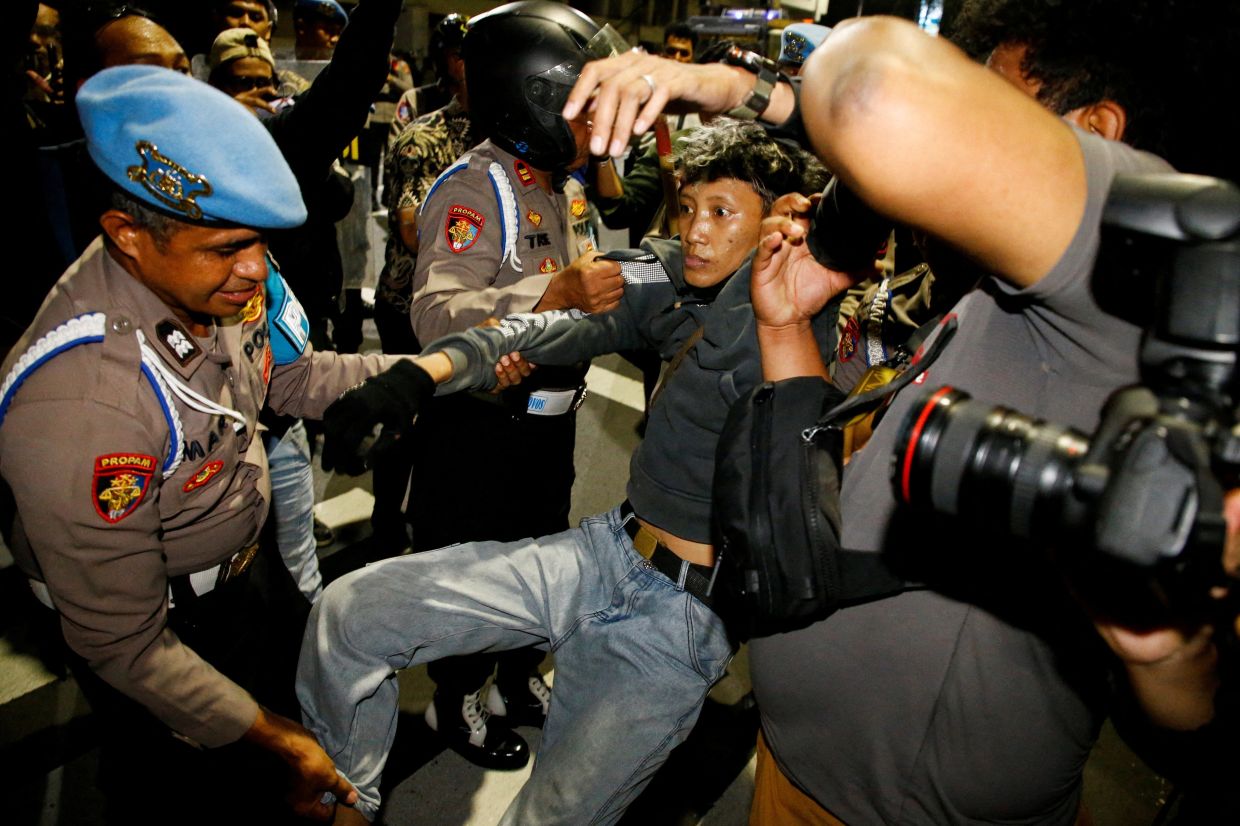
Indonesian police have pressed charges against four individuals arrested during an anti-government gathering in Surabaya on Friday, according to a statement from the city's police chief released on Sunday. The demonstration drew approximately 100 participants to the area surrounding a government compound in Indonesia's second-largest city, with grievances centred on two major policy decisions that have triggered broader public discontent across the archipelago.
The rally reflected mounting frustration with the government's decision to raise fuel prices substantially in recent weeks. The price hike, affecting non-subsidised petrol, has climbed by roughly 30 per cent as Jakarta attempts to manage mounting budget deficits exacerbated by international geopolitical tensions. The Middle East conflict has disrupted global oil markets, creating additional pressure on state finances as governments worldwide grapple with volatile energy costs. Despite being Southeast Asia's largest economy and possessing its own oil reserves, Indonesia remains a net importer of petroleum products, making it vulnerable to international price fluctuations even with domestic subsidy systems in place.
Beyond fuel costs, demonstrators channelled anger toward a flagship social programme that has become mired in controversy. The government's free school meals initiative, positioned as a poverty-reduction measure and response to childhood malnutrition concerns, has instead become synonymous with administrative chaos and public health crises. Since the scheme's launch, tens of thousands of individuals have reported food poisoning incidents linked to the programme. These health emergencies have been compounded by persistent allegations that corruption and mismanagement plague the initiative's implementation, raising questions about whether funds reach their intended beneficiaries or are siphoned through bureaucratic channels.
During Friday's Surabaya demonstration, some participants escalated their actions beyond peaceful protest methods. Surabaya Police Chief Luthfie Sulistiawan indicated that certain demonstrators threw objects at government property, including firecrackers and rocks, prompting law enforcement to employ what officials characterized as "firm actions" to restore order and clear the area. In total, police detained 24 people that day, though most were released without formal charges, reflecting a common practice where authorities exercise discretion regarding which detainees proceed through the criminal justice system.
The four individuals now facing charges have been specifically accused of property destruction and assaulting police officers—charges that typically carry more serious legal consequences than simple trespassing or participation in an unauthorised gathering. Additionally, six people remain under investigation after authorities detected controlled substances in their systems, suggesting that police may be pursuing either drug possession charges or using such findings as ancillary offences to compound the primary allegations. This multi-layered approach to prosecution is not uncommon in Indonesian law enforcement practice.
The unrest in Surabaya represents just one manifestation of broader national dissatisfaction that has mobilized particularly the younger demographic. In Jakarta, the capital, student-led movements have organised substantial street demonstrations targeting both the fuel pricing decisions and the beleaguered meal programme. This student activism reflects generational concern about economic pressures and the adequacy of government social policies, signalling potential sustained mobilization if authorities do not address underlying grievances.
Indonesia's reliance on fuel subsidies represents a distinctive feature of its economic model, designed to protect lower-income populations from volatile global energy costs whilst maintaining social stability. However, the fiscal burden of maintaining these subsidies has prompted successive governments to explore partial deregulation. Such adjustments inevitably generate public resistance, particularly among working-class and middle-income groups already facing inflationary pressures. The current 30 per cent increase thus carries significant political weight beyond its immediate economic impact.
The free meal scheme, meanwhile, epitomizes the challenges facing developing nations attempting to implement ambitious social programmes with limited administrative capacity. While the concept addresses genuine nutritional deficiencies among Indonesia's school-age population, execution has proven problematic. The partial suspension of the programme following the poisoning incidents suggests government acknowledgement of systemic failures, yet this reactive approach has done little to restore public confidence or resolve underlying concerns about procurement, food safety standards, and financial accountability.
The charging of protest participants raises questions about the government's tolerance for dissent and its preferred methods for managing public opposition. By prosecuting a subset of demonstrators rather than the entire gathering, authorities attempt to distinguish between legitimate protest activity and criminal conduct. However, the selective enforcement approach can generate perceptions of political targeting, particularly if charges relate primarily to protest participation rather than genuinely violent conduct that would warrant prosecution in any context.

