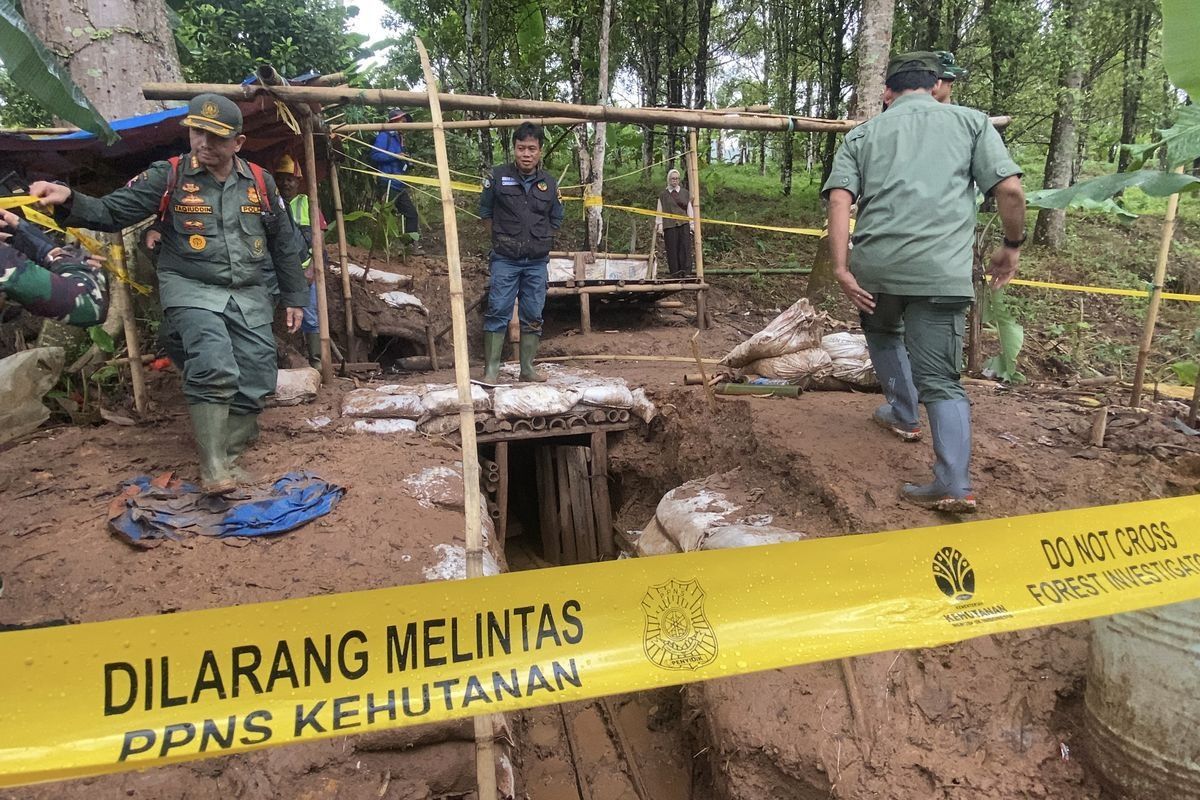
Indonesia's energy ministry has escalated enforcement action against illegal mining by formally charging 24 foreign nationals as criminal suspects in a large-scale operation discovered in the Maluku region, authorities announced this week. The move reflects growing official concern about the prevalence of unauthorised mineral extraction across the archipelago and the involvement of international actors in circumventing Indonesia's mining regulations.
Energy ministry official Jeffri Huwae disclosed that the foreign suspects are accused of establishing physical infrastructure specifically designed to support clandestine gold extraction in the Gunung Botak area. Rather than simply extracting ore, the operation had reached an advanced stage of development with the construction of roads connecting mining sites and processing facilities capable of refining raw material into final product. This level of infrastructure development suggests a sophisticated, well-funded enterprise rather than opportunistic small-scale prospecting.
The gravity of the alleged offences is underscored by Indonesian criminal law, which prescribes maximum sentences of five years imprisonment for violations related to illegal mining. This penalty framework indicates that authorities consider such operations sufficiently serious to warrant substantial custodial punishment, placing illegal mining among the more serious economic crimes Indonesia actively prosecutes.
Authorities have maintained operational secrecy regarding several key details of the case. The nationalities of the 24 suspects have not been publicly disclosed, nor has the ministry quantified how much refined gold the operation had produced before authorities intervened. Indonesian officials have been notably reticent about providing additional information, declining requests for further comment on the investigation.
State news agency Antara had previously reported that 24 Chinese nationals were apprehended in the Gunung Botak area last month while working under the sponsorship of a local company identified as PT Harmoni Alam Manise. This earlier reporting suggests the suspects' home countries were known to authorities, even if not publicly confirmed through official energy ministry channels. The sponsorship arrangement with a registered domestic company indicates that the operation likely involved complicit Indonesian partners providing the veneer of legitimacy.
The current status of the suspects remains split between those in custody and those beyond reach. Twelve of the 24 foreign nationals have been detained within Indonesia's borders and are therefore subject to ongoing legal proceedings. The remaining dozen suspects are reported to be outside Indonesian jurisdiction, complicating prosecution efforts and potentially limiting the scope of penalties Indonesia can eventually impose. This bifurcated enforcement situation reflects a common challenge in international crime cases where perpetrators can flee across borders before arrest warrants are executed.
Beyond the foreign nationals, Indonesian authorities have also identified two domestic suspects complicit in the scheme. These local accomplices likely played essential roles facilitating the operation, whether through government connections, land access arrangements, or logistical support. Their inclusion in formal charges indicates that authorities recognise the illegal mining network encompassed both foreign principals and Indonesian facilitators, a structure that mirrors patterns documented in other transnational resource extraction cases across the region.
Illegal gold mining involving foreign nationals represents a recurring problem for Indonesia's mining sector. The Maluku case follows a similar enforcement action in Papua, where police arrested four Chinese nationals engaged in unauthorised mining in Senggi district during the previous year. These successive incidents suggest that foreign mining interests, particularly from China, perceive opportunities in Indonesia's vast mineral resources and are willing to operate outside legal frameworks to exploit them.
The proliferation of illegal foreign mining operations touches on broader regional concerns about resource sovereignty and environmental protection. Maluku and Papua, Indonesia's resource-rich eastern provinces, face particular vulnerability to such operations because of their geographic distance from Java, limited government presence, and the strategic value of their mineral deposits. The low population density in some areas combined with weak institutional capacity can make enforcement difficult, allowing sophisticated operations to establish themselves before detection.
For Malaysia and other Southeast Asian nations, the Indonesia case carries implications regarding resource management and transnational criminal networks. Illicit mining often generates revenue streams that fund other illegal activities and can involve smuggling networks that operate across the region. Close cooperation between national authorities, including intelligence sharing on criminal suspects and investigation techniques, remains essential for disrupting these cross-border operations.
The formal charging of suspects represents a significant escalation from the initial detention phase, signalling that Indonesian prosecutors believe they have sufficient evidence to proceed with prosecution. However, the absence of half the suspects from Indonesian territory introduces complexity into the legal process. Interpol notices or extradition requests may be necessary to apprehend the twelve suspects currently at large, contingent on the cooperation of the countries where they have fled.

