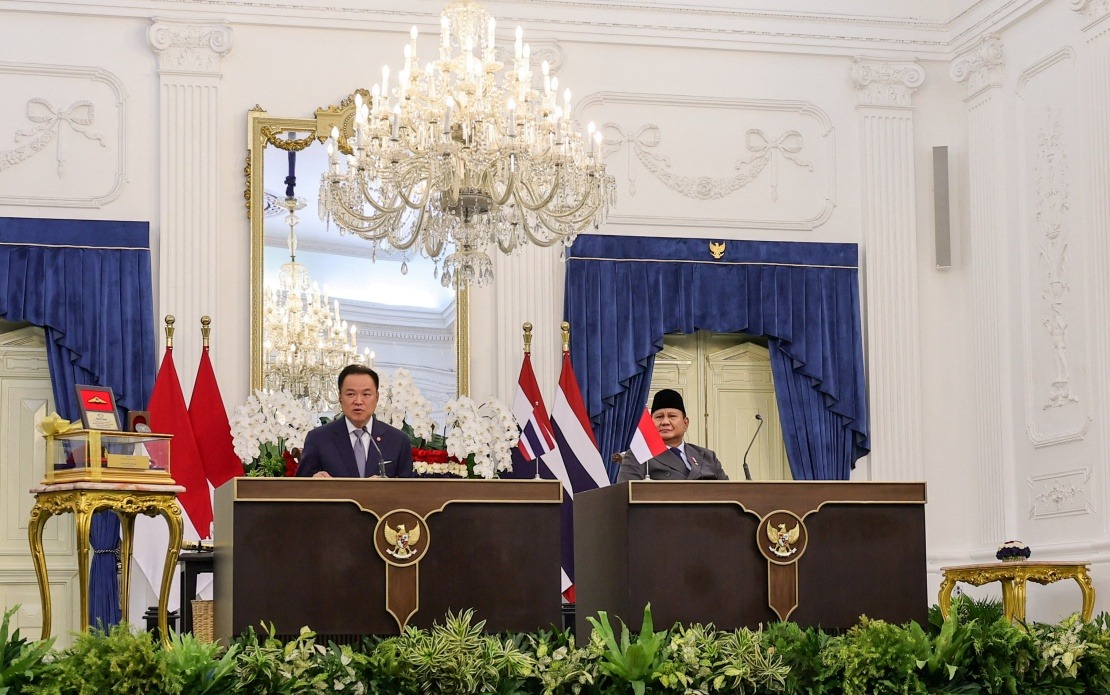
At talks in Jakarta on Monday, Indonesian President Prabowo Subianto and Thai Prime Minister Anutin Charnvirakul jointly declared their countries' determination to sustain ASEAN's intervention in Myanmar, reaffirming the bloc's commitment to implementing the Five-Point Consensus through dialogue, violence reduction, and enhanced humanitarian aid. The commitment emerged from their second Leaders' Consultation at Merdeka Palace, underscoring how both nations view Myanmar's stability as essential to Southeast Asian prosperity and security architecture.
Prabowo emphasised that maintaining ASEAN unity and centralised decision-making remained the cornerstone for achieving lasting peace in Myanmar. He articulated Indonesia's conviction that the regional bloc must maintain its constructive diplomatic posture while encouraging inclusive dialogue among all Myanmar stakeholders. This messaging aligns with Jakarta's broader strategy of positioning itself as ASEAN's stability anchor during a period when the bloc faces credibility challenges regarding its ability to influence Myanmar's military leadership.
Beyond Myanmar, the two leaders elevated bilateral security cooperation into a comprehensive framework targeting organised transnational crime networks. The partnership encompasses joint operations against online fraud syndicates, which have emerged as a sophisticated regional threat affecting multiple countries. Indonesia and Thailand recognised that these criminal operations require coordinated cross-border responses involving intelligence agencies, financial institutions, and law enforcement bodies. The scope reflects growing regional anxiety about the growing sophistication of cybercrime operations originating from Southeast Asia.
Thailand has played a significant role in assisting Indonesian victims of online scams, facilitating the repatriation of nearly 1,000 nationals who fell victim to elaborate fraud networks. This humanitarian dimension demonstrates how transnational crime increasingly blurs traditional security categories, affecting civilians and requiring diplomatic cooperation on humanitarian grounds. The agreed Transnational Referral Mechanism represents an institutional innovation designed to systematise victim identification, protection protocols, and dignified repatriation procedures across borders.
Anutin proposed deeper defence industrial collaboration, including the supply of 36 amphibious wheeled armoured vehicles to Indonesia. This equipment transfer reflects Thailand's emerging role as a regional defence supplier and signals Bangkok's strategic interest in strengthening Indonesia's maritime capabilities. For Jakarta, such procurement arrangements diversify defence partnerships beyond traditional suppliers and signal Thailand's willingness to support Indonesia's military modernisation agenda.
Intelligence sharing and joint military training form the operational foundation of the expanded partnership. Thailand committed to sustaining regular joint exercises and maritime security cooperation, recognising that Indonesia's vast archipelago requires sophisticated naval capabilities. Enhanced information exchange will enable both countries to anticipate threats across shared maritime zones and coordinate responses to piracy, smuggling, and illegal fishing operations that destabilise regional waters.
The two nations specifically targeted human trafficking and drug smuggling alongside online fraud, acknowledging that these crimes operate through interconnected networks requiring multifaceted responses. Capacity building initiatives will enhance Thailand's ability to strengthen Indonesia's law enforcement institutions, particularly in financial forensics and cyber investigation techniques. This assistance dimension reflects Thailand's own evolution as a country managing complex transnational crime challenges while building institutional expertise.
Anutin's visit marked his first official journey to Indonesia since assuming office as Thailand's 32nd Prime Minister in September 2025, carrying particular significance given that no Thai Prime Minister had visited Indonesia for 15 years. This diplomatic opening suggests improved Thai-Indonesian relations after a period of relative coolness, potentially reflecting leadership changes in Bangkok and Jakarta that have created fresh opportunities for engagement. The gap in high-level visits underscores how bilateral relations had atrophied despite geographic proximity and economic interdependence.
For Malaysia and other ASEAN members, the Indonesia-Thailand alignment demonstrates how major regional powers are reconstructing security frameworks beyond traditional military alliances. The emphasis on transnational crime cooperation reflects a shared recognition that contemporary threats transcend borders and require integrated regional responses. Malaysia faces similar challenges with online scam networks and human trafficking, suggesting potential opportunities to participate in the emerging mechanisms being developed by Jakarta and Bangkok.
The Myanmar dimension retains strategic weight for both countries. Indonesia views stable Myanmar governance as essential to ASEAN credibility, while Thailand shares immediate border security concerns requiring Myanmar's cooperation. By reaffirming the Five-Point Consensus, both nations signal they have not abandoned Myanmar despite the military junta's resistance to ASEAN mediation. However, the consensus remains an aspirational framework rather than an implemented roadmap, reflecting the limits of ASEAN pressure on Myanmar's entrenched military leadership.
The partnership represents institutional deepening rather than revolutionary change, building incrementally on existing cooperation frameworks. Yet the explicit attention to transnational crime and the agreement to develop systematic victim protection mechanisms suggest recognition that Southeast Asian security requires addressing challenges that transcend traditional state-to-state military concerns. For Malaysia, understanding how Indonesia and Thailand structure these responses offers insights into regional security architecture evolution and potential collaboration opportunities on shared crime and stability challenges.

