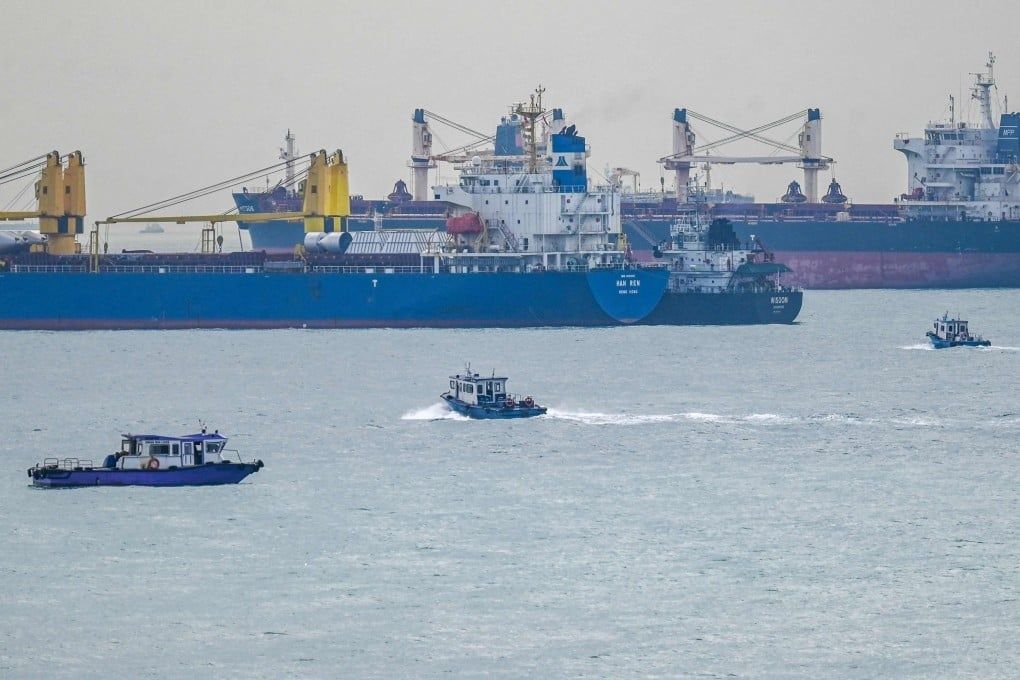
The two maritime nations of Indonesia and Singapore have jointly reaffirmed their dedication to ensuring the security and stability of the Strait of Malacca, one of the world's most vital shipping lanes, while committing to deepened coordination with Malaysia and Thailand on matters affecting the strategic waterway. The pledge came during the annual Indonesia-Singapore Leaders' Retreat held at the Istana Merdeka in Jakarta on Monday, where President Prabowo Subianto and Singapore Prime Minister Lawrence Wong issued a joint declaration underscoring their shared interest in maintaining peace and security across the passage.
As the two countries that directly control the narrow waters separating their territories, Indonesia and Singapore occupy unique positions of responsibility over the Strait of Malacca. Speaking at a joint press conference following their bilateral discussions, President Prabowo stressed that both nations remain committed to upholding the principles enshrined in the 1982 United Nations Convention on the Law of the Sea (UNCLOS), which governs maritime boundaries and navigation rights across international waters. The framework provides the legal foundation for ensuring that the waterway remains accessible to all nations regardless of their size or geopolitical alignment, a principle both leaders emphasised as fundamental to regional stability and international commerce.
The Strait of Malacca represents far more than a simple passage for merchant shipping and naval vessels. For Malaysia, Singapore, and Indonesia especially, the waterway serves as a critical economic artery through which hundreds of billions of dollars in global trade flows annually. President Prabowo articulated the dual nature of their commitment, noting that safeguarding the strait extends beyond merely keeping its channels navigable. The leaders recognised that protection must encompass preventing environmental degradation caused by maritime pollution, minimising the risk of costly accidents that could disrupt traffic or damage coastal communities, and combating piracy and other maritime crimes that threaten both commercial and military interests throughout the region.
The security dimension carries particular weight in Southeast Asia's current geopolitical context. The Strait of Malacca's vulnerability to interference from external powers or non-state actors has long concerned the region's governments. By strengthening bilateral coordination between Indonesia and Singapore, and by extending that framework to include Malaysia and Thailand, the four countries signal their determination to maintain control over their own maritime domain. This regional agency becomes increasingly important as great power competition intensifies and various external actors seek to expand their influence in Southeast Asian waters.
Prabowo's remarks about the second annual retreat between himself and Prime Minister Wong reflected the deepening institutional relationship between Jakarta and Singapore. These regular high-level meetings serve multiple purposes: they provide opportunities to address pressing bilateral concerns, they create space for discussing broader regional security architecture, and they demonstrate to the international community that Southeast Asian nations can cooperate effectively on issues of mutual concern. The timing of this retreat, coming as it does during a period of shifting geopolitical alignments, sends a clear message about the region's commitment to managing its own affairs through dialogue and established mechanisms.
Beyond the Malacca Strait specifically, the two leaders used their retreat to canvass a wider range of bilateral, regional, and global issues. Both presidents underscored ASEAN's longstanding principle that disputes should be resolved through peaceful means, emphasising dialogue and diplomacy as the preferred mechanisms for managing disagreements whether they occur within Southeast Asia or in other regions. This reiteration carries significance given current tensions in the South China Sea and other maritime areas where competing claims and strategic interests create potential for conflict. By reaffirming these principles at the leadership level, Indonesia and Singapore reinforce the norms that ASEAN hopes will guide regional conduct.
The leaders also signalled their preference for addressing misunderstandings and misperceptions through frank, friendly discussion rather than through escalation or public confrontation. This approach reflects a mature diplomatic tradition in which nations acknowledging differences can nevertheless maintain respectful relationships and cooperate on matters of mutual benefit. For Southeast Asian states often caught between competing great power interests, the ability to manage disagreements while preserving working relationships proves essential to maintaining space for regional autonomy.
The backdrop of this retreat carries historical significance that both nations recognise. Indonesia and Singapore will mark the 60th anniversary of their diplomatic relations next year, a milestone that testament to their ability to transform colonial-era rivalries into modern partnership. From their initial interactions following Singapore's separation from Malaysia, the two neighbours have evolved into significant economic and security partners. This trajectory demonstrates that nations sharing water boundaries and commercial interests need not become adversaries but can instead build mutually beneficial relationships.
Prabowo's confidence that continued cooperation between the two countries would contribute to broader stability, growth and prosperity across Southeast Asia reflects an understanding that bilateral relationships ultimately serve regional interests. Indonesia's size and influence mean that its diplomatic orientation carries weight throughout ASEAN. Similarly, Singapore's role as a financial hub and strategic node in regional supply chains means that its positions on maritime security and commerce matter across the region. When these two nations align on preserving the Strait of Malacca's security and openness, they create conditions that benefit not only themselves but all nations dependent on this critical passage.
The commitment to preparing the Indonesia-Singapore partnership for future challenges suggests both nations recognise that maritime security cannot be treated as a static issue but rather as an evolving challenge requiring constant adaptation. Emerging threats ranging from climate-related maritime vulnerabilities to new forms of piracy and smuggling, alongside evolving great power competition, will demand sophisticated coordination among the Strait's bordering and neighbouring states. By institutionalising their leadership engagement through annual retreats and maintaining transparent coordination with other stakeholders like Malaysia and Thailand, Indonesia and Singapore are building mechanisms designed to sustain effective collective management of the waterway for years to come.

