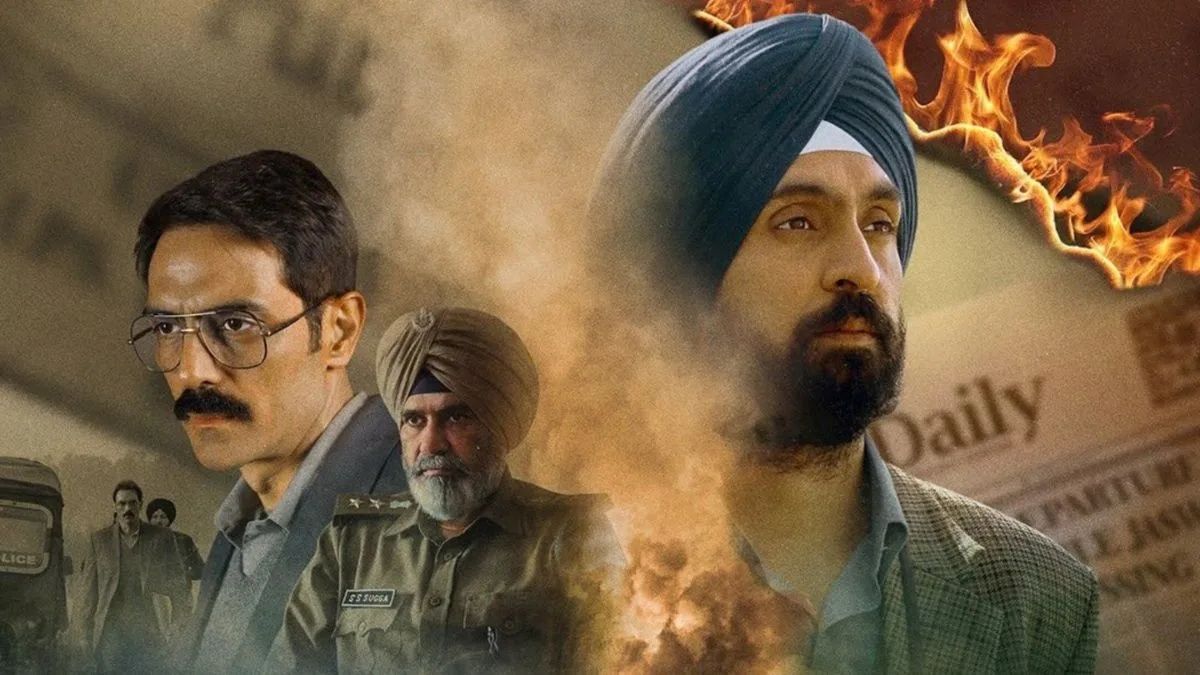
The removal of a major film from India's leading streaming platform this month has crystallised growing anxieties within the country's film industry about state control over creative expression. Producer Honey Trehan spent four years negotiating with Indian authorities over his film "Satluj," enduring demands for 127 modifications before finally accepting defeat and turning to ZEE5 for release. Within days, the platform pulled the title citing "current developments," with reports attributing the decision to government pressure based on unspecified "security concerns." For Trehan, the experience encapsulates a broader troubling pattern: what filmmakers and critics increasingly describe as systematic censorship reshaping Indian cinema under Prime Minister Narendra Modi's administration.
The scale of intervention has become undeniable. Parliamentary documents reveal that India's Central Board of Film Certification demanded alterations to 3,033 films during fiscal year 2025—more than double the figure from four years prior. Yet this raw statistical reality masks deeper complexities. The government provides no transparency regarding what specific content triggered these demands or the rationale behind individual decisions. The CBFC, India's principal film certification authority, has not published a comprehensive annual report since 2017, leaving the industry and public largely in the dark about how creative decisions are being shaped. This institutional opacity stands in stark contrast to rating systems deployed across the United States and most of Europe, which classify films by age suitability but preserve filmmakers' editorial control.
India's censorship framework remains uniquely restrictive among major democracies. Unlike Western classification schemes that broadly indicate content appropriateness, the CBFC possesses direct authority to mandate specific edits before public exhibition. This mechanism grants government-appointed officials the power to directly determine what audiences can view—a structural distinction with profound implications for artistic expression. The board justifies its approach by citing concerns over national sovereignty, security, public order, decency, and other broadly defined categories. Yet these expansive criteria create abundant latitude for subjective interpretation, particularly when contentious political or social themes emerge.
"Satluj" itself represents precisely the kind of narratively challenging material now facing heightened scrutiny. The film, starring prominent Punjabi entertainer Diljit Dosanjh, chronicles the life of Jaswant Singh Khalra, a human rights campaigner who meticulously documented extrajudicial executions and police brutality during Punjab's violent counterinsurgency operations spanning the 1980s and early 1990s. That period remains deeply sensitive within India's political establishment. While the crackdown successfully terminated an armed Sikh independence movement, the subject continues triggering alarm bells in New Delhi, particularly under the Modi government's Bharatiya Janata Party, which remains acutely wary of separatist movements. International incidents, including Canada's 2023 allegations of Indian government involvement in the assassination of a Sikh activist in Vancouver, have further inflamed tensions surrounding such narratives.
Recent patterns illuminate how censorship operates across different genres and subject matters. When Malayalam-language action film "L2: Empuraan" faced post-release objections from Hindu nationalist groups regarding its depiction of the 2002 communal riots, the CBFC accepted 24 cuts without apparent resistance. Similarly, "Phule," a historical biography exploring 19th-century caste reform movements, underwent removal of caste-related terminology at authorities' insistence. "Homebound," India's 2026 Academy Awards entry, obtained certification only after accepting 11 modifications targeting caste and religious references. By contrast, patriotic narratives encounter minimal obstruction—the 2025 spy thriller "Dhurandhar," depicting Indian intelligence operations against Pakistan, cleared certification with routine violence-related trims and subsequently became the highest-grossing Hindi-language film ever.
This pattern reveals an uncomfortable reality: stories affirming state authority and nationalist sentiment progress smoothly through certification, while narratives addressing systemic violence, religious minorities, or caste discrimination face systematic pressure. Filmmaker Onir, who works under a single name, exemplifies the personal toll of these restrictions. When his 2023 film "Pine Cone" referenced the word "gay" within a scene involving a child character, the CBFC flagged the dialogue as objectionable. Only after removal did the film receive approval. For Onir, the expanding restrictions represent "one of the worst phases of Indian cinema," effectively erasing the diversity of narratives and storytelling approaches that previously characterized the industry.
Sadanand Dhume, a senior fellow at the Council on Foreign Relations specializing in South Asian affairs, contextualises these developments within India's broader political trajectory. "The politics of the country has taken a sharp turn since the advent of Modi in 2014, and Bollywood is facing the downstream effects," he observed. The shift reflects how authoritarian impulses within government apparatus extend beyond traditional regulatory domains into cultural institutions previously operating with greater autonomy. For Trehan, the Ministry of Information and Broadcasting's intervention represents something more sinister: government officials "using backdoor entry to enter into the film industry and to control the narrative." This characterisation, while contested by officials, resonates across an industry experiencing mounting pressure.
The CBFC itself remains institutionally opaque about its decision-making processes. Shashi Shekhar Vempati, the board's chairperson, declined to comment on individual film certifications in correspondence about "Satluj," citing standing policy. The Ministry of Information and Broadcasting defended the board's approach by emphasising that modifications only target content violating stated criteria including national sovereignty, security, public order, and morality. However, these categories' elastic nature provides enormous scope for subjective judgement, particularly regarding politically sensitive material. Over five years, the board has certified approximately 72,000 films, yet remains unwilling to publicly detail its reasoning regarding contested decisions.
Despite institutional efforts to suppress "Satluj," the film continues circulating through alternative channels. Trehan arranged a private screening during the Cannes Film Festival in May, while international festival circuits previously provided platforms—though the film was withdrawn from the 2023 Toronto International Film Festival before its scheduled premiere amid ongoing legal disputes with Indian authorities. Most remarkably, grassroots screenings have proliferated across Punjab itself. Community members who downloaded the film before ZEE5's removal now conduct unauthorized exhibitions in Sikh gurdwaras, community centres, and village squares. This grassroots distribution has transformed the narrative: what began as a dispute over regulatory approval evolved into a cultural phenomenon uniting diverse audiences across caste, religion, and economic lines.
Trehan's emotional response to these developments reveals how censorship extends beyond commercial concerns into artistic dignity. "I was very heartbroken," he recalled, referencing the cancelled international premieres. Yet he recognised an unexpected outcome: the film achieved greater resonance through community screening than it might have through conventional theatrical release. "What this film did, it brought the entire Punjab together," Trehan reflected. "It became a celebration." This paradoxical conclusion—that suppression inadvertently strengthened the film's cultural impact—offers limited consolation to an industry facing intensifying state intervention.
The implications extend beyond individual filmmakers or films to fundamental questions about India's democratic trajectory. A functioning democracy requires space for challenging narratives, dissenting voices, and uncomfortable historical reckoning. When government authorities systematically suppress films addressing state violence, minority experiences, or systemic injustice, they signal that certain stories remain forbidden. For Malaysian observers and Southeast Asian filmmakers generally, India's experience offers sobering lessons about how institutional control over cultural production proceeds incrementally—through bureaucratic expansion, subjective criteria, and the steady accumulation of precedent. The challenge facing Indian cinema today portends potential futures elsewhere if cultural regulation proceeds unchecked.
As Indian cinema navigates these constraints, questions persist about which narratives will survive institutional pressure and which will be effectively erased from public consciousness. The numbers—3,033 altered films, mounting demands for cuts, post-release removals—suggest a comprehensive reshaping of what India's audiences encounter on screen. Whether this represents temporary political pressure or a fundamental recalibration of the relationship between state authority and artistic expression remains uncertain. What seems clear is that filmmakers increasingly must calculate political costs alongside creative and commercial considerations when developing projects addressing sensitive historical moments or social realities. In an industry producing thousands of films annually for billions of viewers, such calculations necessarily reshape the stories told and the perspectives represented.

