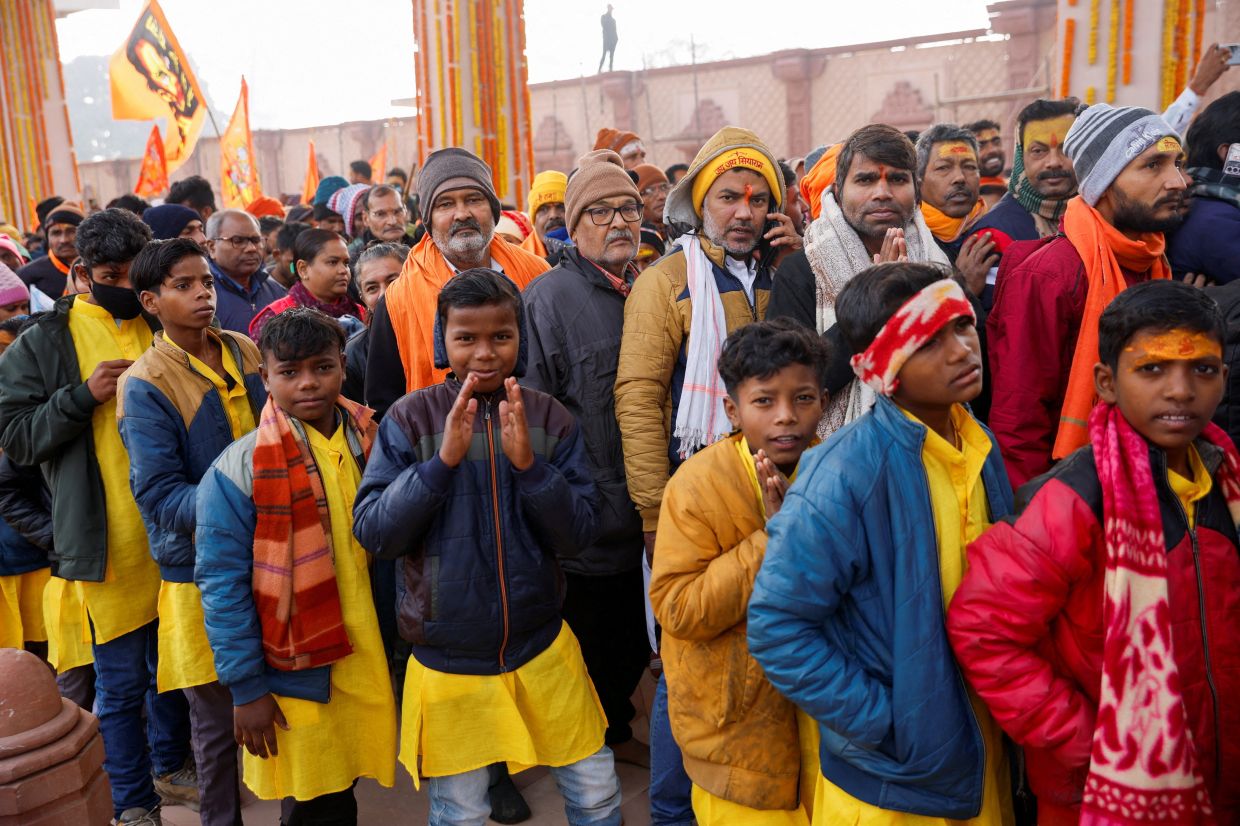
Police in India have launched a criminal investigation into allegations of substantial donation theft at the Ram temple in Ayodhya, with eight people arrested in connection with the misappropriation of funds intended for the Hindu shrine. The case, initiated in June, has cast a shadow over one of India's most prominent religious sites and prompted serious questions about how temples and other pilgrimage destinations safeguard the financial contributions of millions of devotees who visit annually.
While authorities have remained tight-lipped about the exact figures involved, multiple media outlets have reported that the amount allegedly siphoned off could reach approximately 30 million rupees, equivalent to around US$314,000. The stolen funds represent donations made by worshippers in good faith, many of whom are ordinary people with limited means who view their offerings as contributions to religious purposes. For contributors like Ashok Prasad Kushwaha, an auto-rickshaw driver from Delhi who has made three pilgrimages to the Ram temple over the past two years, such theft represents a profound betrayal of the trust that underpins the relationship between devotees and religious institutions.
The Ram temple itself carries exceptional significance within India's religious and political landscape. Prime Minister Narendra Modi inaugurated the structure in 2024, making it one of the nation's most visible religious landmarks. The site now attracts approximately 90,000 visitors daily, with devotees bringing offerings of cash, gold, and silver ornaments that generate a continuous stream of financial contributions. This high volume of foot traffic and donations creates both opportunity and necessity for robust financial management systems that many Indian temples have historically lacked.
The investigation has revealed troubling operational gaps at the temple, with accused individuals apparently exploiting weak counting procedures and surveillance deficiencies to remove donations. These lapses point to a broader institutional problem affecting not just this particular shrine but many of India's major pilgrimage destinations. The Badrinath temple and the Tirumala Tirupati Devasthanams, which holds assets estimated at US$31 billion and ranks among the world's wealthiest temple trusts, have both experienced similar donation-related scandals that underscore how widespread this challenge has become across India's religious sector.
Religious experts and analysts increasingly argue that the fundamental issue stems from inadequate transparency and accountability mechanisms within these institutions. Rahul Easwar, a Hindu activist and descendent of a former chief priest at Kerala's Sabarimala temple, contends that large religious organisations require substantially stronger financial controls to prevent misappropriation. His proposed reforms include mandatory receipt systems for all donations, transition to digital accounting platforms, comprehensive closed-circuit television monitoring of areas where donations are handled and counted, and independent external oversight to verify financial integrity.
The legal landscape complicates efforts to implement uniform standards across India's religious institutions. According to Sonam Chandwani, managing partner at KS Legal & Associates, religious organisations operate under a patchwork of different laws and tax frameworks, with no consistent national guidelines establishing minimum financial transparency requirements. This fragmented regulatory environment means that temples, mosques, churches, and gurudwaras across the country face vastly different standards of accountability, creating vulnerabilities that dishonest individuals can exploit.
The Ram temple's location adds another layer of sensitivity to the donation theft allegations. The site sits at the centre of one of India's most contentious historical disputes. Hindu devotees hold the religious belief that the god Ram was born at this location over 7,000 years ago, yet a Babri mosque had occupied the site from the 16th century onwards. This religious conflict erupted into devastating violence in 1992 when Hindu mobs demolished the mosque, triggering communal unrest that killed more than 2,000 people. The Supreme Court's 2019 decision to award the disputed land for temple construction marked a turning point, enabling a massive nationwide fundraising campaign that ultimately accumulated approximately US$341 million to finance the project's construction.
Given this fraught history and the enormous resources mobilised from devotees across India, the allegations that donations have been misappropriated strike at the heart of community trust. The timing is particularly damaging, arriving just months after the temple's highly publicised inauguration by the Prime Minister and at a moment when the institution should be consolidating its position as a pilgrimage centre.
India's broader religious and spiritual market demonstrates the scale at which these institutions now operate. Industry analysts valued the sector at US$70.14 billion in 2025, with projections indicating growth to US$135.41 billion by 2034. At this economic scale, temples and pilgrimage sites function as major financial enterprises managing cash flows that rival significant corporations, yet many operate with governance structures designed for traditional places of worship rather than large institutions handling substantial assets.
Mass pilgrimage events create particularly acute challenges for donation management. Easwar highlighted how massive gatherings like the Kumbh Mela, where millions converge simultaneously, generate enormous volumes of donations that become extremely difficult to track and secure with conventional methods. These festivals represent both the spiritual vibrancy of Hindu practice and the operational complexity that modern religious institutions must navigate.
Political analysts increasingly argue that India's largest temples require institutional systems comparable to those operating in major public sector organisations. As Anurag Naidu noted, religious institutions have evolved far beyond their traditional role as places of worship and now function as comprehensive organisations with extensive financial operations. Implementing financial controls and establishing independent oversight mechanisms represents not a limitation on religious practice but a necessary professionalisation of how these cherished institutions manage the contributions entrusted to them by hundreds of millions of devotees.

