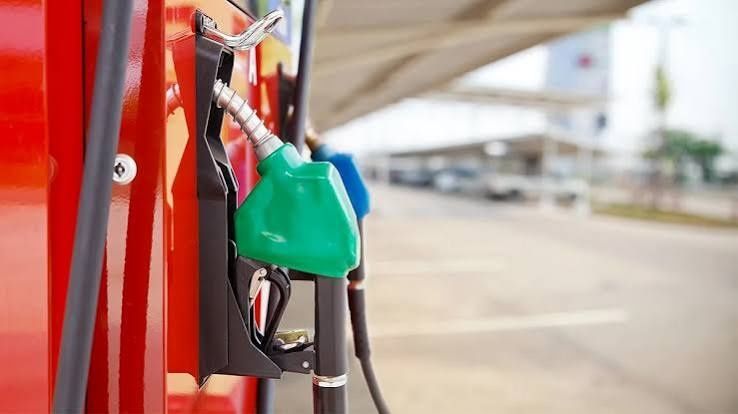
New Delhi is in turmoil over a fuel policy that has become as combustible as the petrol it regulates. India's mandatory shift towards E20—a blend containing 20 per cent ethanol mixed with conventional petrol—has ignited one of the most significant domestic policy controversies facing Prime Minister Narendra Modi's administration, threatening to escalate into a broader political confrontation as the world's third-largest car market erupts in organised consumer resistance.
The E20 mandate, which formally took effect last year, was intended as a progressive environmental and economic initiative. The government positioned the policy as a triple win: reducing carbon emissions, decreasing India's dependence on crude oil imports and thus preserving foreign exchange, and simultaneously boosting rural incomes by creating demand for agricultural ethanol feedstocks. However, what looked promising on government whiteboards has collided messily with the realities of millions of Indian drivers.
The crisis intensified dramatically this week when Attorney General R. Venkataramani, appearing during a court hearing, characterised E20 as an "experiment" whose actual outcomes would only become apparent by next year. His precise words—captured on video and now spreading viriously across social media—transformed a simmering consumer discontent into an explosive political moment. Though Venkataramani subsequently insisted to Reuters that he had used "experiment" specifically in reference to ethanol supply volumes rather than the fuel policy's broader viability, the distinction proved too fine for an already sceptical public.
The government's response has oscillated between dismissal and damage control. Officials rejected the notion that Venkataramani's remarks accurately reflected government position, describing online criticism as "wild claims" and "rage bait" designed to mislead citizens. Yet this defensive posture has failed to restore confidence among an increasingly organised motorist constituency. Tehseen Poonawalla, a prominent New Delhi-based figure with Congress party affiliations, announced plans for a Sunday protest against E20, reporting that thousands of potential participants had already signalled their interest in joining the demonstration.
Petroleum Minister Hardeep Singh Puri attempted to rehabilitate the fuel's image by drawing comparisons to racing vehicles, noting that professional motorsports have long utilised ethanol blends and that while acceleration may improve, mileage typically declines marginally. This comparison, intended to normalise modest efficiency losses, proved unconvincing to motorists experiencing what they regard as significant degradation in vehicle performance and reliability.
The core grievance driving public anger extends beyond mere policy disagreement. Many Indian drivers now lack choice at fuel pumps—E20 has become the default offering—and they report troubling practical consequences. Priyank Kharge, a state minister representing the opposition Congress party, articulated a fundamental complaint: the government had implemented the policy without adequate consultation and could not fairly demand that citizens prove harm when official data on the fuel's long-term impacts remained incomplete. This argument strikes at a vulnerable point in the government's position.
Social media has become the battlefield where the E20 conflict is being waged most visibly. Hundreds of motorists have posted grievances on X (formerly Twitter) documenting reduced fuel efficiency and accelerated wear on engine components. One widely circulated video, viewed more than half a million times, features a motorist identified as Manish Kashyap standing in a workshop beside his damaged vehicle. His frustration is palpable and relatable: after investing substantially in purchasing and maintaining his car, and after fulfilling his tax obligations to the state, he discovered that merely two months of E20 use had rendered his vehicle non-functional.
The political dimensions of this crisis deserve closer analysis for regional observers. In India's fractious political environment, where opposition parties constantly seek openings to challenge the government's competence and legitimacy, the E20 controversy offers a ready-made platform. Consumer protection and fuel quality affect virtually every middle-class household, making this issue far more politically potent than abstract environmental targets or macroeconomic savings in foreign exchange.
For Malaysian readers and Southeast Asian observers, this situation illustrates the hazards of implementing ambitious fuel policy transitions without adequate public preparation, transparent testing protocols, and genuine consultation with affected motorist communities. India's experience suggests that environmental and economic benefits, however real, cannot be imposed through administrative fiat if they impose visible costs on ordinary citizens who believe they have been excluded from decision-making processes.
The fundamental tension remains unresolved. The government maintains that E20 delivers genuine environmental and economic advantages, supporting India's climate commitments while reducing crude import dependency and strengthening agricultural sectors. Yet these system-level benefits, however legitimate, appear abstract compared to a driver whose fuel costs have increased while vehicle reliability has demonstrably declined. Until the government can credibly demonstrate that E20 either performs acceptably or that transition mechanisms will protect motorist interests, the political fire will continue burning beneath this policy.

