India's technology hubs are filling with young workers whose daily task is deceptively simple: they watch videos frame by frame, label images, and correct mistakes in artificial intelligence systems. On any weekday afternoon, city streets near tech labs overflow with junior employees on coffee breaks, their corporate ID badges swinging from their necks, while others work weekend shifts from home, recording themselves performing mundane household tasks with iPhones strapped to their heads. This fast-expanding field of data annotation represents a crucial but temporary reprieve for millions of Indians seeking employment, even as it illustrates the peculiar bind facing the world's most populous democracy in the age of artificial intelligence.
Data annotation has emerged as an unexpectedly labour-intensive bottleneck in AI development. These workers function as the human quality-control layer for machine learning systems, identifying errors and blind spots that training algorithms alone cannot catch. Their efforts directly improve the AI that powers autonomous vehicles, robotic assembly lines, and retail inventory systems used predominantly by Western companies. The work demands patience rather than advanced technical knowledge—hours hunched before monitors, reviewing video sequences with methodical precision—but it has unexpectedly become a lifeline for graduates entering India's notoriously competitive job market.
Objectways Technologies, based in the southern city of Karur, exemplifies this phenomenon. The data annotation company employs 2,600 people and has been hiring aggressively, onboarding 300 workers in a single recent month. Full-time office positions pay approximately RM846 to RM1,047 monthly—a respectable income in smaller Indian cities but a fraction of what equivalent roles command in technology hubs like Bangalore or Mumbai. Freelance work, where people record themselves at home performing household tasks, pays around RM10 per hour for usable footage. Aiswarya Palaniswamy, a 25-year-old with a master's degree in data analytics, accepted a position at Objectways last year, betting that the steady demand for data would insulate her from the job losses consuming India's knowledge economy.
India's employment crisis for young adults provides urgent context for understanding data annotation's appeal. Approximately 2 million Indians turn 18 each month, creating an enormous cohort seeking stable work. Prime Minister Narendra Modi and the ruling Bharatiya Janata Party have positioned job creation as central to their political legitimacy, yet the economic reality contradicts promises of prosperity. Last month, "cockroach" protests erupted over education quality and employment prospects, forcing Modi to replace his education minister—a rare public concession that underscored festering discontent among the youth population.
The Modi government recognises data annotation as an imperfect but necessary stopgap. S. Krishnan, who oversees India's information technology ministry, has articulated an ambitious vision in which the nation's 1.4 billion people become assets in specialised AI sectors requiring uniquely Indian knowledge—tasks such as translating India's multiple languages or monitoring intensive care patients. Yet government strategists worry that simply becoming a data-labelling contractor for foreign AI companies would merely recreate the dependent back-office model that characterised India's previous technology boom, a dynamic Krishnan explicitly wishes to avoid. A 2025 government think tank report warns that as many as 1.5 million IT services jobs could evaporate within the decade due to AI disruption, rendering data annotation unsustainable as a long-term employment solution.
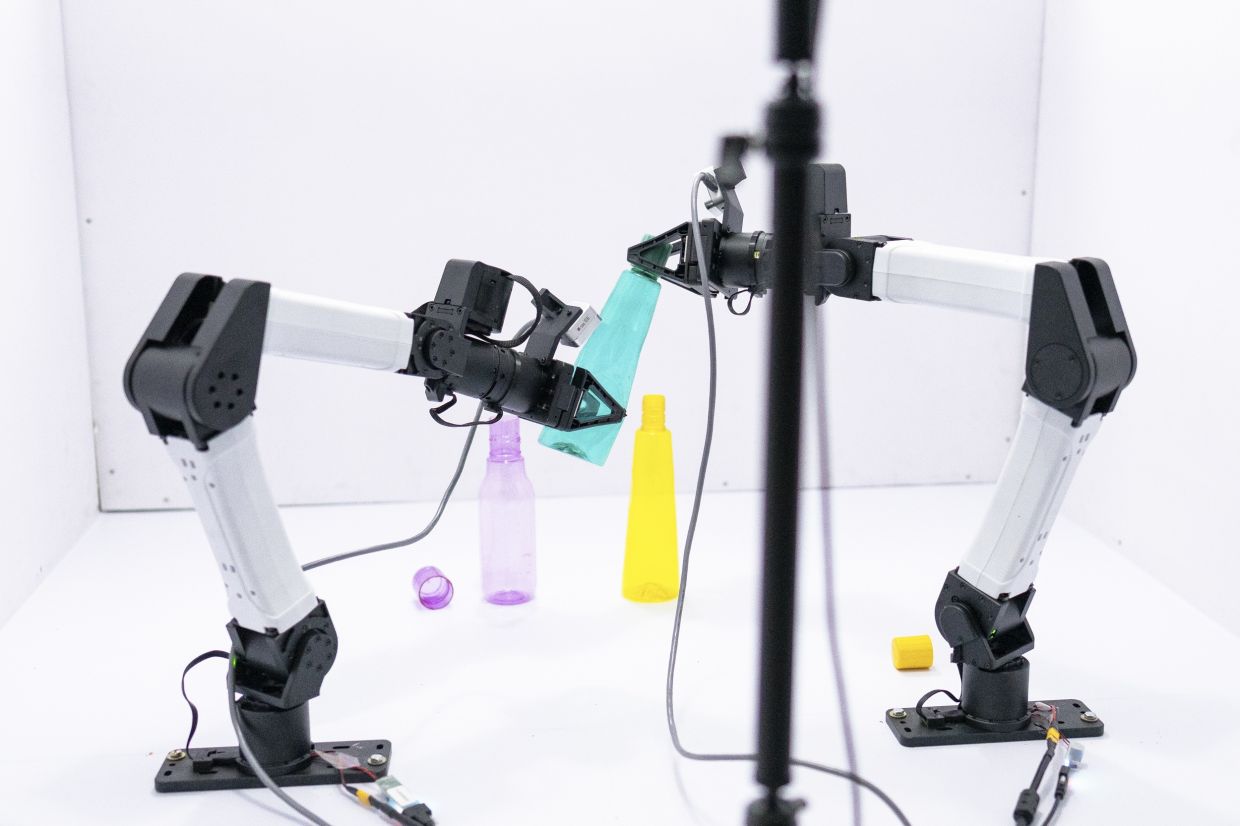
Objectways founder Ravi Rajalingam launched his company in Karur in 2019, deliberately choosing a smaller city over technology-saturated metropolitan areas. He initially saw data annotation as an opportunity to absorb recent graduates into meaningful work, with his wife helping recruit the first 20 employees. The company now operates test facilities resembling real-world environments—kitchens, bathrooms, bedrooms—where robotic systems perform household tasks while cameras record footage for analysis. Workers then review these videos, annotating how accurately the robots executed specific actions, creating datasets that gradually improve the machines' capabilities.
Career progression exists within this ecosystem, though it remains limited. Mohamed Afsar, 29, has advanced to oversee 600 employees working across Objectways' Coimbatore office, located two hours from Karur. Despite the rapid growth, Afsar faces a persistent supply-demand imbalance: his team of 200 annotators can process roughly 70 hours of video daily, yet clients submit approximately 1,000 hours of footage requiring analysis. This gap illustrates both the explosive growth in AI applications demanding human oversight and the labour-intensive reality of training sophisticated machine learning systems at scale.
Analysts project that data annotation could contribute approximately RM40.30 billion to India's economy by decade's end, a figure that captures attention yet fails to convince serious economists or policymakers that the sector provides a genuine competitive advantage in the global AI race. The contribution, while significant in absolute terms, would represent only a marginal impact on India's overall employment challenge and fails to address fundamental concerns about sustainability. Krishnan's emphasis on "higher-value-added jobs" reflects anxiety that India risks repeating its past: developing highly skilled, low-wage workforces that become expendable once automation advances sufficiently.
The workers themselves project relative contentment with their present circumstances, though their optimism carries an undertone of resignation about technological inevitability. Hari Prasad, 25, earned an engineering degree last year and accepted a position annotating robot movements and self-driving car footage. He marvelled at the peculiarity of his occupation: training machines that will eventually replicate human capabilities, even as his own role depends on machines remaining unable to independently perform the annotation work he does. When asked about his future, Prasad reflected that someone must "train the robot," a phrase capturing both the essential nature of his current labour and its foreseeable obsolescence.
The philosophical paradox haunting India's data annotation boom reflects deeper anxieties about AI's employment impact globally. Here exists a rare instance of artificial intelligence creating substantial jobs rather than destroying them, yet the jobs themselves are explicitly temporary—scaffolding supporting the very technologies that will render such human oversight unnecessary. India's policymakers acknowledge this reality while simultaneously grappling with immediate political pressure to provide youth employment. Krishnan and others champion transitioning toward indigenous AI development and higher-skill positions, yet the structural incentives pushing Indian companies to compete on cost and volume in data annotation services remain formidable. For now, hundreds of thousands of young Indians like Palaniswamy and Prasad labour in this peculiar intersection of human and machine, building the tools that will eventually displace them.

