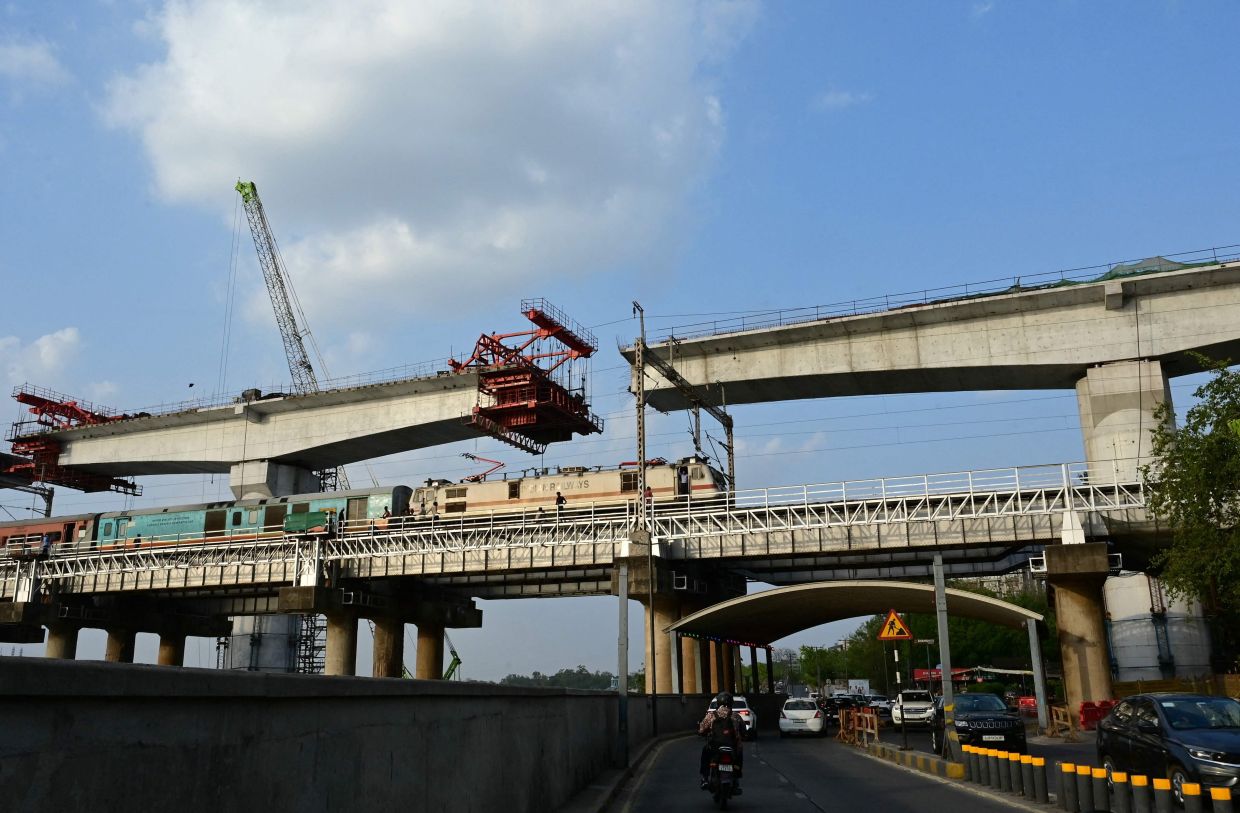
India's long-troubled first bullet train project is finally gathering pace, with railway ministry officials confirming that the initial operational segment will be ready by 2027, roughly ten years after construction commenced. The development represents a significant turning point for what New Delhi characterises as a transformative undertaking in the country's railway modernisation journey. Officials believe this inaugural high-speed corridor will establish the foundation for an ambitious national network of electrified rail routes capable of connecting India's major economic centres at unprecedented speeds.
The flagship Mumbai-Ahmedabad High Speed Rail Corridor stretches 508 kilometres along India's western coast, representing the nation's first venture into bullet train technology. According to Dharmendra Tewari, additional director general of Indian Railways, substantial construction work across the entire corridor has progressed significantly. The initial operational section will run between Surat and Vapi, two cities separated by approximately 100 kilometres. Surat, known globally as the world's premier diamond cutting hub, and Vapi, a major centre for chemical manufacturing and industrial production, represent important economic nodes that stand to benefit from rapid transit connectivity.
The project's trajectory has been marked by considerable setbacks and financial complications since its inception in 2017, when then-Prime Minister Narendra Modi and Japanese counterpart Shinzo Abe jointly launched the initiative using Japan's renowned Shinkansen technology. The original completion target of 2023 proved overly optimistic, with the project encountering substantial land acquisition hurdles and mounting expenditure. The Indian government currently estimates the total cost at US$17 billion, with Japan's International Cooperation Agency providing 81 percent financing through a concessional loan arrangement. However, Indian media outlets suggest that accumulating delays and escalating land compensation expenses may substantially increase the final price tag beyond current projections.
This bullet train initiative holds particular significance given India's broader railway transformation over the past decade. The nation operates one of the world's most extensive rail networks, inherited from colonial-era infrastructure that required comprehensive modernisation. Last year, Indian Railways transported 7.41 billion passengers and 1.67 billion tonnes of freight across approximately 85,000 kilometres of track capable of speeds exceeding 110 kilometres per hour. The government's domestically developed Vande Bharat trains, named "Salute to India," have successfully demonstrated India's capacity to manufacture advanced rolling stock, reaching speeds of 180 kph and carrying nearly 40 million passengers in recent years.
The bullet train's design specifications represent a qualitative leap forward for Indian rail transport. Capable of reaching design speeds of 350 kilometres per hour with operational velocity of 320 kph, the service will dramatically compress travel times between India's financial capital Mumbai and Ahmedabad, the principal city in Modi's home state of Gujarat. The current journey takes approximately six hours by conventional rail or four to five hours by air when including airport procedures; the new service will accomplish the same distance in just under two hours. This transformation carries profound implications for business connectivity and daily commuting patterns across one of Asia's most economically dynamic regions.
The engineering complexity of the corridor demands innovative technical solutions unprecedented in Indian railway construction. The route incorporates a 21-kilometre mountain tunnel that required sophisticated excavation techniques, alongside the country's first undersea rail tunnel currently under completion. These feats of infrastructure engineering underscore India's expanding capacity to execute sophisticated transport megaprojects. Officials project the entire corridor will commence operations by late 2028, positioning Ahmedabad to host the 2030 Commonwealth Games on schedule. Indian leadership increasingly views such international sporting events as stepping stones toward realising the country's long-stated objective of hosting the 2036 Olympic Games.
Beyond this initial corridor, the Indian government has articulated ambitious plans for a nationwide high-speed rail network spanning 4,000 kilometres across seven proposed corridors. These interconnected routes would establish what officials characterise as "growth connectors," integrating economically significant cities and facilitating enhanced inter-state commerce and population mobility. One proposed east-west corridor would link New Delhi to Varanasi, Modi's parliamentary constituency and Hinduism's holiest pilgrimage site, extending further to Siliguri, the strategic gateway connecting India's northeastern states with the broader national economy. A complementary north-south network would originate from Ahmedabad and Mumbai before extending southeastward through major technology hubs including Pune, Hyderabad, and Chennai.
For Malaysia and broader Southeast Asian observers, India's bullet train trajectory carries noteworthy implications for regional transport and economic integration patterns. As India constructs domestic high-speed rail capacity, cross-border transport projects linking Southeast Asia become increasingly feasible. A technologically advanced India with rapid internal connectivity may strengthen its ability to participate in regional initiatives like the proposed Singapore-Kunming railway and other Pan-Asian transport corridors. Furthermore, the successful completion of India's bullet train project would validate Japanese high-speed rail technology in tropical and developing-economy contexts, potentially influencing similar initiatives across Southeast Asia currently under consideration or development.
The current visit of Japanese Prime Minister Sanae Takaichi, a protege of Shinzo Abe, underscores the continued strategic importance both nations place on this collaboration. Japan's sustained financial commitment through concessional lending demonstrates its broader Indo-Pacific strategy, positioning Tokyo as a reliable development partner for India's infrastructure ambitions. This partnership model contrasts with alternative financing approaches and reinforces Japan's technological leadership in high-speed rail implementation. For regional analysts, India's bullet train represents not merely a domestic transportation achievement but a visible expression of strengthened India-Japan strategic cooperation in an era of expanding Asian infrastructure competition.
The 2027 operational date for the initial Surat-Vapi section will represent a critical inflection point for India's high-speed rail aspirations. Successfully delivering this foundational corridor on schedule would generate momentum for subsequent network expansions and demonstrate India's capacity to execute complex transport infrastructure projects despite inherent challenges. Conversely, further delays would necessitate recalibration of the broader national high-speed rail strategy. The bullet train project ultimately reflects India's determination to modernise its transport infrastructure while establishing itself as a major player in twenty-first-century Asian economic geography. As Southeast Asian nations contemplate their own transport infrastructure futures, India's progress will provide valuable lessons regarding the feasibility, costs, and genuine benefits of bullet train systems in the Asian context.

