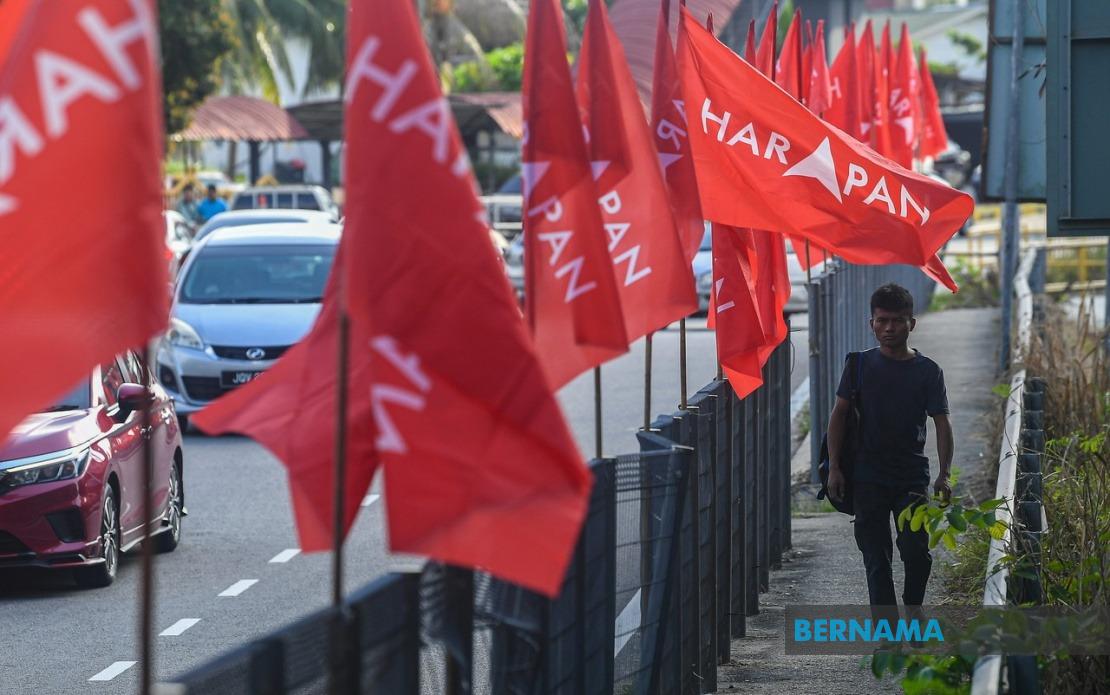
The Indian community in Johor holds disproportionate electoral influence that could prove decisive in the state election scheduled for July 11, according to Dr Gunaraj George, a senior Pakatan Harapan leader and Sentosa Assemblyman. Speaking ahead of the poll, in which PH will contest all 56 state legislative assembly seats, Dr Gunaraj sought to mobilise Indian voters by framing the election as a choice between continuity and chaos, stability and uncertainty.
Dr Gunaraj, who sits on PKR's Central Leadership Council, emphasised that while the Indian community represents a minority demographic in Johor, their concentrated presence in approximately 25 mixed and marginal constituencies grants them strategic importance far exceeding their overall population share. In electoral mathematics, such swing constituencies often determine overall election outcomes, particularly in tightly contested states. His remarks underscore how Malaysian elections frequently turn on the decisions of specific communities in specific battleground areas rather than uniform swings across all voters.
The PKR leader framed support for PH not merely as a partisan choice but as a vote for institutional continuity and economic security at a moment of global flux. He pointed to the current environment of international economic uncertainty, geopolitical instability, and domestic cost-of-living pressures as reasons why political stability should take precedence over other considerations. This framing attempts to shift the election narrative away from performance on community-specific issues toward a broader appeal to self-interest based on macroeconomic management.
Dr Gunaraj's argument hinges on the premise that the governing coalition has delivered tangible benefits to the Indian community over its tenure of more than three and a half years in office. He highlighted the restoration of momentum on the Malaysian Indian Transformation Unit (MITRA), which received an increase from RM100 million to RM150 million—a boost that had not occurred for nearly a decade under previous administrations. Prime Minister Datuk Seri Anwar Ibrahim has reportedly committed to further progressive increases to meet evolving needs, though no timeline or target figure was specified.
Beyond MITRA's expanded funding, Dr Gunaraj cited improvements in governance and transparency around fund deployment, including parliamentary oversight and systematic monitoring of how money reaches intended beneficiaries. Such administrative reforms, if implemented rigorously, address longstanding concerns within minority communities about whether government assistance actually reaches ground-level organisations and individuals or dissipates through bureaucratic inefficiency.
The government's broader portfolio of initiatives targeting Indian Malaysians extends across education, religion, and economic opportunity. Tamil National-Type Schools (SJKT) have received elevated allocations, while maintenance assistance for religious buildings—a category encompassing temples—has expanded. Technical and Vocational Education and Training (TVET) programme expansion offers pathways for youth from disadvantaged backgrounds, while targeted cash assistance schemes including Sumbangan Tunai Rahmah (STR) and Sumbangan Asas Rahmah (SARA) provide direct income support to vulnerable households regardless of ethnicity.
For entrepreneurs and small business operators, the government has sustained support for micro, small, and medium enterprises, a sector employing substantial numbers of Indians, particularly in trade and services. These targeted measures, taken collectively, paint a picture of deliberate policy attention to community needs across multiple life domains rather than ad hoc or reactive assistance.
Dr Gunaraj positioned these programmes within a larger narrative of institutional reform and anti-corruption drives that he argues benefit all Malaysians by improving governance quality and widening opportunity. The implication is that inclusive economic policy and stronger institutional frameworks create conditions where all communities, minorities included, can access opportunity and participate more fully in national development.
The sequencing of Dr Gunaraj's remarks reveals strategic political calculation. By emphasising stability and economic management rather than grievance redressal, PH appears to be betting that Indian voters have moved beyond viewing elections purely through a community-centric lens and now weigh decisions on broader national performance metrics. However, this calculation carries risk; if the Indian community feels that larger parties take their support for granted or insufficiently prioritise their concerns, swing voting becomes possible.
For PH, securing overwhelming support from the Indian community in Johor carries significance beyond the state election itself. Strong community backing would demonstrate that the coalition has successfully consolidated support among diverse constituencies and can credibly govern as a genuinely multiethnic coalition rather than a coalition of convenience. Conversely, if Indian voters splinter or favour alternative parties, it would signal either dissatisfaction with government performance on community issues or vulnerability to opposition messaging.
The political context matters here: Johor is Malaysia's second-largest state by population and historically important to national electoral outcomes. Results there often foreshadow broader national trends. A clear PH victory built on diverse community support would strengthen Prime Minister Anwar Ibrahim's political position ahead of the next federal election, while a narrower margin or weak showing among minorities could embolden opposition narratives questioning the government's multiethnic credentials.
Dr Gunaraj's public appeal to Indian voters also reflects internal party strategy to mobilise communities through trusted leaders with specific constituency knowledge rather than relying solely on national messaging. His role as Sentosa Assemblyman gives him local credibility and direct understanding of constituent concerns, making his advocacy potentially more persuasive than messaging from distant party headquarters.
Ultimately, Dr Gunaraj's intervention suggests that despite campaign messaging emphasising broad stability and national interest, PH remains acutely aware that Malaysian elections are decided through careful navigation of community-specific concerns and deliverables. The party's investment in MITRA funding, SJKT allocations, temple maintenance assistance, and TVET expansion reflects an understanding that minorities vote not in the abstract but based on whether they perceive tangible government delivery affecting their daily lives and futures.

