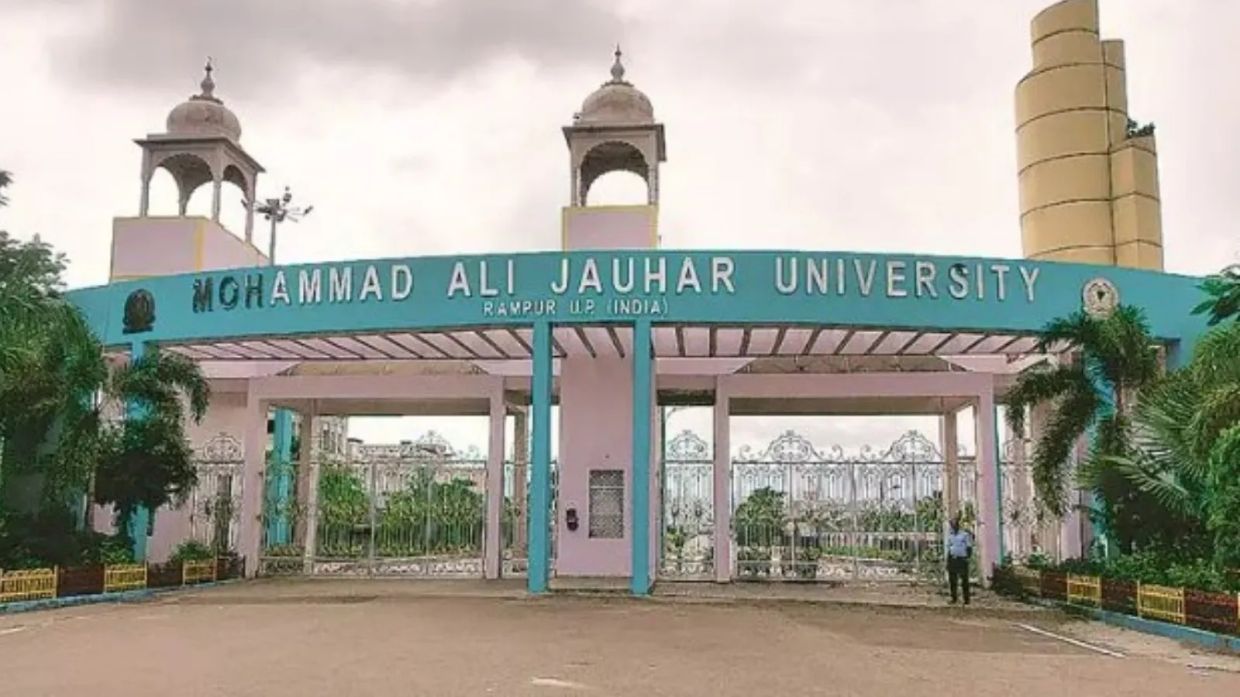
The Rampur Development Authority in northern India's Uttar Pradesh state has issued a sweeping demolition order affecting 38 of 40 structures at Mohammad Ali Jauhar University, triggering fresh controversy around the institution and its politically connected founder. The order, handed down on Wednesday in July, targets unauthorised construction across the sprawling 250-acre campus situated in Rampur city, according to local media accounts of the administrative decision.
Mohammad Ali Jauhar University, named after a prominent figure who played a significant role during India's struggle for independence, was established in 2006 under the vision of Azam Khan, a seasoned politician who previously held ministerial responsibilities within Uttar Pradesh's state government. The university represents a substantial institutional legacy tied directly to Khan's personal and political standing within the region. The institution has become emblematic of the complex intersection between educational infrastructure, political patronage, and administrative oversight that characterises India's higher education landscape.
Azam Khan belonged to the Samajwadi Party, which governed Uttar Pradesh between 2012 and 2017, commanding significant electoral support before experiencing electoral defeat at the hands of the Bharatiya Janata Party. During his political ascendancy, Khan earned recognition as one of India's most compelling orators and wielded considerable influence within his local community. His ability to mobilise supporters and articulate populist positions made him a formidable political figure, though one whose tenure has subsequently become clouded by legal troubles affecting both him and his immediate family.
The current demolition directive represents a dramatic escalation in administrative action against the institution. Khan himself remains incarcerated following a court conviction in a matter concerning forged documentation, alongside his son Abdullah, who faces similar confinement. The legal circumstances surrounding father and son have effectively removed them from the scene, limiting their capacity to contest or challenge the demolition proceedings. This absence of direct opposition may have emboldened authorities to pursue the demolition order, which would have encountered more robust resistance had Khan retained his freedom and political position.
Khan's wife, Tazeen Fatima, experienced imprisonment in connection with a birth certificate dispute but subsequently secured bail, allowing her conditional release pending further judicial proceedings. The accumulation of criminal cases against multiple family members suggests a pattern of legal vulnerability that extends across the household, though Khan's supporters have consistently maintained that these prosecutions represent a calculated political vendetta orchestrated by their rivals in the BJP-dominated state government. The family's legal defence strategy relies heavily on allegations of persecution motivated by political animus rather than genuine criminal wrongdoing.
The demolition order carries profound implications extending far beyond merely removing physical structures. For Malaysia and other Southeast Asian nations grappling with educational governance and institutional accountability, the Mohammad Ali Jauhar case illustrates the precarious position of universities whose origins are deeply entwined with individual political patrons. When founding benefactors face legal jeopardy, institutions can find themselves caught in the crossfire of political rivalries, vulnerable to administrative action that may prioritise political calculations over educational continuity.
The broader context involves questions about how Indian authorities have treated unauthorised construction at universities more generally. If the demolition of 38 buildings represents routine enforcement of building regulations, the timing—coinciding with the founder's imprisonment—raises legitimate questions about whether administrative action follows politically neutral criteria or responds to shifting political fortunes. The apparent selectivity of enforcement, targeting a university connected to a fallen politician, resonates across South Asia where administrative institutions sometimes become instruments of political competition.
For Malaysian observers, the situation offers cautionary perspective on the importance of institutional independence and transparent governance frameworks. Malaysian universities, particularly those receiving government funding, benefit from constitutional protections and established oversight mechanisms that insulate them from sudden administrative upheaval tied to individual political fortunes. However, vigilance remains necessary to ensure that regulatory bodies maintain consistent standards rather than deploying enforcement powers selectively based on political considerations.
The demolition order also raises practical concerns about the university's operational continuity and the welfare of its academic community. Students currently enrolled face disruption to their educational experience, while faculty members confront uncertainty about institutional stability. The scale of the demolition—affecting nearly all structures on campus—suggests the university cannot simply absorb the losses and continue functioning normally. Administrative paralysis may follow if demolition proceeds without simultaneous provision for relocation or reconstruction of essential facilities.
The legal proceedings against Khan's family and the institutional consequences for the university demonstrate how political fortunes in India can rapidly translate into material consequences for enterprises and organisations built during periods of political dominance. The Samajwadi Party's loss of power in 2017 marked the beginning of Khan's reversals, with legal troubles following in succession. Educational institutions founded by politicians occupy an inherently vulnerable position, dependent on the continued political viability and freedom of their patrons to shield them from administrative interference.
As the demolition order proceeds through implementation, the case will likely become a reference point for discussions about the relationship between politics, law, and institutional governance across South Asia. Whether the demolition represents legitimate enforcement of building codes or politically motivated administrative action remains contested, but the perception matters substantially for public confidence in the neutrality of state institutions. Malaysia's experience with similar tensions between institutional autonomy and state authority offers comparative lessons worth studying.

