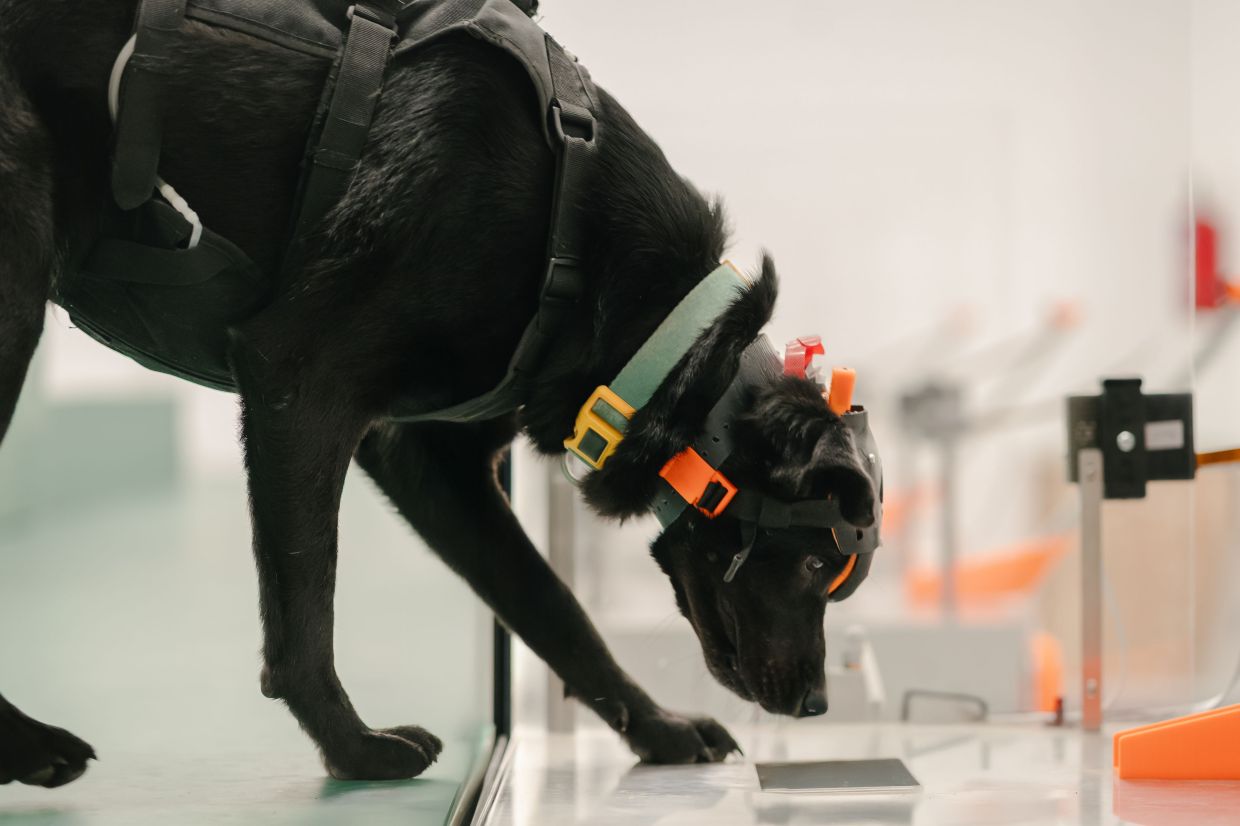
On a farm outside Bangalore, a team of beagles, labradors and Dutch shepherds report for work each day with a single mission: identifying traces of cancer in human breath. The dogs—Billy, Jessie, Banu and others—are employees of Dognosis, a two-year-old startup attempting to solve one of Asia's most pressing public health challenges through an unconventional approach that marries ancient biological capability with cutting-edge sensor technology.
The company has reimagined how canines' legendary olfactory powers might serve modern medicine. Rather than applying their noses exclusively to detecting narcotics or explosives, Dognosis channels this sensitivity toward low-cost health screening accessible to populations that conventional diagnostic infrastructure has historically left behind. Patients breathe into masks at home, which are then forwarded to the startup's laboratory facility. There, the dogs are introduced to each sample in controlled conditions. The critical innovation lies not in replacing the dog's judgment but in systematising and scaling it: miniaturised sensors track the animals' movements, respiratory patterns, brain electrical activity and body language, with artificial intelligence algorithms translating these signals into diagnostic conclusions. No imaging machines, blood draws or surgical biopsies are required.
The scientific foundation underpinning this venture runs deeper than mere entrepreneurial experimentation. Dogs have demonstrated capacity to detect everything from Covid-19 to various malignancies in controlled research environments over recent years. Dognosis's two-year track record has already generated impressive preliminary data. In a Phase 2 trial published in the Journal of Clinical Oncology, the startup documented approximately 90 percent sensitivity for early-stage cancers spanning seven broad categories encompassing more than 20 distinct cancer types, including breast malignancy. Perhaps most intriguingly, co-founder Akash Kulgod noted that dogs trained specifically on ten cancer types subsequently identified an eleventh variety they had never encountered during training—suggesting genuine olfactory discrimination rather than rote pattern matching.
India presents both an urgent opportunity and a complex challenge for this technology. The nation carries the third-highest burden of new cancer diagnoses globally, according to the International Agency for Research on Cancer. The organisation's latest estimates indicated 1.5 million newly diagnosed cases and over 900,000 cancer deaths across India during 2024 alone. Approximately one in ten Indians face the prospect of developing cancer before reaching age 75. Breast cancer emerged as the most frequently identified malignancy, followed by oral cavity and lip cancers, lung cancers and cervical disease. The epidemiological reality becomes even starker when examining screening participation rates. Only 1.9 percent of Indian women surveyed between 2019 and 2021 reported ever undergoing cervical cancer screening, whilst 0.9 percent had completed breast or oral cancer examinations. Among men, merely 1.2 percent reported oral cancer screening history—a striking gap between disease burden and preventive engagement.
This screening deficit reflects structural barriers endemic to the Indian healthcare landscape. Conventional diagnostic infrastructure concentrates overwhelmingly in urban centres, remains financially prohibitive for vast populations and demands time investments that economically vulnerable individuals can ill afford. Dognosis's proposed solution directly addresses these constraints by offering non-invasive breath-based prescreening for costs measured in thousands of rupees—orders of magnitude cheaper than traditional screening pathways. The company plans to launch its at-home multi-cancer prescreening test across India next year, beginning with select cities before pursuing nationwide expansion through partnerships with diagnostic networks and healthcare providers.
The financial backing undergirding this ambition has grown steadily. Dognosis raised $1.5 million during a pre-seed funding round in 2024, supported by investors including Accel India and San Francisco-headquartered Caffeinated Capital, followed by an undisclosed additional investment. Kulgod indicated these resources would sustain operations for approximately two years given the company's projected expansion trajectory. Current operational plans target processing one million tests annually, expansion of the canine workforce from roughly fifteen dogs to thirty, and reduction of turnaround times from current durations to approximately one week. Remarkably, the company is simultaneously pursuing international expansion, with Kulgod indicating potential facility opening in the United States as early as late 2027 or early 2028.
Yet substantial hurdles remain before this model transitions from promising pilot phase to scaled public health implementation. The dogs themselves live at the farm facility where they receive regular walks, playtime and social enrichment, spending thirty minutes to an hour daily on the detection platform framed as an enjoyable game rewarded with treats. During a recent demonstration, a two-year-old beagle named Whiskey worked through ten samples, bounding past five before pausing deliberately at the sixth, sniffing multiple times, withdrawing and returning to circle persistently before the system registered a positive indication. This theatrical performance—however scientifically validated—raises the fundamental challenge Dognosis must overcome: convincing medical professionals and the general public that a diagnostic framework centred on animals' noses deserves trust equivalent to established technologies.
Pankaj Chaturvedi, deputy director of the Centre for Cancer Epidemiology at Tata Memorial Centre in Mumbai, articulates the measured perspective many within India's medical establishment hold. He notes that emerging technologies "offer exciting opportunities, but they should strengthen – not replace – existing screening programs." This perspective reflects legitimate concerns about prematurely displacing established protocols without comprehensive validation across diverse populations. Dognosis appears cognisant of these requirements, having initiated its Phase 3 trial in April with enrollment across ten hospitals throughout India. The study plans to recruit approximately 10,000 participants over twelve months, testing both asymptomatic individuals at elevated cancer risk and survivors vulnerable to disease recurrence. Anyone flagged by the canine screening receives conventional follow-up including imaging and biopsy—effectively using Dognosis as an initial filter rather than a definitive diagnostic tool.
Kulgod argues the regulatory pathway provides strategic advantage within India's specific healthcare governance framework. Because Dognosis positions its offering as a prescreening tool rather than a diagnostic device, it operates outside rigorous medical device regulation applicable to the latter category. This positioning simultaneously reflects genuine functional design and enables faster market deployment than technologies requiring formal regulatory approval. The startup plans Bangalore-based launch following Phase 3 completion, with subsequent expansion across India via established diagnostic and healthcare networks.
For Malaysia and broader Southeast Asia, Dognosis's emergence carries significant implications. The region shares India's structural healthcare constraints: rapidly rising cancer incidence, concentrated diagnostic capacity, affordability barriers limiting screening participation and insufficient infrastructure for conventional early detection programmes. A successfully scaled dog-based screening system could fundamentally reshape prevention economics across these markets. Dogs adapted to tropical Southeast Asian climates could operate from regional hubs processing breath samples collected at decentralised collection points throughout countries, dramatically reducing access barriers while maintaining relatively low operational costs. The model inverts traditional diagnostic geography—rather than patients travelling to distant centres possessing expensive equipment, samples travel to where trained canine teams reside.
The fundamental bottleneck Dognosis confronts, as Kulgod phrases it, concerns "standardisation and scaling of the dog's nose." Technology companies have long attempted this translation—converting intuitive animal capabilities into reproducible, scalable systems. The convergence of artificial intelligence, miniaturised sensors and entrepreneurial ambition appears to offer genuine opportunity where previous attempts faltered. Whether India's regulatory environment, healthcare provider scepticism and public acceptance ultimately enable this transition from research novelty to scaled implementation will determine whether canine cancer detection evolves into transformative public health infrastructure or remains a sophisticated curiosity.

