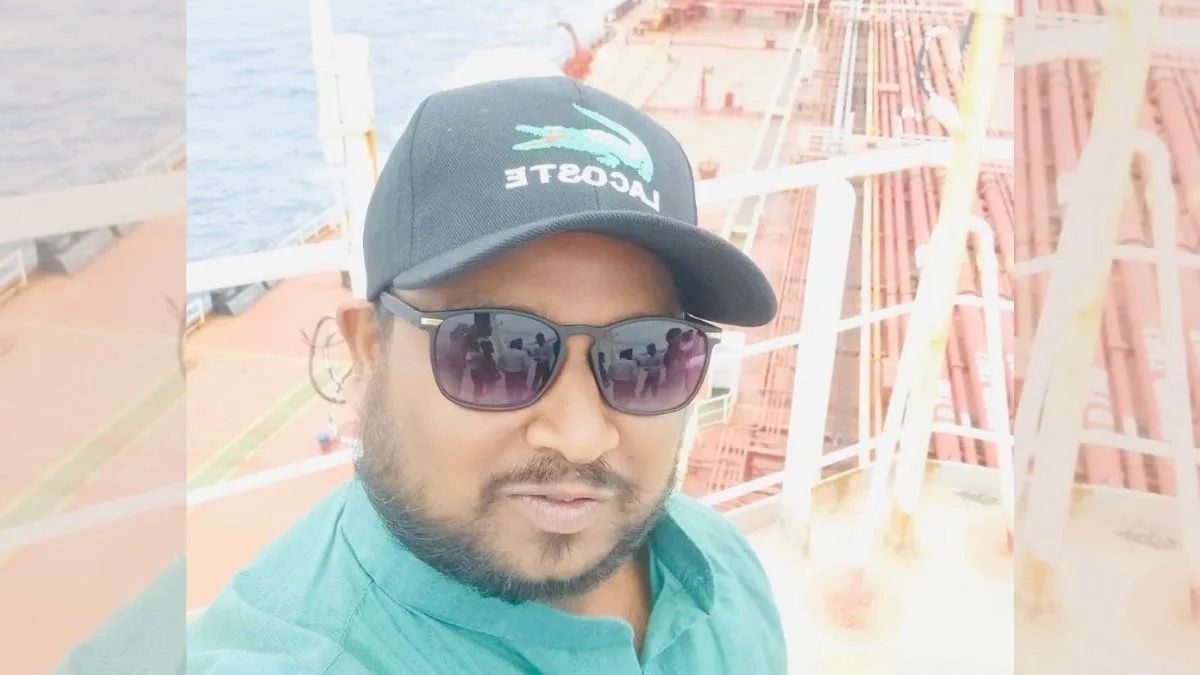
India's maritime workforce faces mounting scrutiny over workplace safety and accountability following the deeply troubling case of Rakesh Chauhan, a 33-year-old seafarer whose death in Venezuela has triggered demands for government intervention and a thorough investigation. The circumstances surrounding his passing have alarmed both his family in Deoria district, Uttar Pradesh, and India's maritime unions, who say the handling of his remains raises serious questions about organ trafficking and potential foul play.
Chartered to work as a crew member aboard a merchant vessel in November 2025, Chauhan's journey ended abruptly when the shipping company first informed his family that he had sustained injuries from a fall onboard. According to the family's account, the company's narrative shifted rapidly: within hours, officials announced his condition was critical with only a five per cent survival rate, and by the same day, they were told he had succumbed to his injuries. This accelerated timeline, combined with minimal official documentation, would later prove to be the first of many irregularities that would trouble medical examiners and labour advocates alike.
What occurred following Chauhan's death in Venezuela presents a puzzle that extends beyond the immediate circumstances of his passing. The body was retained for an extended period before eventually being repatriated to India on June 4—nearly a month after his death on May 7. Critically, no autopsy report or official explanation from Venezuelan authorities accompanied the remains, a procedural gap that immediately raised red flags among maritime safety advocates. When doctors in Deoria initially examined the body, they observed clear evidence of prior autopsy work, prompting them to decline a second examination until the District Magistrate intervened and ordered a fresh post-mortem.
The Indian re-autopsy findings proved startling and inexplicable. Medical examiners documented extensive surgical incisions—22 stitches running from the neck to the pubic symphysis and 21 stitches extending from ear to ear across the back of the skull. Yet what distinguished this case as extraordinary was not the evidence of autopsy work itself, but rather its incomplete character. The examination revealed that the brain, heart, both lungs, liver, kidneys, spleen, pancreas, stomach, intestines, thyroid, hyoid bone, larynx, trachea, major blood vessels and numerous other organs were entirely absent from the body. Doctors were left unable to determine the cause of death because the very organs required for such examination had vanished.
The Federation of Seafarers' Unions of India has seized upon these findings as evidence of systemic negligence at best and deliberate misconduct at worst. The organisation has publicly questioned how vital organs could be extracted without family consent or notification, and why Venezuelan authorities provided no official documentation explaining such a dramatic intervention. The union's statements on social media platforms highlight what it characterises as "deeply disturbing irregularities"—discrepancies that extend beyond the missing organs to encompass administrative details that suggest potential records tampering or identity confusion.
Among the additional allegations raised by the maritime federation are troubling inconsistencies in documentation. The receipt accompanying Chauhan's remains bore a signature from someone identified as "Anjana Chauraisya" rather than "Ranjana Chaurasiya," the name the union associates with someone authorised to receive the body on behalf of Chauhan's wife. The federation has also flagged a mismatch between the vessel named in Chauhan's employment agreement and the actual vessel where he was deployed—a discrepancy that raises questions about contract integrity and worker tracking. These details, individually concerning, collectively paint a picture of administrative chaos or deliberate concealment.
The case carries particular significance for India's maritime sector and its estimated 200,000 seafaring workers employed on international vessels. Unlike workers in regulated domestic industries, seafarers operate in jurisdictions beyond India's direct oversight, dependent on shipping companies and foreign authorities to maintain safety and accountability standards. The Chauhan case exposes potential vulnerabilities in this system, particularly when circumstances remain unclear and official cooperation from foreign governments proves insufficient. For Malaysian maritime workers facing similar overseas deployment, the implications deserve attention, as regional seafarers often navigate comparable regulatory gaps and power imbalances.
The Federation of Seafarers' Unions has explicitly raised the spectre of organ trafficking, suggesting that the systematic removal of organs without consent or documentation deserves investigation by law enforcement agencies specialising in trafficking crimes. While the federation has not provided evidence directly linking the organs to any trafficking operation, the combination of missing documentation, absent organs, suspicious administrative records and delayed repatriation creates a framework of circumstances that trafficking investigators might recognise as potentially consistent with such activity. This dimension transforms the case from a workplace safety concern into a matter of potential transnational crime.
Indian government intervention has been conspicuously absent from public discourse regarding the Chauhan case, though the unions have explicitly demanded that the Indian Embassy in Venezuela become actively involved in securing clarity from Venezuelan authorities. Such embassy engagement would typically encompass requesting the Venezuelan autopsy report, interviewing relevant officials, and facilitating investigation into the handling of the remains. The lack of visible diplomatic pressure raises questions about whether cases involving workers from India receive adequate governmental priority, particularly when they occur in nations with weaker governance structures or less developed maritime regulatory frameworks.
For Chauhan's family, the void left by missing organs mirrors the void left by missing answers. They possessed only the company's verbal account of a workplace accident and the stark findings of the Indian re-autopsy—but no objective means of verifying what actually occurred in Venezuela. The Venezuelan authorities' silence, the company's limited information provision, and the mysterious disappearance of internal organs have left them with suspicion but no definitive proof of wrongdoing. Their demand for a comprehensive investigation reflects the natural parental instinct to understand how and why their son died, a need that bureaucratic indifference and international jurisdictional complexity have thwarted.
The broader implications extend to India's maritime labour ecosystem and its interaction with international shipping standards. The case illustrates how seafarers, despite their critical role in global trade, remain among the world's most vulnerable workers—geographically isolated, often linguistically displaced, dependent on employers for accommodation and communication, and subject to the judicial systems of foreign nations. When Venezuelan authorities handle remains with such opacity and Indian authorities respond with apparent passivity, the message to seafarers and their families becomes clear: your safety and dignity matter less than administrative convenience. Until government agencies on both sides of this tragedy prioritise investigation and accountability, the family's anguish will persist, and the seafaring community's faith in institutional protection will continue to erode.

