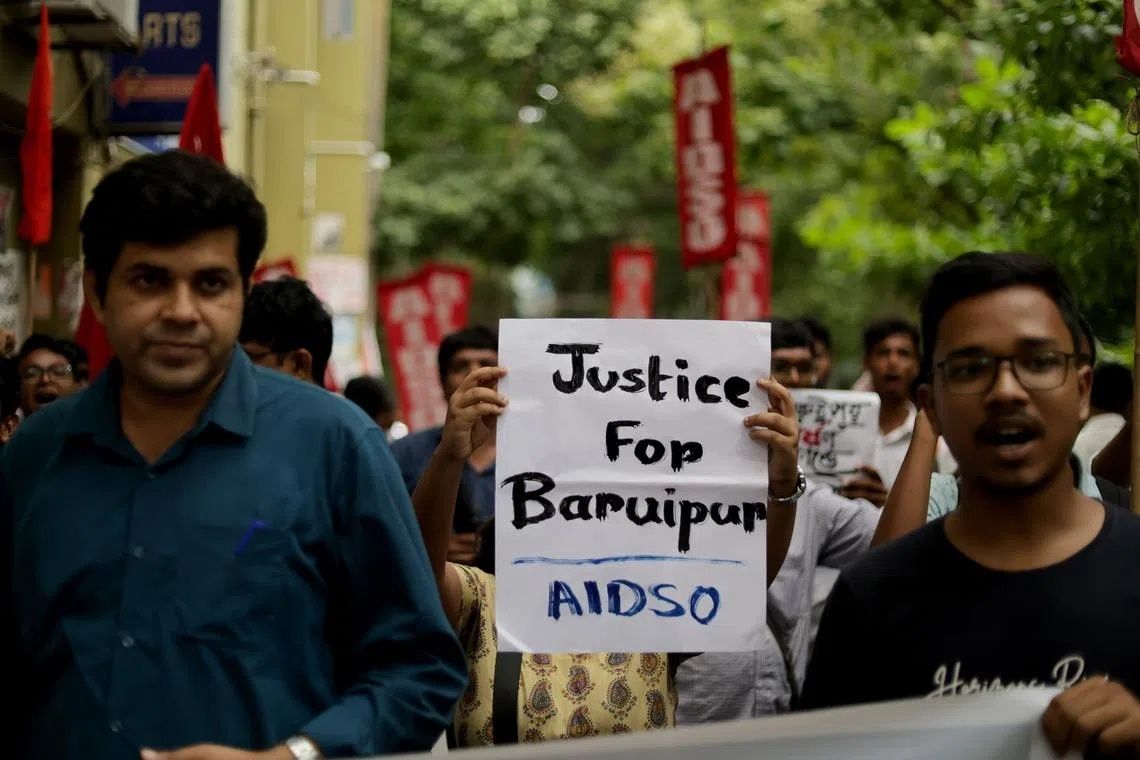
The discovery of an 11-year-old girl's body in a pond near Kolkata has ignited a firestorm of public anger in West Bengal, with Indian police now grappling with the dual challenge of investigating a heinous crime while managing widespread civil unrest. The child went missing on July 4 and was found dead in Baruipur city, roughly 30 kilometres south of the state capital, prompting immediate and intense community backlash against authorities and those accused of the crime.
Community members have taken matters into their own hands since news of the killing spread, with protesters blocking major roads and setting fire to vehicles throughout the week. The scale of the disturbances has forced police to deploy resources to control crowds and prevent further escalation. According to senior state officer Arvind Kumar Anand, authorities have so far arrested 35 individuals directly involved in acts of violence and property destruction, with investigators continuing to review viral video footage to identify additional perpetrators among the demonstrating crowds.
The tragedy has taken an even darker turn with reports of vigilante justice. Police confirmed that an innocent person was killed by enraged protesters, underscoring how quickly public sentiment can transform into dangerous mob violence when communities feel their children are at risk. This cycle of crime, anger, and extrajudicial response reflects a deep crisis of confidence in institutional protections that extends well beyond this single incident.
Among the four men arrested for the girl's rape and murder, one suspect—Prabhas Mondal—was shot dead by police during the early morning hours of July 8. Officers stated that Mondal attempted to flee while being taken to the crime scene as part of routine investigative procedures. The shooting has added another layer of complexity to an already volatile situation, raising questions about police conduct and accountability that are particularly sensitive in a context where institutional trust is already strained.
Mondal's mother's public refusal to claim her son's body speaks to the profound shame and moral reckoning now gripping his family. In a television interview, she expressed her belief that her son deserved the punishment he received, stating that he had "not done anything good" in life. Her words reflect both a mother's anguish and perhaps a broader societal judgment about the nature of the crimes alleged against her son.
The other three arrested suspects have generated their own complications for investigators. Media reports indicate that the family of at least one of these individuals claims he was wrongfully arrested due to mistaken identity, creating potential legal and investigative headaches for authorities already under intense scrutiny. No public statements have emerged from the families of the remaining two suspects, leaving their circumstances unclear.
West Bengal's newly installed Chief Minister Suvendu Adhikari, whose Bharatiya Janata Party won state elections in May under Prime Minister Narendra Modi's leadership, has seized the moment to project governmental firmness on crime. In a post on X on July 9, Adhikari pledged that his administration would show "no leniency" toward perpetrators of rape, violence, and murder, as well as toward vigilantes who lynch innocent persons. He framed the commitment as part of a broader law-and-order agenda, asserting that the new government would "pursue such criminals to the fullest extent of the law and ensure justice is served." Such messaging is politically significant given the recent political transition in the state and the electoral mandate the party believes it received.
This tragedy resurfaces persistent concerns about the safety of women and girls across India, a challenge that has haunted the nation despite significant legislative reforms. The 2012 gang rape and murder of a 22-year-old woman in Delhi triggered a massive national awakening on the issue, leading to tougher criminal laws and, ultimately, the execution of four of the convicted perpetrators. Yet more than a decade later, horrific crimes continue to claim victims and provoke cycles of protest and official crackdowns.
West Bengal itself has been at the centre of heightened scrutiny on this issue. In 2024, the state drew international attention when a trainee doctor was raped and murdered at Kolkata's prestigious RG Kar Medical College and Hospital, sparking nationwide demonstrations demanding greater institutional safeguards for women. That case exposed systemic failures in medical institutions and raised questions about workplace safety across sectors. The current incident suggests that despite the renewed focus and emotional mobilisation following that case, vulnerabilities persist and perpetrators continue to operate with impunity.
For Malaysian and Southeast Asian observers, this case underscores a troubling pattern present across the region: the gap between legal frameworks and actual enforcement, the way institutional failures breed public desperation, and the risks of vigilante responses that create secondary victims. It also highlights how political transitions can become opportunities for new administrations to project toughness, sometimes at the cost of due process or thorough investigation. The involvement of police use of force, the alleged wrongful arrest of at least one suspect, and the broader climate of mob violence all present serious questions about whether rapid, visible action truly serves justice or merely manages optics during a crisis.
For victims' families and communities, the case represents a failure across multiple systems—prevention, detection, prosecution, and institutional protection. For policymakers across the region, it offers a cautionary tale about the limitations of laws alone and the necessity of building trustworthy, efficient, and humane institutions capable of protecting society's most vulnerable members while also preserving the rule of law when emotions run highest.

