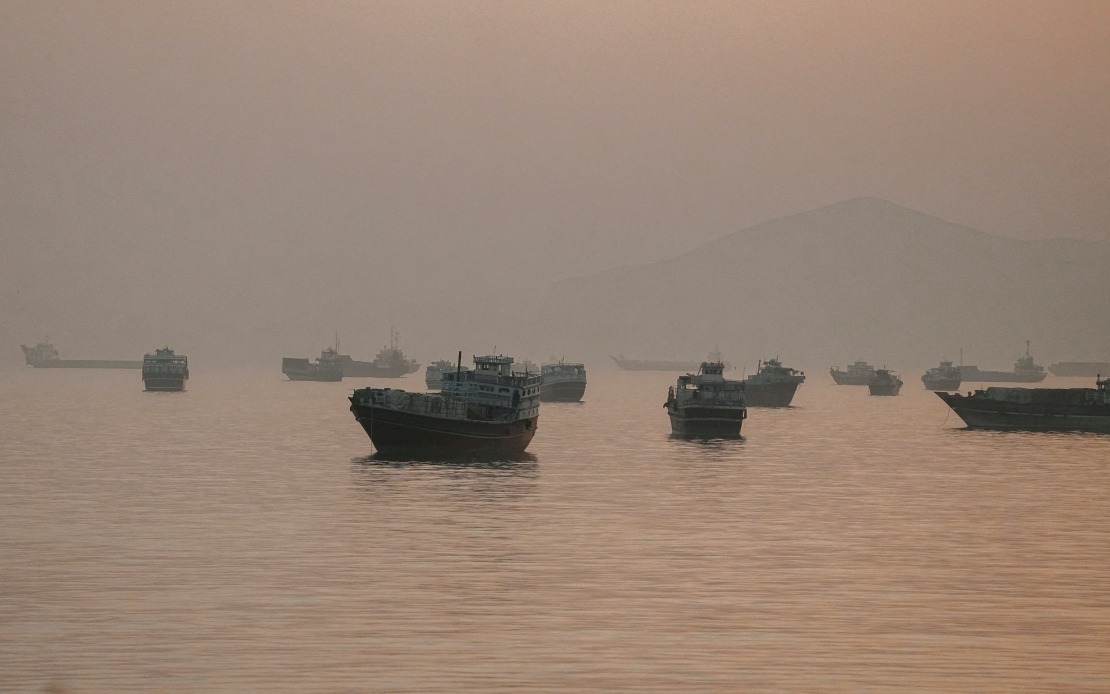
India has taken decisive action to protect its maritime workforce by imposing a blanket restriction on deploying seafarers through one of the world's most critical shipping corridors. The Directorate General of Shipping, India's top maritime regulatory authority, issued the directive late Wednesday, instructing all shipowners, vessel managers, and recruitment agencies to cease routing Indian personnel through the Strait of Hormuz. This move represents a significant step to safeguard Indian maritime workers from escalating security threats in the region.
The regulatory order comes in response to a sharp deterioration in security conditions affecting commercial shipping in the Persian Gulf and its approaches. A series of recent incidents targeting merchant vessels has substantially elevated the danger profile for both ships and crew members navigating these waters. Indian authorities specifically cited multiple attacks on commercial shipping over the preceding days as the catalyst for the emergency directive, emphasizing that these hostile actions have materially increased risk exposure for seafarers operating in the conflict-affected zone.
The human toll of the escalating maritime violence has directly impacted Indian nationals. Within a three-day period before the government's announcement, two Indian seafarers lost their lives in vessel attacks within the region, while several others sustained injuries. These casualties underscored the acute vulnerability of merchant marine personnel caught in cross-fire between hostile actors, prompting swift governmental intervention to prevent further loss of Indian life at sea.
The deteriorating security situation reflects broader geopolitical tensions gripping the eastern Arabian Peninsula. Renewed confrontation between the United States and Iran has significantly amplified instability throughout West Asia, with the Strait of Hormuz serving as the flashpoint for competing strategic interests. This waterway, through which approximately one-third of global maritime petroleum traffic passes daily, has become increasingly hazardous as regional power competition intensifies. The strait's strategic significance makes its security implications reverberate far beyond the immediate region, affecting global energy supplies and maritime commerce worldwide.
For Malaysia and other Southeast Asian maritime nations, India's action carries important ramifications. Many Southeast Asian shipping operators and recruitment agencies routinely deploy their own seafarers through the Hormuz passage, making them similarly vulnerable to the same hostile activities that prompted India's restrictions. The Indian government's decision effectively acknowledges that conventional maritime safety protocols have become inadequate in an environment where deliberate targeting of commercial vessels occurs with regularity. This assessment may prompt similar reassessments by other governments regarding crew deployment strategies.
The involvement of India's recruitment sector in this prohibition reflects the complex international maritime labour market. Indian nationals comprise a substantial proportion of the global merchant marine workforce, with recruitment companies playing a crucial intermediary role in deploying seafarers aboard foreign-flagged vessels. By instructing these recruitment agencies to avoid Hormuz-bound assignments, India's maritime authority has directly influenced commercial decisions of international shipping companies that depend on Indian crew supply.
The restriction also highlights how regional security crises directly translate into disruption of economic networks and labour markets. Indian seafarers depend on maritime employment for their livelihoods, and a curtailment of deployment opportunities—even if temporarily necessary for safety—carries economic consequences for affected workers and their families. Simultaneously, international shipping companies face mounting pressure to relocate crew and adjust voyage planning to respect national government directives, adding operational costs and logistical complexity to already strained supply chains.
India's maritime authority faces a delicate balancing act in enforcing this restriction while maintaining the international standing of Indian seafarers. Recruitment agencies and shipowners must navigate between respecting India's directive and fulfilling existing commercial obligations. The prohibition may also create opportunities for seafarers from other nations whose governments have not implemented similar restrictions, potentially fragmenting the global maritime labour market along geopolitical lines.
The long-term implications of this policy remain uncertain. If the security situation in the Strait of Hormuz stabilizes, India will likely lift restrictions relatively quickly. However, should hostilities persist or intensify, the directive could remain in place indefinitely, fundamentally altering deployment patterns in the maritime industry. Other shipping nations may follow India's precedent, potentially creating a cascading effect where multiple governments simultaneously restrict their nationals from high-risk routes, further complicating global maritime operations and energy transportation.
From a Southeast Asian perspective, this development underscores the vulnerability of the region's maritime economy to external shocks. While Southeast Asian nations do not directly border the Strait of Hormuz, many depend critically on its continued function for energy imports and international commerce. Any sustained disruption to shipping patterns through this strait reverberates throughout Asian supply chains and energy markets. India's protective action, while justified domestically, represents a warning signal that geopolitical friction in distant regions can unexpectedly disrupt the international maritime ecosystem upon which Asian economies depend.
The restriction also raises broader questions about maritime safety governance during armed conflicts. Historically, international maritime law has attempted to maintain neutral corridors for commercial shipping even during wars. The frequency and apparent coordination of recent attacks on merchant vessels suggest a departure from this principle, creating unprecedented challenges for maritime authorities attempting to protect their nationals while upholding international commerce norms. India's response—withdrawing its nationals rather than seeking international intervention—reflects the current reality that individual governments may find unilateral protective action more feasible than multilateral enforcement of maritime safety protocols.

