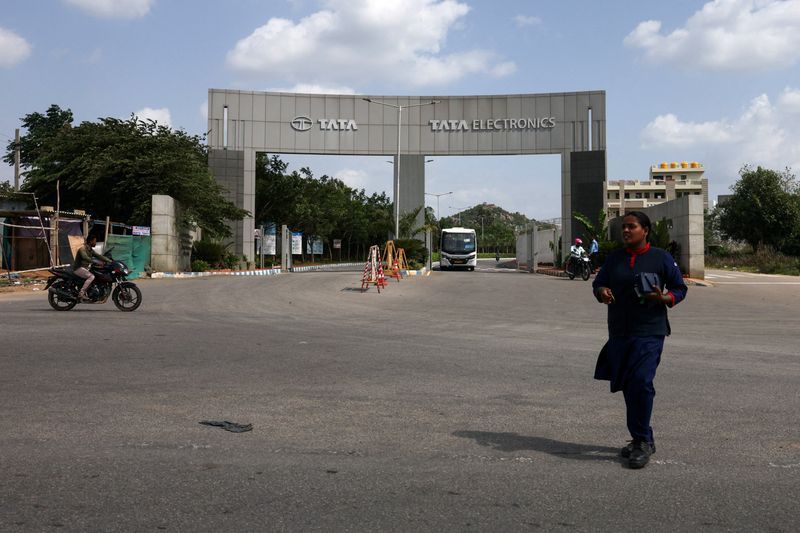
India's Ministry of Electronics and Information Technology has launched a formal investigation into a significant data breach at Tata Electronics, one of Apple's primary manufacturing partners in the country, following the exposure of confidential documents related to the forthcoming iPhone 18 Pro. The incident, which came to light this week, marks the government's first public acknowledgment of the security failure and underscores growing concerns about the vulnerability of critical technology supply chains operating within Indian territory.
According to S. Krishnan, the ministry's IT secretary, sensitive files stolen from Tata Electronics have been circulated on the dark web by a ransomware group. The leaked materials include detailed component lists, supplier information, and photographic documentation of the unreleased iPhone 18 Pro models—information that Apple deliberately keeps confidential to maintain competitive advantage and prevent counterfeiting. The breach is particularly significant because it exposes not merely prototype images but the granular supply chain architecture underpinning one of the world's most valuable consumer electronics products.
The stolen dataset contains at least six distinct files cataloguing which manufacturers are producing specific components destined for the iPhone 18 Pro variants. This level of granularity in supply chain visibility represents proprietary intelligence that Apple methodically guards, never voluntarily disclosing in its publicly available supplier roster. The exposure of such detailed sourcing information could potentially allow competitors to reverse-engineer production timelines, identify technological innovations, and gain strategic insights into Apple's manufacturing strategy months before the device's scheduled September launch.
The Indian government has directed its Computer Emergency Response Team, the national authority overseeing cybersecurity threats, to handle the investigation. This institutional response reflects New Delhi's recognition that the breach extends beyond a private corporate matter into questions of national data security and the protection of foreign investment in critical manufacturing sectors. The involvement of government agencies signals that authorities view the incident as having implications for India's reputation as a secure destination for sensitive technology production and assembly operations.
Tata Electronics' role as Apple's Indian manufacturing partner has expanded significantly in recent years as the technology giant diversifies its production footprint away from China. The group handles assembly and testing operations for various iPhone models, making it a crucial node in Apple's global supply network. The breach therefore represents not merely a loss of corporate secrets but a potential vulnerability in the international infrastructure supporting one of humanity's most widely used computing devices. For manufacturers like Tata, the incident highlights the mounting cybersecurity challenges accompanying their ascent in global technology production.
In response to the breach, Tata Electronics has engaged an international forensic investigation firm to conduct comprehensive audits of its systems and identify how the breach occurred and what protective measures failed. This decision reflects the severity with which both Tata and Apple regard the incident and their determination to understand the scope of compromised data. The engagement of external expertise suggests that internal security protocols proved inadequate against the capabilities of the ransomware group responsible.
The data leak has not been limited to Apple materials. Concurrent disclosures have revealed that the same ransomware group has also posted stolen documents from Tesla, Qualcomm, and TSMC on the dark web, suggesting a potentially broader campaign targeting multiple technology sector leaders. This pattern indicates a coordinated effort to extract maximum ransom value and commercial intelligence across the semiconductor and consumer electronics industries. The involvement of TSMC, the world's largest contract chip manufacturer and a crucial supplier to Apple itself, adds another layer of concern regarding the interconnected vulnerabilities throughout global technology supply chains.
The incident arrives at a delicate moment for India's ambitions to establish itself as an alternative manufacturing hub for advanced electronics. New Delhi has invested considerable diplomatic and financial capital in attracting technology companies to establish production facilities domestically, positioning itself as a counterweight to Asian competitors and a hedge against geopolitical tensions affecting China-dependent supply chains. A high-profile data breach at a major supplier could potentially dampen investor confidence in India's cybersecurity infrastructure and regulatory capacity to protect sensitive operations.
For Apple, the exposure of iPhone 18 Pro specifications ahead of the officially scheduled September announcement represents a significant breach of its carefully orchestrated product launch strategy. The company has long maintained strict control over information flows surrounding new products, using controlled leaks and strategic disclosures to manage media narratives and consumer anticipation. An uncontrolled data dump circumvents these sophisticated communications strategies and potentially undermines Apple's ability to generate the concentrated media attention and consumer excitement that typically accompanies new flagship device introductions.
The cybersecurity implications extend to the broader challenge facing multinational technology firms operating complex, geographically dispersed supply chains. As manufacturing becomes increasingly distributed across multiple jurisdictions and partner companies, the surface area for potential security breaches expands exponentially. No single company, regardless of its resources, can unilaterally guarantee the cybersecurity posture of every supplier and contractor within its ecosystem. This incident illustrates the inherent tension between supply chain efficiency and security resilience in contemporary technology manufacturing.
For Malaysian readers and the Southeast Asian technology sector more broadly, the Tata breach carries important implications. As regional governments attempt to attract semiconductor and electronics manufacturing investment, they must contend with the reality that such operations present attractive targets for sophisticated cybercriminal groups. The incident reinforces the necessity for comprehensive national cybersecurity frameworks, regular security audits of critical infrastructure, and international cooperation in responding to transnational data theft and ransomware operations affecting technology supply chains.

