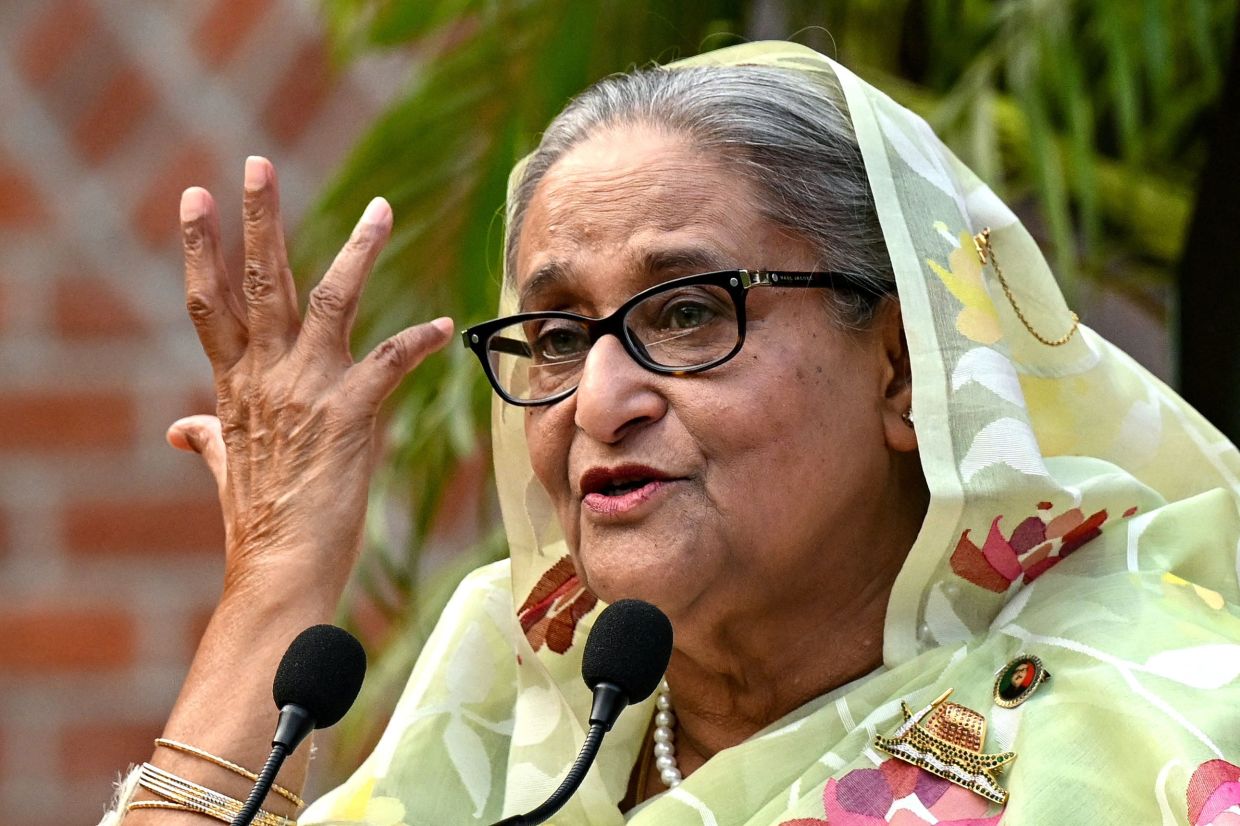
India's foreign ministry has firmly stated it has no involvement in an upcoming virtual address by exiled Bangladesh former Prime Minister Sheikh Hasina, seeking to defuse rising diplomatic tensions between New Delhi and Dhaka. The clarification came after Bangladesh officially requested India to explain its position on Hasina's scheduled appearance at an event hosted by the Foreign Correspondents' Club of South Asia on August 5, which will mark two years since the student-led uprising that toppled her government. Foreign ministry spokesperson Randhir Jaiswal told reporters that the gathering is being organised entirely by a private media entity, emphasising that "the government has no involvement whatsoever in it, neither does it endorse any views that may be expressed at the forum."
The diplomatic salvage effort underscores the delicate balancing act India must perform with its neighbour, as Dhaka has made clear that permitting political activities by a fugitive residing on Indian soil could damage the improving bilateral relationship both nations have been attempting to rebuild. Since Hasina fled to India in August 2024 following the collapse of her administration, her continued presence and occasional public statements have become a persistent friction point. Bangladesh's new administration under Prime Minister Tarique Rahman, which assumed office following February's elections, has signalled willingness to normalise ties, yet the question of how to handle the exiled opposition leader remains contentious.
Simultaneously, Bangladesh has escalated its own response by imposing strict media censorship on Hasina's planned remarks. Information Adviser Zahed Ur Rahman cautioned that any Bangladeshi media outlets or social media platforms broadcasting Hasina's speech, statements, interviews, or video messages would violate a December 2024 order issued by Bangladesh's International Crimes Tribunal. This directive effectively criminalises the dissemination of her words within the country, creating a comprehensive information blockade around her public appearances. The restriction reflects the severity with which Bangladesh's government views Hasina's continued political voice, treating it as a threat to national stability and judicial authority.
The 78-year-old former premier has remained secluded in India since fleeing her homeland, where she was sentenced to death in 2025 for crimes against humanity related to her government's response to the student demonstrations. Hasina has publicly dismissed the verdict as legally invalid and without legitimacy. Her scheduled virtual appearance on August 5 marks a significant moment—her first public statement by video since her departure from Dhaka. Beyond herself, the event will feature her son Sajeeb Wazed Joy and other speakers, signalling a deliberate re-entry into the public discourse by the exiled opposition.
While Hasina's aides have declined to reveal the content of her forthcoming address, the former prime minister disclosed to Reuters last month that she and other Awami League colleagues intend to return from exile around December and present themselves before the courts. This stated intention carries profound implications for Bangladesh's political trajectory, as it would force the current government to navigate the complex legal and security questions surrounding the nation's most prominent political opponent. Such a return could fundamentally test whether the new administration has genuinely moved toward institutional stability or whether it remains locked in partisan confrontation with its predecessors.
Hasina's aide Abu Obaidha Arin responded defiantly to Bangladesh's censorship directive, declaring that "efforts to silence dissent cannot extinguish voices" beyond national borders. This statement captures the fundamental tension at play: Bangladesh seeks to enforce domestic control over the narrative surrounding Hasina and her fall from power, yet her physical exile in India complicates enforcement of such restrictions. The internet age ensures that any virtual address, regardless of domestic media bans, can potentially reach Bangladeshi citizens through alternative channels, rendering traditional censorship mechanisms partially obsolete.
Bangladesh's State Minister for Foreign Affairs Shama Obaed Islam has lodged repeated complaints to India, protesting that Hasina and other senior Awami League figures continue to issue political statements from Indian soil. These communications have mounted pressure on New Delhi to restrict the political activities of its residents, something that conflicts with India's general approach to hosting asylum seekers and political exiles. The Indian government's careful language—distinguishing between official government sanction and the private activities of media organisations—reflects an attempt to maintain both the principle of hospitality to political refugees and the pragmatic goal of not antagonising Dhaka.
The episode unfolds against a backdrop of strained bilateral relations that have persisted since Hasina's ousting more than a year ago. Recent months have seen incremental improvements in communication between the two governments, with both New Delhi and Dhaka signalling a desire to move past immediate post-transition hostilities. However, unresolved issues—including Bangladesh's ongoing efforts to secure Hasina's extradition from India—continue to complicate this nascent rapprochement. The August 5 virtual address threatens to rekindle sensitivities just as the two nations appear poised to advance cooperation.
For Malaysia and other Southeast Asian nations, this episode carries broader significance regarding how the region manages political transitions, interstate relations, and the rights of exiled politicians. The case demonstrates the inherent tensions between national sovereignty and transnational political activism, between judicial processes and international law, and between the rights of refuge-seekers and the diplomatic expectations of neighbouring states. As populism and political polarisation affect democracies across Asia, the treatment of displaced leaders and opposition figures increasingly tests regional stability and norms of conduct.
The situation also illustrates how modern communications technology has rendered traditional tools of information control—such as media blackouts—far less effective than in previous eras. Bangladesh's prohibition on broadcasting Hasina's remarks may succeed in preventing domestic television and radio outlets from airing her message, yet online platforms and international media ensure that interested parties can access her statements regardless. This reality underscores a broader challenge facing governments attempting to manage the political aftermath of regime transitions: the impossibility of achieving complete narrative control in an interconnected world.

