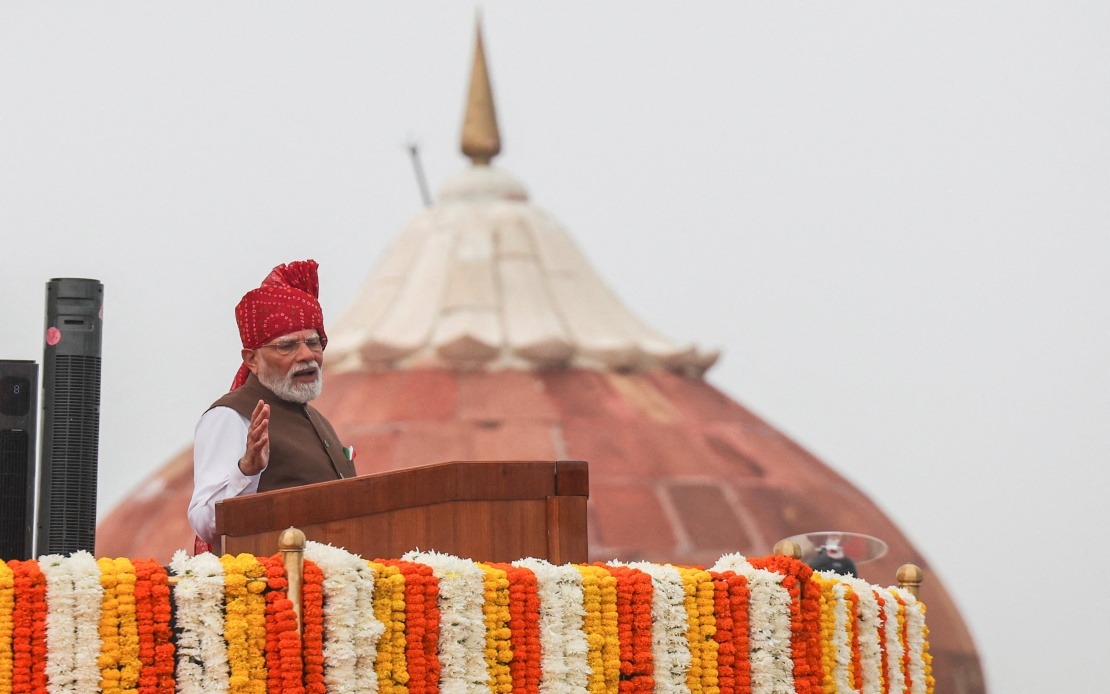
India is embarking on a transformative journey toward economic independence and developed-nation status by 2047, with Prime Minister Narendra Modi laying out an expansive vision centred on domestic capability-building across critical industries. Speaking on Independence Day from Delhi's Red Fort, Modi articulated a comprehensive strategy that positions self-reliance not as protectionism but as essential infrastructure for sustainable prosperity. The emphasis on internal strength rather than external shortcuts reflects a fundamental shift in how India approaches economic development and technological advancement in an increasingly multipolar world.
The semiconductor sector has become a cornerstone of this initiative, with Modi announcing that three fabrication plants are already operational and between five and eight additional facilities are expected to commence production within seven to eight years. This expansion represents a dramatic acceleration of India's capacity to design and manufacture chips domestically, reducing vulnerability to global supply chain disruptions that have plagued industries worldwide since 2020. For Southeast Asian economies like Malaysia, which have substantial electronics manufacturing bases, India's emergence as a semiconductor producer carries significant competitive implications, potentially reshaping regional trade patterns and investment flows in the technology sector.
Energy security underpins the entire self-reliance framework, with nuclear power receiving particular prominence in Modi's vision. India has committed to achieving 100 gigawatts of nuclear capacity by 2047, a tenfold increase from current levels, requiring five new reactor units to begin operations within the current decade. The achievement of fast-breeder nuclear technology mastery during the past year represents a critical milestone, positioning India to reduce dependence on imported nuclear fuel and eventually reach fuel self-sufficiency. This technological breakthrough carries implications beyond India's borders, as demonstrated nuclear fuel capabilities influence regional power balances and energy security arrangements throughout South and Southeast Asia.
Renewable energy capacity has experienced extraordinary growth, with solar power expanding from two gigawatts to 160 gigawatts over the preceding twelve years. This eightyfold expansion demonstrates India's capacity to execute large-scale infrastructure transformations when aligned with strategic priorities. The trajectory reflects both technological improvements and manufacturing scale-ups that have made solar installations increasingly affordable, a model that resonates across developing economies grappling with climate commitments alongside development needs. For Malaysian policymakers monitoring renewable energy targets, India's achievements offer both benchmarks and cautionary lessons regarding infrastructure financing and grid integration challenges at scale.
Exploration of offshore petroleum and gas reserves received substantial financial commitment through an allocation of 850 billion Indian rupees, approximately 8.9 billion US dollars, targeting areas previously deemed commercially unviable. Modi characterised these regions as 99 percent no-go zones, suggesting that technological advances and strategic reassessment now render them economically viable. This expansion of energy exploration represents a counterpoint to global decarbonisation pressures, reflecting India's determination to meet growing energy demands through diversified sources rather than accepting energy constraints on development.
Military self-sufficiency constitutes another pillar of the strategy, with Modi calling for accelerated domestic development of drone technology, counter-drone systems, and hypersonic defence capabilities. The emphasis on indigenous military manufacturing reflects both security imperatives and the economic potential of defence industries. For an India increasingly assertive in regional geopolitics, particularly concerning Pakistan and China, reducing military hardware dependence becomes strategically critical. The downstream effects ripple through Southeast Asia, influencing regional military balance calculations and alliance configurations as India's technological capabilities advance.
The psychological and economic messaging embedded in Modi's appeal for citizens to prioritise domestically produced goods introduces a consumer nationalism dimension to the self-reliance agenda. The articulation that buying imported goods, however cheap and convenient, fails to build national capabilities or test internal strengths reframes consumption as a patriotic duty rather than purely economic choice. This framing carries particular resonance in India's democratic context, where public support proves essential for policies requiring short-term sacrifices for long-term gains. The approach echoes earlier nationalist movements but applies contemporary economic logic, suggesting that capability-building requires protected space for domestic industries to mature.
The 2047 timeframe carries historical symbolism, marking one century since independence and transforming development into a generational narrative. By anchoring ambitious targets to this date, Modi connects current policies to a compelling national vision, enabling gradual progress without requiring immediate results. The extended timeline provides realistic flexibility for technological maturation, manufacturing scale-up, and workforce development while maintaining political momentum through incremental achievements.
For Malaysia and other Southeast Asian nations, India's self-reliance push presents complex dynamics. Increased Indian manufacturing capacity in semiconductors and defence technology creates competition for regional industries while potentially offering technology-sharing opportunities. Supply chain reorganisation away from China and toward India could benefit some sectors while challenging others. The Indian strategy also demonstrates how major democracies balance development aspirations with strategic autonomy, offering lessons relevant to regional discussions around technology governance and economic sovereignty.
The success of India's self-reliance vision depends critically on execution across multiple technical, financial, and organisational dimensions. Semiconductor fabrication requires sustained capital investment and specialised expertise; nuclear expansion necessitates rigorous safety standards and regulatory frameworks; renewable energy deployment faces grid modernisation challenges; and defence manufacturing demands continuous innovation in competitive global markets. Even partial achievement would substantially reshape India's economic trajectory and regional influence, affecting investment patterns, technology partnerships, and strategic alignments throughout South and Southeast Asia for decades ahead.

