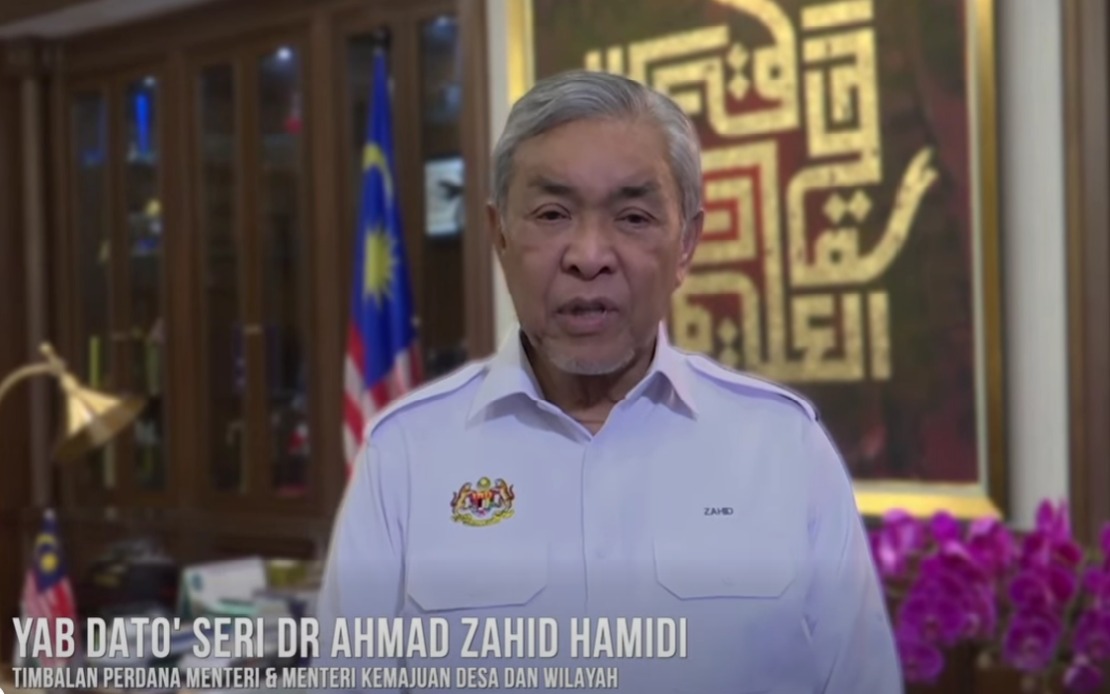
In his National Day address, Deputy Prime Minister Datuk Seri Dr Ahmad Zahid Hamidi reframed what independence means to Malaysians in the 21st century—not as a historical milestone confined to textbooks, but as an ongoing commitment to lift living standards and ensure no community is abandoned in the country's progress.
Ahmad Zahid's message represents a significant shift in how Malaysian leadership is articulating the nation's development agenda. Rather than focusing solely on commemorating the struggle for independence from colonial rule, his remarks underscore that the real work of nation-building lies in creating concrete opportunities for citizens. He specifically highlighted vocational and technical education training (TVET) as critical to equipping young Malaysians with skills that command premium wages in an increasingly competitive global job market. This emphasis on practical skills development speaks to persistent concerns among policymakers that Malaysia's education system must better align with industry demands to prevent youth unemployment and underemployment.
The Deputy Prime Minister expanded his vision beyond urban centres, articulating a philosophy that development must permeate Malaysia's villages, remote districts, and underserved regions. As Rural and Regional Development Minister, Ahmad Zahid has positioned his portfolio as central to ensuring that infrastructure projects, economic opportunities, and government services reach beyond city boundaries. His observation that a nation's greatness is measured not merely by what it constructs but by who it brings along in its development journey reflects growing recognition that Malaysia's rapid urbanisation has left pockets of the country lagging significantly behind in access to quality services, employment prospects, and educational facilities.
Ahmad Zahid's invocation of small infrastructure projects—a single road transforming a village, electricity reaching a modest home, a classroom nurturing aspirations—acknowledges that meaningful development often requires unsexy, foundational investments rather than headline-grabbing megaprojects. This framing carries particular resonance for rural constituencies across Peninsular Malaysia, Sabah, and Sarawak where such basic amenities remain inadequate. His implicit critique suggests that previous development strategies may have neglected these essentials in favour of more visible urban and industrial initiatives.
A notable dimension of Ahmad Zahid's address concerns entrepreneurship and the halal industry. His emphasis on enabling small entrepreneurs to expand their businesses and positioning Malaysia's halal sector as a vehicle for global economic participation reflects the government's broader strategy to diversify income streams and create wealth-generating opportunities beyond traditional sectors. For a Muslim-majority nation, the halal industry represents both cultural alignment and commercial opportunity, particularly as demand for halal-certified products and services grows across Islamic-majority markets in Asia, the Middle East, and beyond. This sector has potential to generate employment across rural areas where small-scale food production and artisanal manufacturing remain significant economic activities.
Complementing Ahmad Zahid's remarks, Deputy Prime Minister Datuk Seri Fadillah Yusof approached National Day with an emphasis on social cohesion and internal harmony. Fadillah's call for Malaysians to liberate themselves from division, prejudice, and extremism speaks to anxieties within government circles about societal fragmentation along religious, ethnic, and ideological lines. His message that independence must involve personal and collective commitment to unity reflects a government strategy to position social harmony as integral to national prosperity rather than merely a nice-to-have cultural value.
Fadillah's framing of independence as extending beyond freedom from colonial administration to encompassing individual liberation from prejudice presents an interesting philosophical argument. It suggests that true independence requires citizens to exercise personal agency in choosing unity over division, a concept that places responsibility on Malaysians themselves rather than solely on government institutions. This rhetorical move can be interpreted as attempting to reframe national identity around shared aspirations for prosperity and peace rather than around potentially divisive questions of identity politics and constitutional arrangements.
The invocation of the Rukun Negara—Malaysia's founding national principles—and emphasis on respecting diversity while maintaining constitutional order signals the government's desire to ground its vision in established institutional and ideological frameworks. By anchoring contemporary calls for unity in Malaysia's founding documents and principles, both deputy prime ministers attempt to present their positions as consistent with historical commitments made at independence rather than as novel interventions.
This year's National Day theme, "Malaysia MADANI: Well-being for All," encapsulates the government's current policy direction. The concept of MADANI—derived from Islamic civilisational ideals—aims to position Malaysia's development model as rooted in Islamic principles while remaining inclusive and forward-looking. Fadillah's emphasis that development should benefit all sections of society, not just elites or urban populations, reflects concerns that Malaysia's wealth distribution remains unequal despite decades of economic growth. The framing suggests that inclusive prosperity is not merely morally desirable but essential for maintaining the social cohesion that enables continued development.
For ordinary Malaysians, these messages carry practical implications. Young people should expect continued government focus on skills training and job placement initiatives; rural residents might anticipate accelerated infrastructure development; entrepreneurs will likely encounter policies designed to support business expansion. However, the gap between rhetoric and implementation remains significant. Malaysia's historical experience shows that policy announcements from senior leaders often face challenges during execution due to bureaucratic inefficiencies, funding constraints, or shifting political priorities.
Regionally, these articulations of Malaysia's development vision matter because they reflect how a major Southeast Asian economy is positioning itself amid global economic uncertainty and geopolitical competition. An emphasis on inclusive development and social cohesion can attract foreign investment from companies seeking stable, harmonious operating environments. Conversely, any perception of internal division or failed development promises could undermine confidence and competitiveness against neighbouring economies competing for similar investor attention and regional influence.
The dual emphasis on material development—skills, employment, infrastructure, entrepreneurship—and social-psychological development—unity, harmony, rejection of extremism—reveals that Malaysian leadership recognises the complexity of modern nation-building. Neither infrastructure investment alone nor aspirational calls for harmony suffice; sustainable prosperity requires both tangible improvements in citizens' economic circumstances and emotional investment in shared national identity. Whether these parallel emphases can be effectively operationalised across Malaysia's federal system, competing state governments, and diverse population remains an ongoing challenge.

