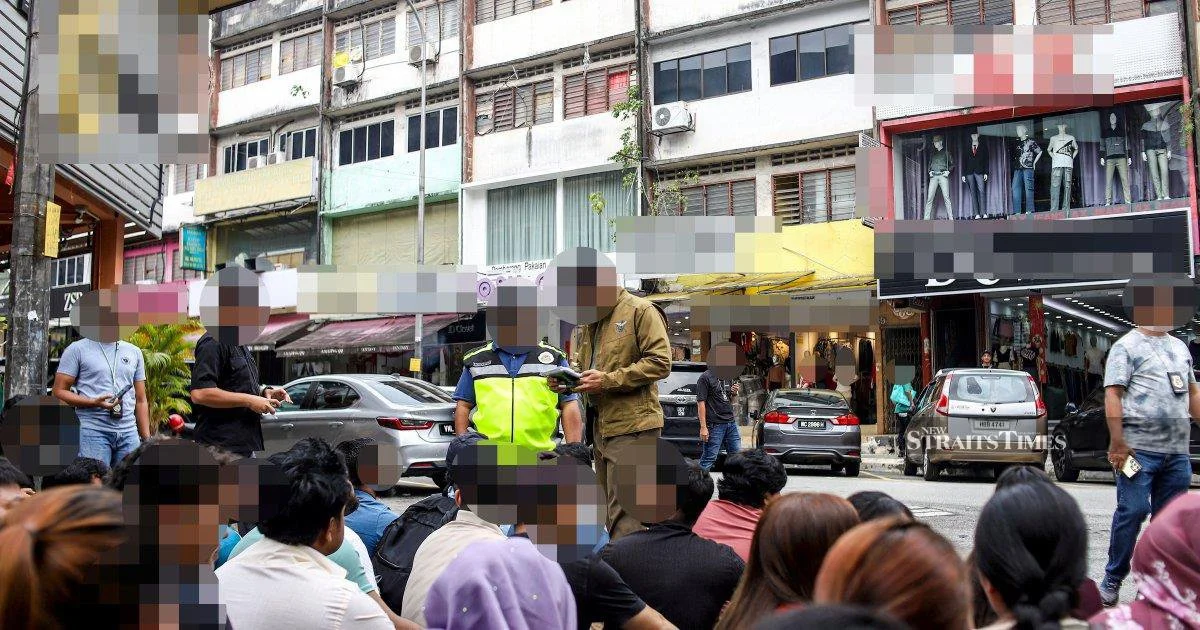
A significant immigration enforcement operation in Kuala Lumpur's Jalan Kenanga wholesale clothing precinct has resulted in the detention of 111 undocumented migrants, underscoring ongoing efforts by authorities to combat irregular migration in Malaysia's densely populated commercial zones. The sweep, conducted by immigration officers, targeted the sprawling clothing distribution hub that serves as a major transshipment point for textiles and apparel across Southeast Asia.
Jalan Kenanga has long functioned as the nerve centre of Malaysia's wholesale garment trade, with hundreds of outlets operating along the corridor and employing thousands of workers from across the region and beyond. The district's labour-intensive operations, combined with its maze-like warehouse networks and high employee turnover, have historically presented challenges for immigration authorities attempting to monitor compliance with documentation requirements. This raid represents one of the larger enforcement actions targeting the sector in recent months and reflects heightened scrutiny of irregular employment practices within Malaysia's critical wholesale and distribution industries.
The operation highlights the persistent vulnerability of migrant workers to exploitation within informal labour markets. Many undocumented individuals employed in wholesale and retail sectors accept positions without proper visa status or work permits, often at significantly reduced wages and under poor working conditions. These arrangements benefit unscrupulous employers who avoid mandatory contributions to social security schemes and face minimal penalties compared to the labour cost savings achieved through hiring irregular workers. The concentration of such workers in specific geographic hubs like Jalan Kenanga creates both operational and humanitarian concerns that extend beyond simple immigration compliance issues.
Malaysia's approach to managing undocumented migrants has evolved considerably over the past decade, balancing labour market realities with security and sovereignty concerns. The country hosts an estimated 1.8 million documented foreign workers across various sectors, yet the actual presence of undocumented individuals remains difficult to quantify with precision. Raids such as the Jalan Kenanga operation serve multiple purposes within the broader immigration enforcement framework: they deter employers from hiring irregular workers, generate revenue through fines and detention fees, and provide data that helps authorities understand migration patterns and vulnerabilities within specific industries and localities.
The apprehended individuals face administrative processing that typically includes identity verification, health screening, and deportation procedures unless they can establish legal status or claims to remaining in Malaysia. For workers from neighbouring countries including Indonesia, Bangladesh, Myanmar, and the Philippines, the deportation process can extend several weeks while authorities arrange transportation and coordinate with origin country diplomatic missions. During this period, detainees remain in immigration detention facilities that frequently operate at or near capacity, creating management challenges for authorities tasked with maintaining detention centre operations across the country.
For the wholesale clothing industry specifically, large-scale deportations create short-term labour shortages that can disrupt supply chains and inventory management, particularly given the seasonal nature of fashion and apparel distribution. Legitimate businesses operating within the regulatory framework must compete for labour with firms willing to hire undocumented workers, creating distortions in wage levels and working conditions across the sector. Industry observers note that sustained enforcement operations, when combined with employer education and gradual adjustment periods, can gradually shift business practices toward compliance without triggering economic disruption that ultimately harms regulated operators.
The raid also reflects broader regional concerns about human trafficking and labour exploitation networks that operate across Southeast Asia. While not all undocumented migrants are trafficking victims, many irregular workers have been subjected to debt bondage, document confiscation, and wage theft. Immigration enforcement operations, when coordinated with anti-trafficking specialists and labour inspectors, can identify vulnerable individuals requiring protection services rather than straightforward deportation. Malaysian authorities have increasingly incorporated this victim-identification perspective into immigration enforcement procedures, recognising that a proportion of detainees represent cases requiring intervention beyond standard administrative processing.
From a Malaysian economic perspective, the reliance of certain labour-intensive sectors on undocumented workers reflects deeper structural questions about wage competitiveness, automation adoption, and productivity growth. The wholesale clothing district's continued dependence on low-wage labour suggests that many businesses have not undertaken the investments in mechanisation or process innovation that characterise higher-productivity segments. This pattern, replicated across multiple sectors, influences Malaysia's long-term competitiveness and capacity to transition toward higher-value manufacturing and service activities that generate greater employment quality and economic dynamism.
The Jalan Kenanga operation also sends signalling effects to businesses throughout Malaysia's commercial and industrial sectors regarding the probability and consequences of hiring undocumented workers. While enforcement capacity remains constrained relative to the estimated scale of irregular employment, highly visible raids in prominent business districts generate awareness among employers and demonstrate commitment to compliance enforcement. However, sustained impact requires not merely episodic enforcement but consistent operations supported by adequate resources, clear penalties, and coordination between immigration, labour, and law enforcement agencies.
Moving forward, the effectiveness of immigration enforcement in wholesale and distribution sectors will depend substantially on whether authorities can move beyond reactive raids toward systematic monitoring systems and employer compliance programmes. Several Southeast Asian countries have experimented with digitalised worker documentation, biometric verification systems, and regularisation pathways that reduce incentives for irregular hiring while maintaining orderly migration frameworks. Malaysia's continued reliance on traditional enforcement approaches, while necessary, remains insufficient alone to address the structural factors that sustain demand for undocumented labour across multiple sectors. The Jalan Kenanga raid thus represents both a tactical success in enforcement and an indicator of the deeper systemic challenges that immigration management in a major regional economy continues to face.

