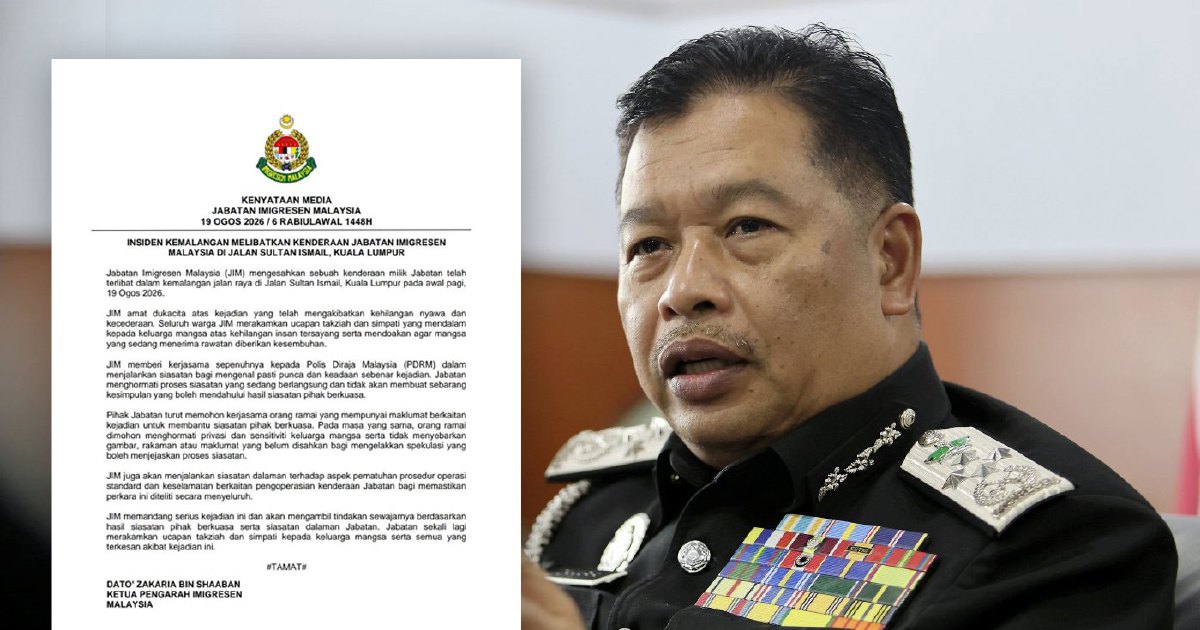
The Immigration Department has announced it will undertake a comprehensive internal investigation into the circumstances surrounding a fatal collision involving one of its vehicles that occurred on Jalan Sultan Ismail in Kuala Lumpur in the early hours of today. The probe will specifically examine whether all standard operating procedures and established safety protocols were properly followed by personnel and in the operation of the vehicle at the time of the incident.
The decision to launch this review represents a significant institutional response to what appears to be a serious lapse in road safety involving government resources. By focusing on procedural compliance and adherence to safety measures, the department aims to identify any systemic weaknesses that may have contributed to the accident. This inward-looking approach is standard practice in Malaysian government agencies when incidents result in loss of life, though public transparency regarding findings remains variable across different departments.
Fatal traffic accidents involving official vehicles carry particular weight in Malaysia's public discourse, as they raise questions about driver competence, vehicle maintenance standards, and whether government staff receive adequate training in defensive driving techniques. The fact that this incident occurred along one of Kuala Lumpur's major arterial roads during early morning hours suggests the department will need to examine factors such as visibility conditions, vehicle speed, driver fatigue, and road awareness—all critical elements in preventing collisions in the capital's congested traffic environment.
The Immigration Department's internal investigation will likely examine personnel files, vehicle maintenance records, and any available footage from traffic cameras or dashcam recordings. The scope of such investigations typically encompasses not just the immediate circumstances of the crash but also broader questions about whether the department's safety culture adequately emphasizes risk mitigation and whether vehicle operators receive regular refresher training on road safety protocols.
For Malaysian public servants and government agencies generally, this incident underscores the importance of maintaining rigorous standards for official vehicle operations. Government vehicles are heavily utilized across the country for various administrative and enforcement purposes, and accidents involving such vehicles can undermine public confidence in institutional competence. This makes the Immigration Department's swift action in commissioning an internal review particularly noteworthy, as it demonstrates responsiveness to a crisis situation.
The tragedy also touches on broader road safety concerns in Malaysia, where fatal traffic accidents remain a persistent public health challenge. Government agencies have been increasingly scrutinized for their role in promoting road safety awareness, particularly given that their own operational practices should serve as exemplars of safe driving conduct. When accidents occur involving official vehicles, they inevitably raise questions about whether such agencies are practicing what they preach regarding road discipline and safety consciousness.
From an organizational perspective, the Immigration Department faces the dual challenge of investigating this matter thoroughly while maintaining the morale and operational effectiveness of its workforce. The internal investigation will need to balance accountability with sensitivity to staff affected by the incident, particularly colleagues of those involved in the accident. This investigation may also inform whether additional safety measures, such as mandatory driving refresher courses or enhanced vehicle maintenance protocols, should be implemented across the department's fleet.
The Jalan Sultan Ismail corridor, being a frequently traveled route in central Kuala Lumpur, carries significant traffic volume throughout the day. The early morning timing of the accident adds another investigative dimension—early morning driving conditions can be complicated by factors such as reduced visibility, fewer other vehicles to provide navigational cues, and potential driver fatigue after night shifts or early starts. The department will need to consider whether operational necessities require staff to work shifts that might compromise alertness during vehicle operations.
Public agencies in Malaysia increasingly recognize that such investigations, when conducted rigorously and with transparency, can serve as valuable learning opportunities not just for the department directly involved but for the broader civil service. Well-documented findings from internal probes can be shared across government to help other departments avoid similar incidents, effectively creating institutional knowledge around safety management.
As the Immigration Department proceeds with its investigation, particular attention will likely focus on whether all parties involved were trained to current standards, whether vehicle maintenance schedules had been consistently adhered to, and whether any environmental or circumstantial factors beyond human control may have contributed to the collision. The investigation's conclusions will potentially influence how other Malaysian government departments approach vehicle safety moving forward.
The incident serves as a sobering reminder that even routine government operations carry inherent risks, and that maintaining vigilance around safety protocols is not simply an administrative formality but a matter of life and death. For the families affected by this tragedy and for the broader Malaysian public, the thoroughness and transparency of this investigation will be important indicators of institutional accountability.

